What ZK model proofs verify
Zero-knowledge (ZK) model proofs represent a critical intersection of advanced cryptography and machine learning. They allow a prover to demonstrate that an AI model was trained on specific, compliant datasets without revealing the raw data itself. This capability is essential for high-stakes environments where data privacy and regulatory compliance are paramount, such as finance and healthcare.
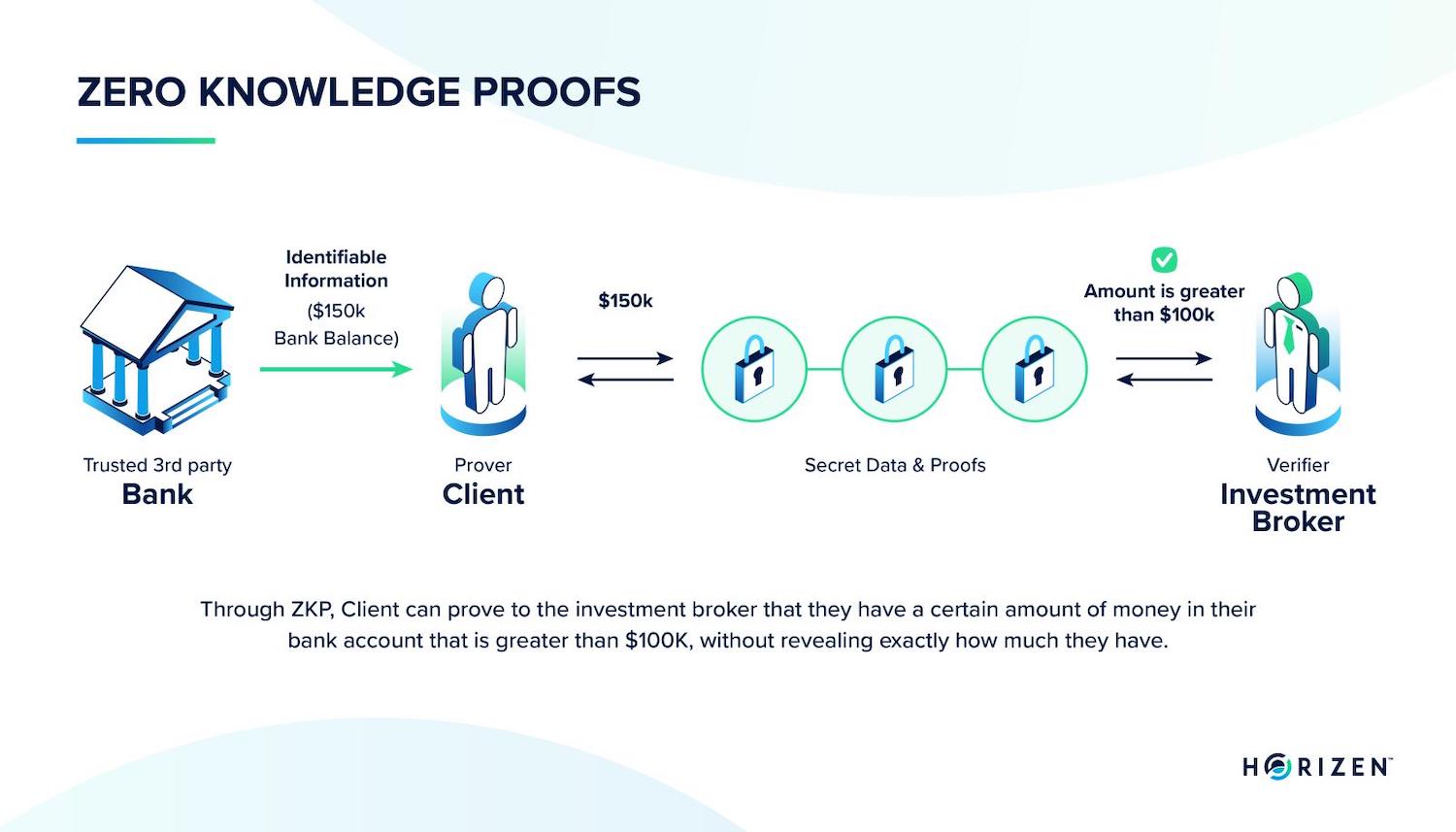
At its core, a zero-knowledge proof is a method of proving the validity of a statement without revealing anything other than the validity of the statement itself 1. In the context of AI, this means a company can prove its model adheres to strict data usage policies—such as excluding copyrighted material or sensitive personal information—without exposing the underlying training corpus. This preserves confidentiality while ensuring transparency in model behavior.
This cryptographic primitive ensures the validity of data and computations without sacrificing their confidentiality 2. By leveraging ZK proofs, organizations can integrate privacy-preserving datasets into transparent systems, such as public blockchain networks, enabling verifiable AI without compromising trade secrets or user privacy.
Privacy-preserving machine learning use cases
Zero-knowledge model proofs transform how institutions validate AI integrity without exposing proprietary data or compromising user privacy. By generating cryptographic attestations of model behavior, these proofs enable trust in high-stakes environments where data leakage is unacceptable.
Defending federated learning against poisoning
Federated learning allows multiple parties to train a shared model without exchanging raw data. However, this decentralization creates vulnerabilities to model poisoning attacks, where malicious actors inject bad data to corrupt the final output. Integrating zero-knowledge proofs strengthens these defenses by allowing nodes to prove their updates came from valid, unmanipulated training processes.
Research indicates that ZK proofs can verify the integrity of local training steps without revealing the underlying dataset. This ensures that the global model remains robust even when participating nodes are untrusted or potentially hostile. The cryptographic guarantee replaces the need for centralized data auditing, which is often impossible in privacy-preserving architectures.
Verifying off-chain AI computations on-chain
Many AI workloads require significant computational resources that cannot run directly on blockchain networks. Zero-knowledge proofs solve this by allowing off-chain computation to be verified on-chain. A prover performs the heavy AI inference or training step off-chain, then generates a succinct proof that the computation was executed correctly according to the agreed-upon model weights and inputs.
This approach enables transparent, verifiable AI services on public ledgers like Ethereum without exposing the sensitive data used in the calculation. As noted by industry providers, this method allows the validity of a statement to be proven without revealing the statement itself, bridging the gap between private AI models and public trust mechanisms.
| Metric | Traditional Verification | ZK Model Proofs |
|---|---|---|
| Data Exposure | Full dataset required | None (zero-knowledge) |
| Trust Model | Centralized auditor | Cryptographic proof |
| Privacy | Low (data shared) | High (data hidden) |
| Verification Speed | Slow (manual audit) | Fast (automated check) |
ZK-rollups adoption in AI infrastructure
ZK model proofs generate massive computational overhead. Validating complex AI training data on-chain without exposing the underlying secrets requires significant processing power. Running these proofs directly on a base layer like Ethereum is often prohibitively expensive and slow. The system hits a scalability wall where the cost of verification exceeds the value of the data being protected.
ZK-rollups solve this by batching multiple proof verifications into a single transaction. They process the heavy cryptographic lifting off-chain and submit a compact validity proof to the main chain. This reduces the gas cost per verification by orders of magnitude. For AI infrastructure, this means real-time verification becomes economically feasible. Systems can now validate model integrity at scale without draining capital on transaction fees.
The efficiency gains are measurable. As ZK-rollup technology matures, the cost to verify a single AI training step drops significantly. This allows institutions to audit large language models and proprietary datasets without compromising intellectual property. The blockchain acts as a final settlement layer, ensuring transparency without requiring full data exposure.
The following chart contextualizes the cost-efficiency improvements brought by ZK-rollups for AI verification tasks by showing ETH price and gas trends.
Community perspectives on ZK verification
The developer community remains divided on the practical viability of zero-knowledge proofs for AI training data. While the cryptographic promise is undeniable, the implementation costs are steep. Developers on r/CryptoTechnology frequently compare ZK proofs to tamper-proof stamps on opaque envelopes: they allow a system to confirm that specific data was used correctly without revealing the data itself. This analogy highlights the core tension between verification and privacy.
Technical debates often center on computational overhead. Proving that a neural network was trained on a clean, non-infringing dataset requires generating complex cryptographic receipts. Critics argue that the gas costs and latency involved in generating these proofs on-chain are currently prohibitive for large-scale models. Proponents counter that as ZK hardware accelerates, the marginal cost of verification will drop, making it a standard compliance layer.
The primary benefit cited by researchers is the ability to leverage privacy-preserving datasets within transparent systems like public blockchains. This creates a verifiable audit trail for AI governance without exposing proprietary training corpora. However, the community acknowledges that this technology is still in its infancy. Widespread adoption depends on solving the scalability trilemma without compromising the security guarantees that make ZK proofs valuable in the first place.
Frequently Asked Questions About ZK Proofs
Zero-knowledge proofs (ZKPs) are a cryptographic method used to prove knowledge about a piece of data without revealing the data itself Chainlink. This technology enables a prover to convince a verifier that a statement is true without disclosing any additional information beyond the validity of the statement Idura.
The primary benefit of zero-knowledge proofs is the ability to leverage privacy-preserving datasets within transparent systems, such as public blockchain networks like Ethereum Chainlink. This allows institutions to verify AI training data compliance without exposing proprietary or sensitive source material.
No comments yet. Be the first to share your thoughts!