What zero-knowledge proofs deliver today
A zero-knowledge proof (ZKP) is a cryptographic method that allows one party to prove a statement is true without revealing any underlying data. In blockchain terms, this means a "prover" can convince a "verifier" that a transaction is valid without exposing the sender, receiver, or amount. This capability solves two of the industry's most persistent problems: scalability and privacy.
For scalability, ZKPs act as a compression layer. Instead of every node in a network verifying every transaction individually, a single compact proof can verify the validity of thousands of transactions at once. This dramatically reduces the computational load, allowing blockchains to handle higher throughput without sacrificing security. It is the primary mechanism behind "rollups," which bundle transactions off-chain and post only the proof on-chain.
For privacy, ZKPs provide a way to maintain transparency without full disclosure. Traditional blockchains require public ledgers, which can expose sensitive financial data. ZKPs allow institutions to prove compliance—such as confirming that a transaction did not involve sanctioned addresses—without revealing the broader portfolio or transaction history. As noted by NTT DATA, this technology is becoming essential for societies that require high levels of privacy while maintaining regulatory trust.
ZK-Rollups versus ZK-SNARKs
Zero-knowledge proofs are not a single technology but a family of cryptographic tools. In the current blockchain landscape, ZK-Rollups and ZK-SNARKs serve distinct, often complementary roles. One prioritizes transaction throughput; the other prioritizes compact verification.
ZK-Rollups are scaling solutions. They bundle hundreds of transactions off-chain and submit a single validity proof to the main chain. This approach dramatically increases throughput while maintaining Ethereum's security guarantees. Projects like zkSync and Scroll use this model to handle high-volume payments and DeFi interactions efficiently.
ZK-SNARKs, or Succinct Non-Interactive Arguments of Knowledge, are the underlying mathematical primitives. They generate small, quickly verifiable proofs. While Rollups use SNARKs (or STARKs) to settle data, SNARKs also power standalone privacy protocols. They are ideal when proof size and verification speed matter more than raw transaction batching.
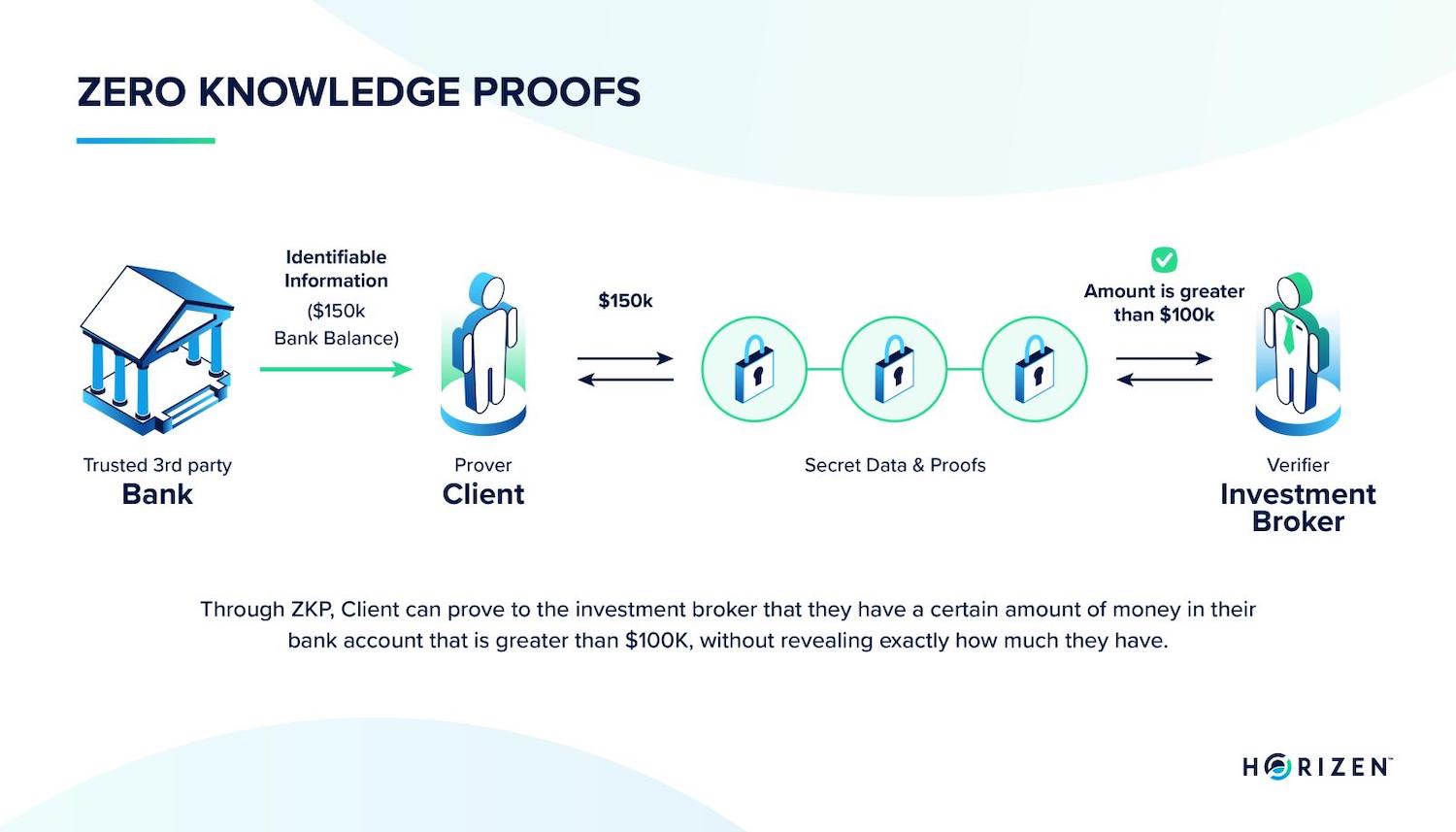
The choice between them depends on your goal. If you need to process thousands of transactions per second, a Rollup architecture is the standard. If you need to verify a single complex statement with minimal on-chain data, a SNARK circuit is the right tool.
| Feature | ZK-Rollup | ZK-SNARK |
|---|---|---|
| Primary Goal | Transaction Throughput | Compact Verification |
| Proof Size | Large (batched) | Small (kilobytes) |
| Verification Cost | High (complex circuit) | Low (optimized) |
| Typical Use Case | Layer 2 Scaling | Privacy & Identity |
| Example Projects | zkSync, Scroll | Zcash, Tornado Cash |
Verifying AI Training Data Without Exposure
Zero-knowledge proofs are moving beyond simple transaction privacy to address a growing crisis in artificial intelligence: data provenance. As large language models consume petabytes of proprietary and copyrighted material, organizations need a way to prove that their training datasets meet specific criteria without revealing the underlying data itself.
This capability, often referred to as ZK Model Proofs, allows AI developers to cryptographically attest to the integrity, origin, or composition of their training sets. A third party can verify that a model was trained on a compliant dataset—such as one free of specific liabilities or containing a minimum threshold of high-quality sources—without ever seeing the raw data. This preserves the competitive advantage of proprietary information while satisfying regulatory or partner requirements.
The mechanism works by generating a non-interactive zero-knowledge proof (NIZK) that binds the model's output or training metadata to a verifiable statement. For example, a financial institution could prove its AI risk model was trained on audited, sanitized data without exposing sensitive client records. This approach aligns with emerging standards for programmable zero-knowledge applications, which are increasingly focused on decentralized verification of complex computational states.
By decoupling verification from disclosure, ZK model proofs enable a new layer of trust in AI systems. They allow organizations to demonstrate compliance and data hygiene in a manner that is both mathematically rigorous and commercially viable, setting the stage for a more transparent yet private AI ecosystem.
Market Adoption and Institutional Reality
The transition of zero-knowledge proofs (ZKPs) from academic theory to institutional infrastructure is no longer hypothetical. While early blockchain privacy relied on mixing services or ring signatures, modern ZKPs allow institutions to verify transaction validity without exposing sensitive data like trading flows, customer identities, or counterparty details. This capability addresses the primary regulatory hurdle for traditional finance entering Web3: the need for auditability without sacrificing commercial confidentiality.
A significant milestone in this adoption curve is the XRP Ledger’s integration with Boundless. This implementation brings native zero-knowledge proof verification directly to the ledger, enabling institutions to verify transactions without revealing amounts, senders, or receivers. By embedding ZK verification at the protocol level rather than relying on external rollups, the XRP Ledger demonstrates how legacy-friendly infrastructure can support privacy-preserving compliance. This shift from experimental sidechains to core ledger functionality signals that privacy is becoming a standard feature, not an optional add-on.
The ZKProof community continues to drive standardization efforts, ensuring that these cryptographic tools remain interoperable and secure across different blockchain environments. As major networks integrate these capabilities, the focus is shifting from "if" ZKPs will be used to "how" they will be governed. The technology is moving beyond speculative use cases into the realm of regulated financial operations, where proof of solvency and private settlement are becoming table stakes.
Common questions about zero-knowledge proofs
Zero-knowledge proofs (ZKPs) are no longer theoretical. They exist today, powering privacy features on major blockchains and scaling solutions for Ethereum.
Is zero-knowledge proof the future?
Industry analysts view ZKPs as a foundational layer for private digital infrastructure. As regulatory scrutiny on data privacy increases, the ability to verify transactions without revealing sensitive details becomes essential. NTT DATA and other tech leaders anticipate ZKPs will become standard for secure, privacy-preserving societies, moving beyond niche crypto use cases into broader enterprise applications.
Does zero-knowledge proof exist?
Yes. Zero-knowledge proofs are a well-established cryptographic protocol introduced by Goldwasser, Micali, and Rackoff. Today, they are implemented in production environments. Projects like ZKSync and StarkWare use them to scale Ethereum, while the ZKProof initiative works on standardizing these protocols for broader adoption.
Is XRP a zero-knowledge proof?
The XRP Ledger itself is not a ZKP, but it now supports them. Through an integration with Boundless, the ledger can verify transactions without revealing amounts, senders, or receivers. This adds a native privacy layer to XRP, allowing institutions to conduct compliant, confidential transfers.
Note: Chart shows ETH/USDT price action for context on the broader market where ZK scaling solutions are primarily deployed.
No comments yet. Be the first to share your thoughts!