What is ZK-ML?
Zero-knowledge machine learning (ZK-ML) is a cryptographic protocol that allows a party to prove that a specific computation was performed on an AI model without revealing the underlying data or the model architecture itself. In this setup, the prover generates a mathematical proof that a verifier can check instantly, confirming the integrity of the result while keeping the inputs and the model weights private.
This approach goes beyond standard encryption. While encryption protects data at rest or in transit, ZK-ML ensures the correctness of the inference or training process. It solves the fundamental trust gap in AI: how do you know a model actually used the claimed data and followed the specified algorithm, rather than returning a pre-computed or manipulated answer?
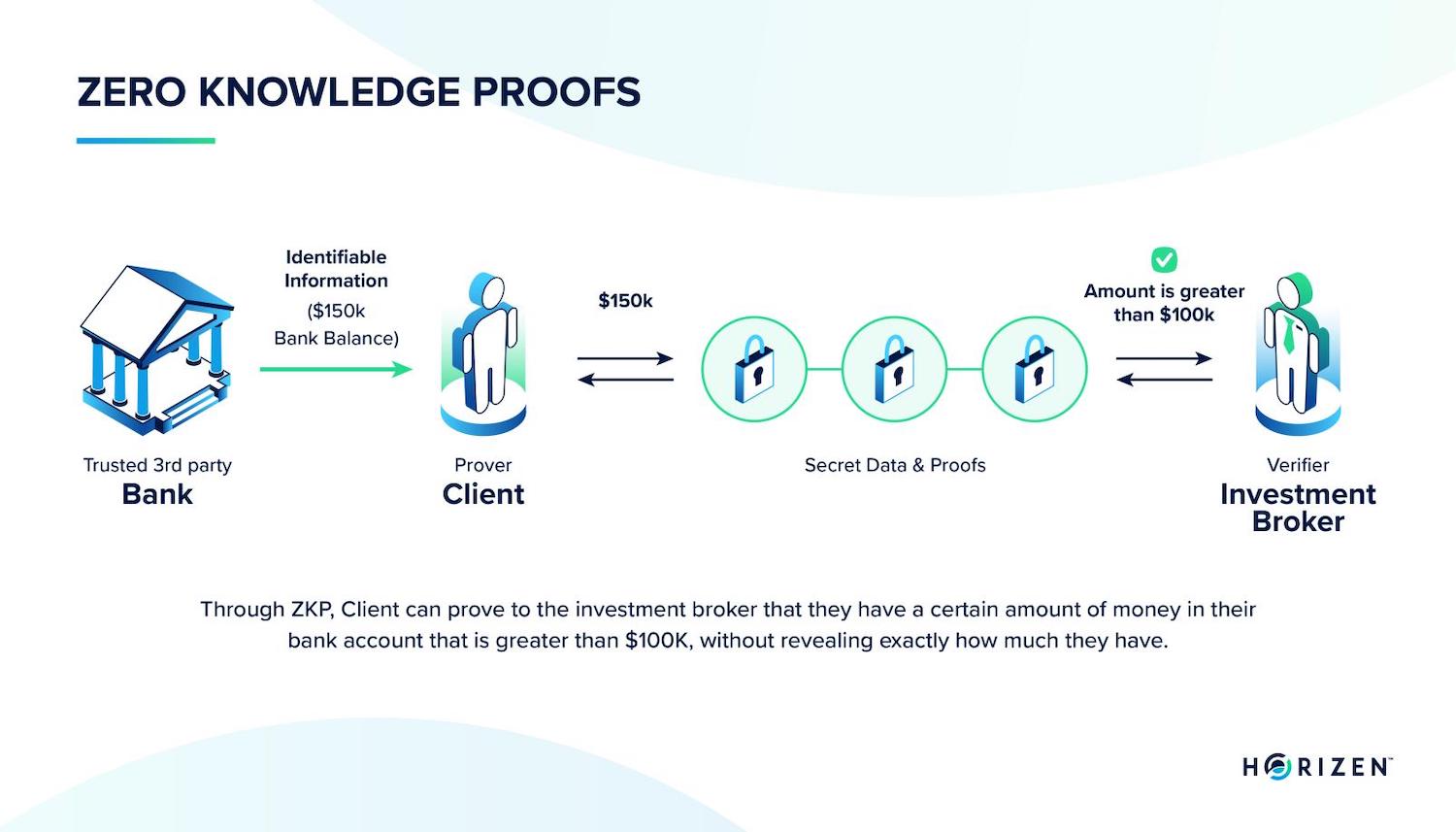
To understand ZK-ML, it helps to distinguish it from general zero-knowledge proofs (ZKPs). Traditional ZKPs, such as those used in some blockchain privacy layers, primarily prove that a statement is true (e.g., "I have enough funds to make this transaction") without revealing the statement's content. ZK-ML applies this concept to the complex, high-dimensional computations of neural networks. The proof attests to the fidelity of the machine learning operation itself.
The technology is particularly relevant for verifying training data provenance and ensuring that sensitive customer data is never exposed during model inference. By decoupling verification from visibility, ZK-ML enables AI systems to operate in regulated environments where privacy and auditability are mandatory, such as healthcare diagnostics or financial risk assessment.
How ZK-ML Proves Model Integrity
To verify that an AI model produced a specific output without re-running the computation, ZK-ML relies on a cryptographic handshake between a prover and a verifier. The prover, who holds the private model weights and input data, executes the inference and generates a succinct cryptographic proof. This proof acts as a mathematical guarantee that the output was derived from the exact claimed model and input, without revealing the model's architecture or the underlying data.
The core mechanism transforms the machine learning model into a mathematical circuit. Every operation within the neural network—matrix multiplications, activations, and pooling layers—is translated into a set of arithmetic constraints. When the prover runs the model, they generate a ZK-SNARK (Succinct Non-Interactive Argument of Knowledge) that attests to the correct execution of these constraints. This proof is typically only a few hundred bytes in size, making it lightweight enough to transmit over a network.
The verifier, which could be a blockchain node or a client application, checks this proof using a public verification key. This process is computationally inexpensive and extremely fast. As demonstrated by the ZKML framework, verification can be up to 5× faster than prior methods while producing proofs that are 22× smaller than earlier approaches. This efficiency allows for real-time integrity checks, ensuring that the AI's decision-making process remains transparent and untampered.
This architecture shifts trust from the hardware provider to the cryptographic protocol. Because the proof is succinct, a verifier can confirm the integrity of a massive deep learning model in milliseconds. This capability is essential for high-stakes applications where model theft or unauthorized modification poses significant financial or regulatory risk.
Why Verifying AI Models Is Hard
Traditional machine learning operates as a black box. When a model generates a prediction, it offers no cryptographic evidence of how that result was derived. This opacity creates a fundamental trust gap, particularly in high-stakes environments where the cost of error or fraud is significant. Without a way to audit the internal state of a computation, stakeholders must simply accept the output on faith.
The primary challenge with verifying AI models lies in this lack of transparency. In conventional systems, the model weights and the inference process are proprietary secrets. A client cannot prove to a regulator, an investor, or a counterparty that the model used specific data, adhered to a compliance rule, or was not tampered with during execution. The computation is a closed loop, invisible to anyone outside the system.
This secrecy introduces severe risks. Model theft is a constant threat, as competitors or malicious actors can extract proprietary algorithms by analyzing inputs and outputs. In addition, there is no way to verify the provenance of training data. If a model was trained on biased or illegal datasets, there is no mechanism to detect or prove that contamination without breaking the model's confidentiality.
Zero-knowledge proofs address this by separating the computation from its verification. They allow a party to prove that a specific AI model ran correctly on specific data without revealing the model itself or the data. This shifts the paradigm from blind trust to cryptographic certainty, enabling verifiable AI models that can be audited without compromising privacy.
ZK-ML Use Cases in Finance
Institutional finance is adopting zero-knowledge machine learning (ZK-ML) to solve the "trust paradox": the need to verify AI-driven decisions without exposing proprietary algorithms or sensitive client data. Traditional machine learning models in finance act as black boxes; regulators and risk managers must trust that the model executed correctly, but they cannot audit the internal computation. ZK-ML replaces this blind trust with cryptographic proof.
Private Algorithmic Trading
High-frequency trading firms use ZK-ML to prove their execution logic complies with regulatory constraints—such as avoiding front-running or adhering to specific risk limits—without revealing the underlying alpha-generating strategy. A trader can submit a proof that a trade was executed according to a pre-approved model, allowing exchanges to verify compliance instantly while keeping the strategy secret.
Confidential Credit Scoring
Banks leverage ZK-ML to verify creditworthiness without exposing raw financial histories. A borrower can generate a proof that their income and debt-to-income ratio meet lending criteria, computed on a third-party AI model, without revealing their actual bank statements or transaction logs to the lender or the model provider. This enables fairer lending decisions while maintaining strict data privacy.
Verification vs. Traditional ML
The shift from opaque verification to cryptographic assurance changes how institutions manage risk. Traditional methods rely on periodic audits and trust in the model provider, creating latency and potential points of failure. ZK-ML provides real-time, mathematically guaranteed verification.
| Feature | Traditional ML Verification | ZK-ML Verification |
|---|---|---|
| Trust Model | Trust in provider | Cryptographic proof |
| Audit Speed | Slow, batched | Real-time |
| Data Privacy | Low, requires raw data | High, zero-knowledge |
| Strategy Secrecy | Exposed during audit | Preserved |
Common Misconceptions About ZK-ML
Zero-knowledge machine learning is often misunderstood because the term "zero-knowledge" borrows from cryptography, leading to intuitive but incorrect assumptions about what it actually does. The core purpose of ZK-ML is not to make AI models faster or to conceal the model itself, but to verify that a specific computation was performed correctly without exposing the underlying data.
ZK-ML Does Not Speed Up Inference
A frequent misconception is that ZK-ML accelerates AI inference. In reality, generating zero-knowledge proofs is computationally expensive and significantly slower than standard model execution. The proof generation process adds overhead that can take minutes or hours depending on the model complexity, whereas inference itself remains a standard, albeit potentially optimized, operation. ZK-ML is a verification layer, not an optimization layer. It ensures trust in the result, not speed in its delivery.
The Model Architecture Is Public
ZK-ML does not hide the AI model's existence or architecture. The model definition, weights, and logic are typically public or known to the verifier. What remains private are the inputs fed into the model and the intermediate computations. This distinction is critical: you are proving that "Model A was run on Input B to produce Output C" without revealing what Input B or the specific internal states were. The model is the tool; the data is the secret.
Privacy Is Limited to Inputs and Weights
While ZK-ML protects privacy, it does not provide absolute anonymity for all parties. It primarily safeguards the privacy of the data owner (the prover) by keeping their inputs and potentially their model weights hidden from the verifier. However, the verifier still sees the final output and the proof of correctness. If the output itself can reveal sensitive information (e.g., a medical diagnosis), additional privacy techniques like secure multi-party computation may be required alongside ZK-ML. It is a piece of the privacy puzzle, not the entire solution.
No comments yet. Be the first to share your thoughts!