What zero-knowledge proofs mean for 2026
Zero-knowledge proofs (ZKPs) have evolved from a niche cryptographic tool for transaction privacy into a foundational layer for enterprise scalability and data integrity. While early implementations focused on anonymizing DeFi transactions, the 2026 landscape is defined by a shift toward proving computational correctness and verifying model provenance without revealing underlying proprietary data.
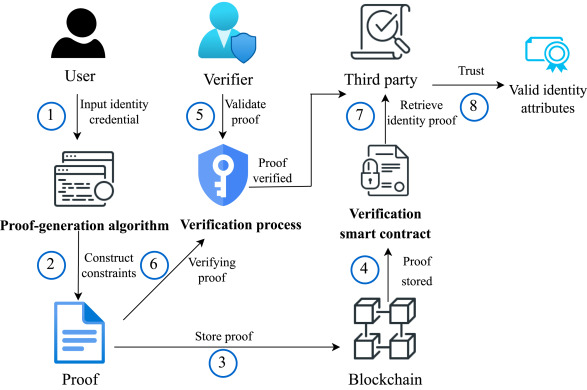
This transition addresses a critical bottleneck in high-stakes sectors. Financial institutions and AI developers require verifiable assurance that computations were performed correctly and that training data adheres to compliance standards, without exposing sensitive intellectual property or violating data privacy regulations. ZKPs provide this assurance by generating succinct proofs that can be verified efficiently on-chain or in distributed systems.
The technology’s value proposition now hinges on its ability to decouple verification from computation. By allowing a verifier to confirm the integrity of a complex process—such model’s training run or a bank’s risk calculation—without re-executing the entire process, ZKPs enable new architectures for trust-minimized enterprise systems. This capability is central to the emerging standards for post-quantum readiness and secure multi-party computation.
zk-SNARKs vs STARKs: Core technical differences
The choice between Succinct Non-interactive Arguments of Knowledge (zk-SNARKs) and Scalable Transparent Arguments of Knowledge (STARKs) hinges on distinct cryptographic architectures, each offering specific trade-offs in proof size, verification speed, and trust assumptions. Understanding these differences is essential for selecting the appropriate standard for enterprise applications.
Trust Assumptions and Setup
zk-SNARKs rely on a trusted setup phase, which requires the generation of a common reference string (CRS). This process introduces a potential point of failure; if the cryptographic parameters are not destroyed after generation, a malicious actor with knowledge of the "toxic waste" could forge proofs. While multi-party computation (MPC) ceremonies can mitigate this risk, they add operational complexity. In contrast, STARKs are transparent, meaning they do not require a trusted setup. This eliminates the reliance on a specific trust model, making them inherently more robust against setup-related vulnerabilities.
Proof Size and Verification
The primary advantage of zk-SNARKs is their succinctness. Proofs are typically small, often ranging from 200 to 500 bytes, and verification is extremely fast, usually requiring only a few milliseconds. This makes zk-SNARKs ideal for on-chain verification where bandwidth and computational costs are critical. STARKs, however, generate significantly larger proofs, typically in the range of kilobytes to megabytes. While verification times are comparable to zk-SNARKs, the larger proof size can create bottlenecks in bandwidth-constrained environments.
Quantum Resistance
A critical distinction lies in quantum resilience. zk-SNARKs are generally based on elliptic curve cryptography and pairing-based assumptions, which are vulnerable to attacks by sufficiently powerful quantum computers. STARKs, on the other hand, rely on collision-resistant hash functions, which are believed to be quantum-resistant. As the threat of quantum computing advances, STARKs offer a more future-proof solution for long-term data integrity.
| Feature | zk-SNARKs | STARKs |
|---|---|---|
| Trust Model | Trusted Setup Required | Transparent (No Trusted Setup) |
| Proof Size | Small (200-500 bytes) | Large (KB to MB) |
| Verification Speed | Fast (~ms) | Fast (~ms) |
| Quantum Resistance | Vulnerable | Resistant |
| Underlying Math | Elliptic Curves, Pairings | Collision-Resistant Hashes |
The decision between zk-SNARKs and STARKs ultimately depends on the specific requirements of the application. zk-SNARKs remain the standard for scenarios where proof size and on-chain efficiency are paramount, provided the trusted setup is managed securely. STARKs are increasingly favored for applications demanding long-term security, transparency, and quantum resilience, despite the overhead of larger proof sizes.
Post-quantum readiness and security standards
The transition to post-quantum cryptography is not merely a future concern but an immediate architectural requirement for systems handling long-term sensitive data. As quantum computing capabilities advance, the cryptographic assumptions underpinning current zero-knowledge proof (ZKP) standards face distinct vulnerabilities. Evaluating quantum resistance requires analyzing the underlying mathematical hardness problems: elliptic curve discrete logarithms for SNARKs versus collision-resistant hash functions for STARKs.
SNARKs, particularly those based on pairing-friendly elliptic curves like BLS12-381, rely on the hardness of the discrete logarithm problem. While efficient today, Shor’s algorithm running on a sufficiently large quantum computer can break these assumptions, rendering existing SNARK proofs invalid or forgeable. This creates a "harvest now, decrypt later" risk for financial records or identity credentials that must remain secure for decades.
STARKs offer inherent post-quantum security because they depend only on the collision resistance of hash functions. No known quantum algorithm provides a quadratic speedup for finding hash collisions, meaning STARKs remain secure against quantum attacks without requiring a full protocol migration. For enterprise data protection, this makes STARKs the preferred choice for long-term archival integrity, despite their larger proof sizes.
The ZKProof community and IACR research groups are actively standardizing post-quantum ZKP schemes. Organizations must decide whether to adopt hybrid proofs that combine classical and post-quantum assumptions or wait for finalized NIST standards. Given the high stakes of cryptographic failure, prioritizing hash-based STARKs provides a clearer path to quantum resilience.
Cost analysis for enterprise ZK scalability
Enterprise adoption of zero-knowledge proofs requires a rigorous assessment of total cost of ownership (TCO), where the economic model diverges sharply between SNARKs and STARKs. The primary distinction lies in the trade-off between proving time and verification efficiency. For organizations processing high volumes of transactions where on-chain verification is the bottleneck, SNARKs offer a lower verification cost, making them economically attractive for finality layers. However, this advantage is offset by exponentially higher proving costs as circuit complexity increases, creating a financial ceiling for large-scale data processing.
STARKs present a different economic profile. While their proving costs are currently higher than SNARKs for equivalent workloads, they scale linearly rather than exponentially. This characteristic makes STARKs more cost-effective for massive datasets, such as full-node state transitions or large-scale privacy-preserving computations. The initial infrastructure investment for STARK proving is significant, but the marginal cost per additional transaction decreases as the system scales, potentially lowering the long-term TCO for enterprises focused on bulk data integrity rather than individual transaction speed.
The choice between these standards ultimately depends on the specific use case and data volume. Financial institutions prioritizing rapid settlement for individual transactions may find SNARKs more economical despite higher upfront proving expenses. Conversely, enterprises managing vast ledgers or requiring post-quantum security guarantees may find the scalable nature of STARKs to be the more prudent long-term investment. This decision must be weighed against the evolving cost of computational resources and the increasing demand for quantum-resistant cryptographic standards.
Choosing the right standard for your use case
Selecting between SNARKs and STARKs requires balancing verification speed against long-term security assumptions. For most enterprise applications, the decision hinges on whether the primary constraint is computational efficiency or quantum resilience.
When to choose SNARKs
SNARKs remain the standard for scenarios requiring small proof sizes and fast verification, particularly on mobile devices or constrained networks. Their succinctness makes them ideal for high-frequency transactions where gas costs and latency are critical. However, enterprises must account for the trusted setup ceremony, which introduces a one-time trust assumption that some institutions find difficult to justify for long-term infrastructure.
When to choose STARKs
STARKs offer a compelling alternative for large-scale data processing and environments demanding post-quantum security. Because they rely on hash-based cryptography rather than elliptic curve pairings, STARKs are inherently resistant to quantum attacks. While their proof sizes are larger and verification slightly more computationally intensive, the elimination of trusted setups and the robust security model make them suitable for financial records and archival data integrity.
| Feature | SNARKs | STARKs |
|---|---|---|
| Proof Size | Small | Large |
| Quantum Resistance | No | Yes |
| Trusted Setup | Required | Not Required |
| Verification Speed | Fast | Moderate |
Making the final decision
The choice is not always binary. Many hybrid architectures use SNARKs for user-facing interactions due to their efficiency, while relying on STARKs for backend settlement and audit trails where security and transparency are paramount. Align the protocol with your specific risk tolerance and infrastructure capabilities rather than chasing the latest cryptographic trend.
Frequently asked questions about ZK standards
Are SNARKs quantum-resistant? No. Most SNARK constructions rely on elliptic curve pairings, which are vulnerable to Shor’s algorithm. While post-quantum SNARKs are under active research, current implementations require migration to lattice-based schemes like STARKs or Dilithium signatures for long-term security.
Why are STARKs considered post-quantum ready? STARKs rely on collision-resistant hash functions rather than elliptic curves. Cryptographic hashes are believed to remain secure against quantum attacks, provided the hash function itself is quantum-resistant. This makes STARKs a more future-proof choice for financial data.
What are the main barriers to ZK adoption in finance? Verification latency and computational costs remain significant hurdles. While proving can be offloaded, real-time settlement requires efficient verification. Additionally, regulatory clarity on zero-knowledge privacy is still evolving, creating compliance uncertainty for institutional adopters.
How do ZK standards impact DeFi privacy? ZKPs enable transaction verification without exposing underlying data, addressing regulatory demands for transparency while preserving user privacy. This balance is critical for institutional DeFi adoption, where auditability and confidentiality must coexist.
Where can I track ZK standardization efforts? Official updates are published by the ZKProof Foundation and IACR. The upcoming 8th ZKProof Workshop in Rome (May 2026) will address emerging standards for post-quantum readiness and cross-chain interoperability.
No comments yet. Be the first to share your thoughts!