What ZK model proofs verify
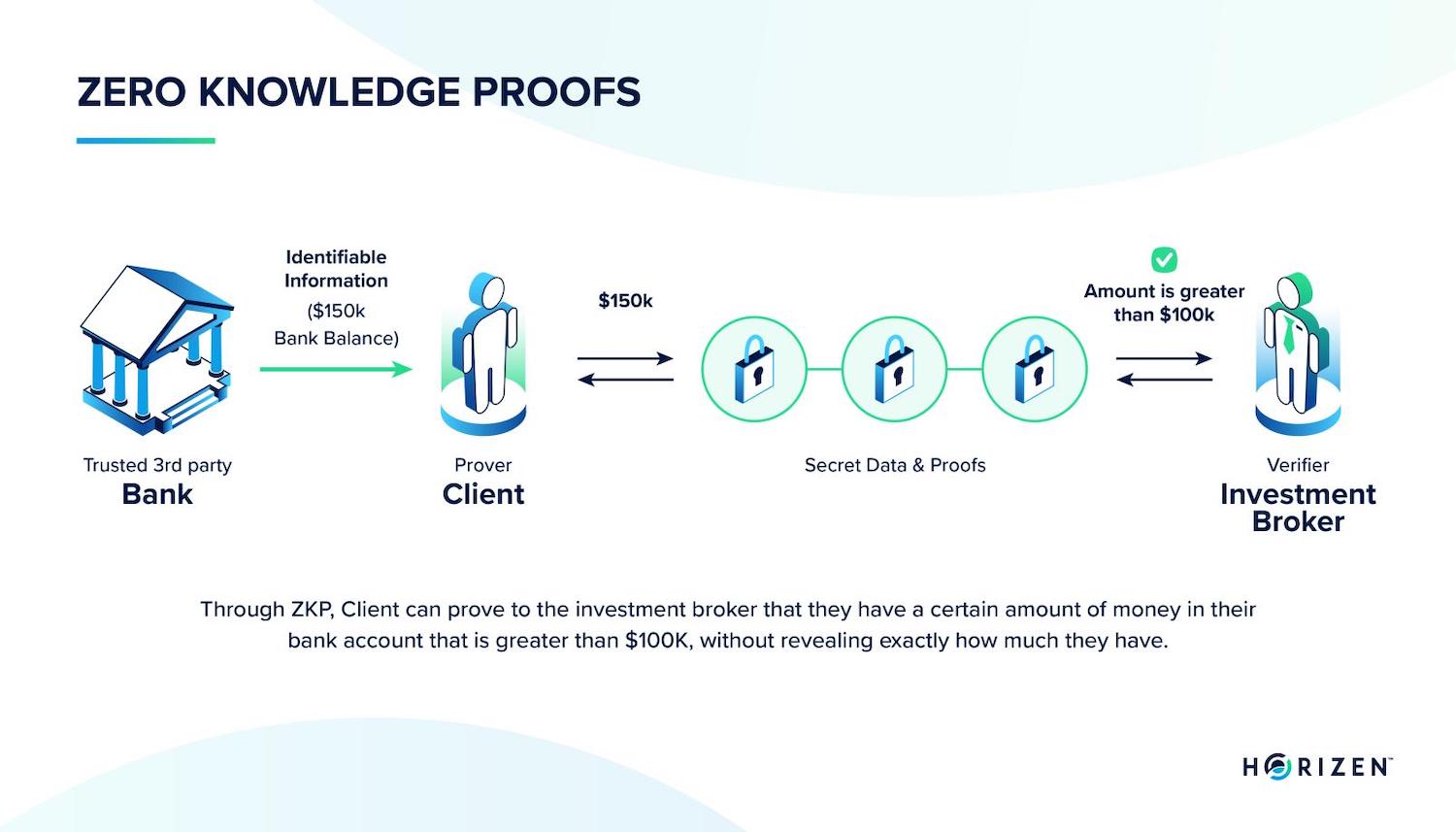
Zero-knowledge proofs (ZKPs) provide a cryptographic mechanism to validate a statement without revealing the underlying data itself. In the context of artificial intelligence, this technology has evolved into ZK machine learning (ZKML), a framework that allows third parties to verify AI behavior without exposing the model's proprietary weights or training datasets.
For enterprises, this distinction is critical. Traditional AI deployment requires trusting the provider's integrity. With ZKML, verification shifts from reliance on reputation to mathematical certainty. The system proves that a specific model architecture was used and that it adheres to strict constraints, such as regulatory compliance or data privacy boundaries, all while keeping the intellectual property hidden.
This capability addresses the "black box" problem that plagues high-stakes sectors like finance and healthcare. By generating a proof that the inference engine operated within defined parameters, organizations can deploy AI models with a level of auditability previously impossible. The result is a trust layer where the outcome is verifiable, but the source remains confidential.
As Ethereum.org explains, a zero-knowledge proof is a way of proving the validity of a statement without revealing the statement itself. Applied to AI, this means a prover can demonstrate that a model's output is correct and compliant without revealing the "witness"—the actual data or weights that generated it. This compression of verification is what enables secure, decentralized AI deployment.
Proving training data provenance
In the current AI compliance landscape, verifying the origin of training data is a high-stakes liability. Traditional audits require exposing proprietary datasets, creating a conflict between transparency and intellectual property protection. ZKML resolves this by allowing developers to cryptographically prove that a model was trained on specific, authorized data without revealing the data itself.
This mechanism functions like a sealed audit trail. The prover encodes the training process into a circuit, generating a proof that attests to the dataset's composition and licensing status. Verifiers can then validate the proof on-chain or in a decentralized network, confirming compliance with copyright laws and usage agreements without accessing the underlying weights or data samples.
According to Kudelski Security, ZKML facilitates this verification by compressing model verification, enabling trust in decentralized environments where data provenance is critical. This approach shifts the burden of proof from manual inspection to cryptographic assurance, reducing the risk of unlicensed data usage and associated legal penalties.
To implement this, teams must integrate ZK circuits into their training pipelines. The circuit must verify that the input data matches a whitelist of authorized sources. This ensures that every claim of "clean" training data is backed by mathematical proof, not just policy statements.
Verifying inference integrity
Verifying inference integrity requires balancing computational cost against the need for real-time assurance. The primary constraint is latency: generating a proof for a large language model can take minutes, making it unsuitable for interactive chatbots but viable for batch-processed financial reports or compliance checks.
When evaluating options, distinguish between must-have criteria and nice-to-have features. The must-have is the ability to prove the model architecture and input constraints. Nice-to-have features include faster verification speeds or support for specific non-deterministic operations. A practical choice survives normal use, maintenance, timing, and budget. If a recommendation only works in an ideal situation, call that out plainly and give the reader a fallback path.
ZKML Standards and Interoperability
The fragmentation of ZKML tools poses a systemic risk to enterprise adoption. Without a unified protocol, AI verification remains a siloed exercise, limiting cross-platform trust and increasing integration overhead. The emerging ZKML standards, led primarily by the ZKProof initiative, aim to resolve this by establishing an open-industry framework for cryptographic validation.
| Framework | Supported Models | Verification Speed | Standard Status |
|---|---|---|---|
| ZKProof | General ML/DL | High (Optimized Circuits) | Industry Standard |
| Sparta | Neural Networks | Medium | Research Phase |
| ZK-LLM | Large Language Models | Low (Heavy Compute) | Experimental |
| TensorProof | Linear/Convolutional | High | Emerging |
Interoperability is the critical asset in this market. Frameworks like ZKProof provide the foundational arithmetic circuits necessary for diverse models to communicate securely. While specialized libraries offer faster verification for specific architectures, they often lack the broad compatibility required for enterprise-scale compliance. As the ZKProof community drives mainstream adoption, the gap between experimental proofs and standardized verification will likely narrow, reducing the cost of trust for AI operators.
Adoption challenges in 2026
The transition from theoretical ZKML to production-grade verification faces three distinct headwinds. First, computational overhead remains the primary barrier. Generating a proof for a large language model requires arithmetizing the entire inference graph, a process that is currently orders of magnitude more expensive than standard execution. This cost structure limits ZK proofs to high-stakes compliance scenarios rather than routine inference.
Second, proof generation time introduces latency that conflicts with real-time applications. While verification is instantaneous, creation can take minutes or hours depending on the circuit complexity. As noted in recent research on LLM code generation, optimizing these circuits is an active area of development, but no standard solution yet exists for sub-second proof generation at scale [1].
Third, integrating ZK circuits with non-deterministic models like LLMs is technically fragile. Standard circuits struggle with floating-point operations and dynamic attention mechanisms, requiring complex approximations that can introduce noise. This complexity makes auditing the proof system itself a significant challenge for enterprise risk teams.
The market is currently valuing trust over speed. Until overhead drops, ZK proofs will remain a niche tool for regulatory reporting rather than a general AI infrastructure standard.
Frequently asked: what to check next
What is zk proven data?
ZK-proven data is cryptographically validated information that confirms a claim is true without revealing the underlying data. It acts as a trust layer for AI verification, allowing stakeholders to verify model outputs without exposing proprietary training data or internal weights. This mechanism ensures that the outcome is authentic, even if the system generating it is untrusted.
How to generate a ZK proof?
Generating a ZK proof involves encoding a "witness"—the secret knowledge or solution—into a mathematical circuit. The prover runs this circuit to create a proof that demonstrates knowledge of the solution without revealing the actual values. This process enables the verification of complex AI computations, such as model inference, while maintaining strict data privacy and integrity.
Why is ZKML critical for AI compliance?
ZKML provides a standardized way to audit AI models for regulatory compliance. By proving that a model adheres to specific constraints or ethical guidelines without exposing its architecture, organizations can mitigate legal risks. This is essential for high-stakes industries like finance and healthcare, where data sovereignty and model transparency are mandatory.
No comments yet. Be the first to share your thoughts!