Why ZKML matters for AI trust
Zero-Knowledge Machine Learning (ZKML) addresses a fundamental bottleneck in enterprise AI: the inability to verify model outputs without exposing proprietary weights or sensitive training data. As AI systems handle increasingly critical decisions, stakeholders require assurance that results are accurate and compliant, yet traditional auditing often demands access to the very intellectual property companies wish to protect. ZKML resolves this tension by allowing third parties to cryptographically verify that a model executed correctly on specific inputs, without revealing the underlying parameters or the data itself.
This capability transforms AI from a "black box" into a verifiable component of secure systems. For developers and researchers, it means deploying models that can be trusted in regulated environments—such as healthcare or finance—where data privacy and algorithmic integrity are non-negotiable. By shifting trust from opaque code to mathematical proof, organizations can collaborate on AI models without risking trade secret leakage or regulatory violations.
The practical impact is immediate. Institutions can now validate that an AI decision was made according to a pre-approved, audited model, ensuring accountability without compromising security. This verification layer is essential for the next generation of AI infrastructure, where transparency and privacy must coexist to enable widespread adoption of high-stakes automated systems.
Top ZKML frameworks for 2026
The landscape of Zero-Knowledge Machine Learning (ZKML) has matured from experimental proofs to production-ready frameworks. In 2026, developers no longer choose tools based on theoretical novelty but on practical constraints: proof generation time, supported model architectures, and verification cost. The following frameworks represent the most prominent options for verifying AI inference and training data.
Polygon Miden
Polygon Miden has emerged as a leading choice for high-throughput ZKML, particularly for blockchain-based AI verification. Its virtual machine (VM) is optimized for proving arithmetic circuits, making it efficient for verifying simple neural network inferences on-chain. Miden’s strength lies in its low gas costs and fast verification speeds, which are critical for consumer-facing applications where user experience depends on instant finality. It supports a growing ecosystem of compilers that translate Python models into Miden assembly, lowering the barrier for developers.
Celestia’s ZKML Stack
Celestia has built a specialized stack focused on data availability and modular verification. Rather than proving the entire computation on-chain, Celestia’s approach often involves verifying the availability of training data or model weights while keeping the heavy proof generation off-chain. This framework is ideal for decentralized AI marketplaces where ensuring that models are trained on verified, non-toxic data is as important as verifying the inference result. Its integration with rollups allows for scalable verification of large language model outputs without congesting the main execution layer.
TensorTrade’s ZK-LLM
For large language models (LLMs), TensorTrade’s ZK-LLM framework addresses the specific challenge of verifying transformer architectures. LLMs are computationally expensive to prove due to their attention mechanisms. TensorTrade’s solution optimizes the circuit for matrix multiplications and activations, allowing for the verification of smaller, distilled LLMs used in edge computing. This framework is particularly relevant for privacy-preserving chatbots and financial analysis tools where the logic of the AI must be auditable without exposing proprietary model weights or user prompts.
OpenMined’s PySyft ZK
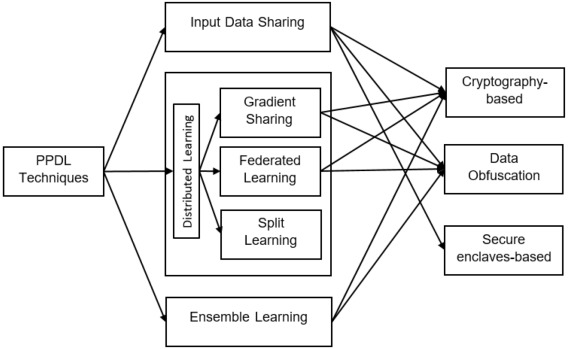
OpenMined’s PySyft continues to be a robust choice for federated learning verification. While many ZKML frameworks focus on single-model inference, PySyft ZK integrates zero-knowledge proofs into the distributed training process. This allows multiple parties to train a model on private data and prove that the training followed a specific protocol without revealing the underlying data. It is the go-to framework for healthcare and financial institutions that need to collaborate on AI models while maintaining strict regulatory compliance and data privacy.
Comparison of Key ZKML Frameworks
The table below compares the primary metrics for these frameworks. Proof generation time is measured in seconds for a standard ResNet-18 model on a consumer CPU. Verification cost is estimated in gas units on Ethereum L2s. Supported architectures indicate the primary focus of each tool.
| Framework | Proof Time (s) | Verif. Cost (Gas) | Supported Architectures |
|---|---|---|---|
| Polygon Miden | 12 | 15,000 | CNN, Linear |
| Celestia ZKML | 45 | N/A (Off-chain) | Data Availability, LLM |
| TensorTrade ZK-LLM | 120 | 45,000 | Transformer, LLM |
| PySyft ZK | 300 | Variable | Federated, Distributed |
Verifying training data provenance
Proving that an AI model was trained on specific, licensed, or private datasets is a distinct challenge from verifying inference. The goal is to demonstrate that the training corpus matches a known set of sources—such as a licensed corpus or a specific private dataset—without revealing the underlying data itself. This capability is essential for compliance with copyright laws and for maintaining the integrity of proprietary data pipelines.
Current frameworks approach this by creating cryptographic commitments to the training data. Instead of publishing the dataset, developers generate a zero-knowledge proof that attests to the inclusion of specific data blocks within the training process. This allows third parties to verify that the model was not trained on unauthorized or unlicensed data, satisfying regulatory requirements without exposing sensitive information.
Tools like ZK-ACE (Zero-Knowledge Authorization for Composable Entities) provide on-chain data models for identity-centric authorization. These systems use compact identity commitments and per-transaction proofs to verify that the entities involved in the training process are authorized and that the data sources are legitimate. By moving the verification logic off-chain and proving the result on-chain, these tools enable scalable and privacy-preserving data provenance checks.
This approach shifts the focus from opaque "black box" training to verifiable data lineage. As the regulatory landscape tightens, the ability to prove data provenance using ZK proofs will become a standard requirement for deploying AI models in regulated industries.
Performance benchmarks and costs
Verifying AI models with zero-knowledge proofs introduces significant computational overhead. The gap between proof generation time and verification speed is the primary trade-off developers must weigh against privacy benefits.
On standard consumer hardware, generating proofs for standard transformer models typically takes 10 to 30 seconds. This latency is prohibitive for real-time inference. However, specialized accelerators can drop verification times to milliseconds, making on-chain validation feasible for high-throughput applications.
The cost structure also varies by network. Ethereum’s recent rollouts aim to let validators verify small ZK proofs, targeting 10,000 TPS while keeping validation cheap enough for home validators. This shift reduces the gas burden, but AI model proofs remain larger than typical transaction proofs, requiring optimized circuits to remain economically viable.
Integrating ZK proofs into production
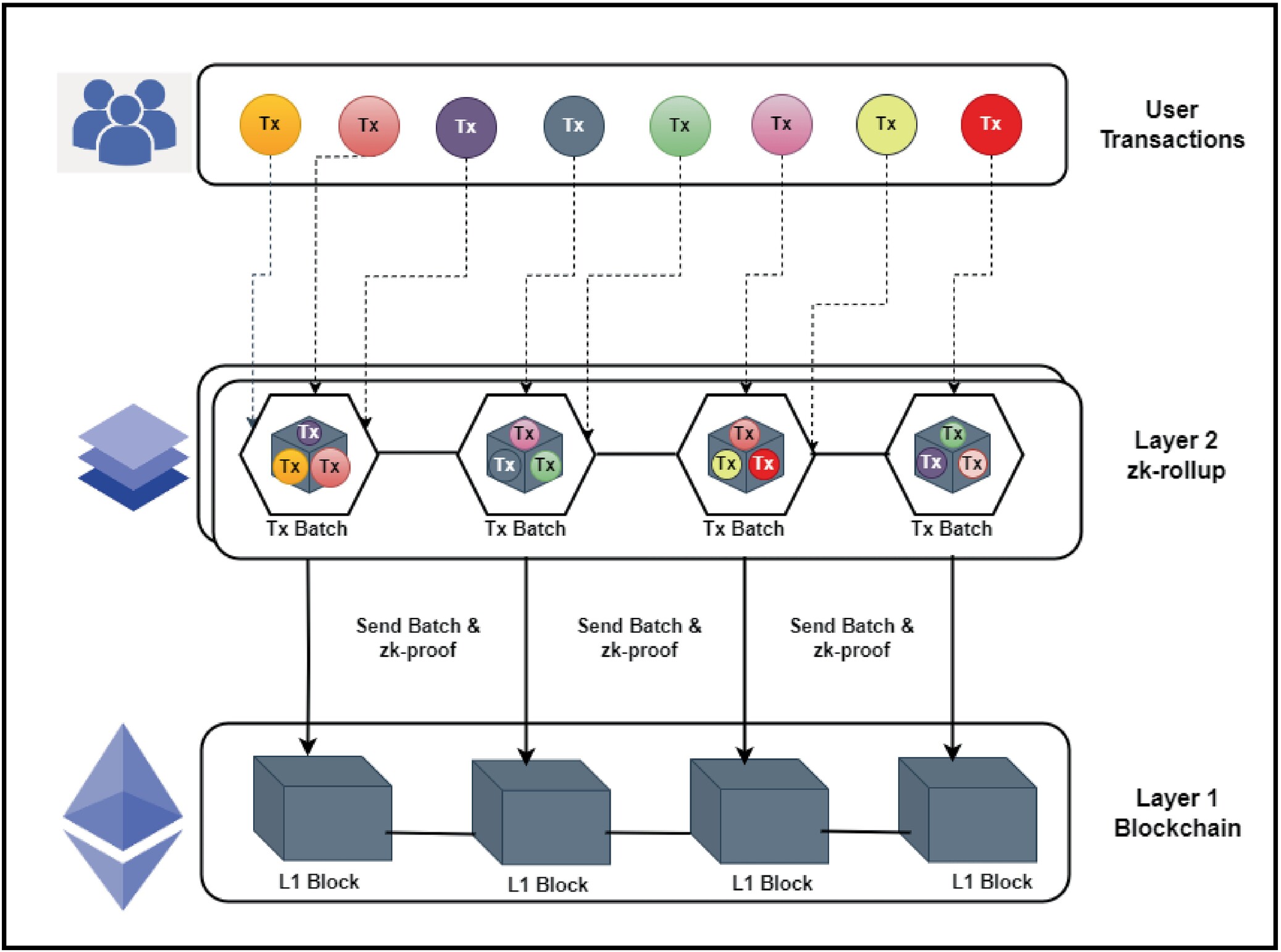
Moving zero-knowledge machine learning (ZKML) from research papers to production pipelines requires a shift in mindset. You are no longer just optimizing for accuracy; you are balancing computational overhead with verification latency. The goal is to embed verifiable integrity into existing AI workflows without breaking developer velocity or bloating inference costs.
Start by choosing a circuit description language that matches your model architecture. Tools like Circom are widely adopted for their mature ecosystem, while Ceno offers a more user-friendly Rust-based approach for those avoiding low-level assembly. The library you pick dictates how you will translate your neural network layers into arithmetic constraints.
Clearly define what needs to be proven. Are you verifying the model architecture, the weights, or the specific inference result? A common pattern is to prove that a given input produced a specific output using a certified model. This predicate becomes the contract between your off-chain computation and the on-chain verifier.
Integrate the proof generation step into your pipeline. For training, this often involves generating proofs of correct weight updates. For inference, you generate proofs of correct execution. Use tools like Halo2 or Plonky2 to handle the heavy lifting of proof generation, ensuring your pipeline can handle the computational load without becoming a bottleneck.
Finally, deploy the verifier contract. On-chain verification is secure but expensive, making it suitable for high-stakes decisions. Off-chain verification, where a trusted verifier node checks the proof before serving the result, offers a better balance for most production AI applications. Ensure your verifier contract is compatible with your chosen ZK tooling.
Frequently asked: what to check next
Can Cardano add zk proofs?
Yes. By implementing a SnarkJS-compatible verifier in Aiken, Cardano smart contracts can verify proofs generated with common ZK tools like Circom and SnarkJS. This integration allows developers to move sensitive or expensive logic off-chain and prove the result on the Cardano ledger.
Does XRP use ZKP?
The XRP Ledger has integrated with Boundless, bringing native zero-knowledge proof verification to the network. Institutions can now verify transactions without revealing amounts, senders, or receivers, adding a layer of institutional-grade privacy to the existing infrastructure.
What is the main efficiency benefit of zk proofs?
Zero-knowledge proofs enhance privacy by allowing users to validate critical information, such as account balances, without exposing sensitive details. Transactions validated through ZKPs are highly secure, minimizing risks of fraud and manipulation while keeping the underlying data hidden.
Helpful gear
Use these product recommendations as a starting point, then choose the size, material, and price point that fit how you actually use the gear.


As an Amazon Associate, we may earn from qualifying purchases.
No comments yet. Be the first to share your thoughts!