What zero-knowledge proofs deliver in 2026
Zero-knowledge proofs (ZKPs) are cryptographic methods that allow one party to prove the validity of a statement without revealing the statement itself [1]. In 2026, this capability has moved beyond abstract theory to become the foundational infrastructure for privacy and scalability in digital finance. By enabling a "prover" to demonstrate that data is authentic without exposing the underlying details, ZKPs solve the fundamental tension between transparency and confidentiality.
The practical utility of zero-knowledge proofs 2026 lies in their ability to scale blockchain networks. Instead of processing every transaction on the main chain, systems can generate a single proof that verifies thousands of transactions off-chain. This reduces network congestion and lowers costs while maintaining the security guarantees of the underlying protocol. For finance and technology audiences, this means faster settlements and lower fees without compromising auditability.
Consider a payment verification: a user can prove they have sufficient funds to complete a transaction without revealing their total balance or transaction history to the network. This selective disclosure is what makes ZKPs distinct from traditional encryption. While encryption hides data from everyone, ZKPs allow data to be verified by anyone while remaining hidden from observers who lack the specific cryptographic key.
As adoption grows, the distinction between zk-SNARKs and zk-STARKs becomes critical for developers choosing the right tool for their use case. Understanding the trade-offs between proof size, verification speed, and trust assumptions is essential for building robust systems in 2026.
zk-SNARKs vs zk-STARKs: Core Differences
In 2026, the choice between zero-knowledge proofs 2026 architectures hinges on balancing proof generation speed, verification efficiency, and trust assumptions. While both systems allow a prover to demonstrate knowledge of a secret without revealing it, their underlying cryptographic mechanisms lead to distinct operational trade-offs.
The primary distinction lies in their setup requirements and quantum resilience. zk-SNARKs (Succinct Non-Interactive Arguments of Knowledge) rely on a trusted setup ceremony to generate public parameters. This initial phase introduces a small but critical trust assumption: if the secret randomness from the ceremony is compromised, the entire system's security collapses. However, zk-SNARKs produce significantly smaller proofs and faster verification times, making them ideal for applications where bandwidth and on-chain verification costs are paramount.
Conversely, zk-STARKs (Scalable Transparent Arguments of Knowledge) eliminate the need for a trusted setup, relying instead on publicly verifiable randomness. This transparency makes them inherently quantum-resistant, as they do not depend on number-theoretic problems like integer factorization or discrete logarithms, which are vulnerable to quantum computing attacks. The trade-off is that STARKs generate larger proofs and require more computational resources to generate and verify them compared to SNARKs.
| Feature | zk-SNARKs | zk-STARKs |
|---|---|---|
| Proof Size | Small (KB range) | Large (MB range) |
| Verification Speed | Fast | Slower |
| Trusted Setup | Required | Not Required (Transparent) |
| Quantum Resistance | No | Yes |
| Cryptographic Basis | Elliptic Curves, Pairings | Hash Functions |
For most current enterprise and blockchain applications, zk-SNARKs remain the default choice due to their efficiency. However, as quantum computing capabilities advance and the demand for transparent, trust-minimized systems grows, zk-STARKs are gaining traction for long-term security needs. The ZKProof organization continues to standardize these protocols to ensure interoperability and security across both systems.
When to choose zk-SNARKs for rollups
zk-SNARKs (Succinct Non-Interactive Arguments of Knowledge) remain the standard for Layer 2 rollups that prioritize minimal on-chain data costs. Their primary advantage lies in proof size: a single SNARK proof is typically under 200 bytes. This compact footprint allows L2s to post proof data on Ethereum mainnet without consuming excessive gas, keeping transaction fees low for end users. In contrast, zk-STARKs often require proofs that are several kilobytes in size, which can become prohibitively expensive on high-fee networks.
For projects where immediate finality and small verification costs are critical, zk-SNARKs offer a more efficient path. Because the verifier only needs to check a tiny piece of data, the computational load on Ethereum validators is negligible. This efficiency makes zk-SNARKs particularly well-suited for payment-focused rollups, such as zkSync or Scroll, where thousands of transactions are batched and verified in a single, small proof. The trade-off is the requirement for a trusted setup ceremony during initialization, which introduces a one-time security assumption. However, once established, the system operates with high predictability and low overhead.
Ethereum.org notes that zero-knowledge proofs allow the validity of a statement to be verified without revealing the statement itself, a principle that underpins all rollup architectures Ethereum.org. For developers choosing between proof systems in 2026, zk-SNARKs are the pragmatic choice when the priority is reducing on-chain gas consumption rather than maximizing long-term cryptographic resilience against quantum threats. If your application requires frequent, low-cost verification on mainnet, zk-SNARKs provide the necessary scale.
When to choose zk-STARKs for security
zk-STARKs are the preferred choice for high-stakes environments where long-term data integrity and quantum resistance are non-negotiable. Unlike zk-SNARKs, which rely on elliptic curve cryptography, STARKs use hash functions that are resistant to attacks from quantum computers. This makes them ideal for securing financial records or health data that must remain private for decades.
The absence of a trusted setup is another major advantage. With zk-SNARKs, the initial ceremony to generate public parameters must be kept secret; if compromised, an attacker could forge proofs. STARKs eliminate this single point of failure by generating parameters publicly and deterministically. This transparency is critical for decentralized finance (DeFi) protocols that cannot rely on a central authority to vouch for their security foundations.
While STARKs produce larger proofs and require more computational power to generate, the trade-off is justified in contexts where security outweighs speed. For applications like state channels or layer-2 scaling solutions that need to prove validity without revealing underlying transaction details, STARKs offer a robust, future-proof framework. As noted in recent cybersecurity analyses, the shift toward transparent, quantum-resistant proofs is becoming a standard for next-generation zero-knowledge proofs 2026 implementations.
Real-world zero-knowledge proofs 2026 applications
Zero-knowledge proofs 2026 extend far beyond blockchain scaling. The technology now secures identity verification, model provenance, and private data sharing across finance and healthcare. By allowing one party to prove a statement is true without revealing the underlying data, ZKPs solve the privacy-versus-transparency dilemma that has long hindered digital trust.
Age verification is a primary use case. Instead of uploading a scanned driver’s license—exposing your address, license number, and expiration date—ZKP age assurance allows a user to generate a cryptographic proof that they are over 18. Google has highlighted this approach as a way to promote privacy in age assurance, enabling compliance with regulations without storing sensitive biometric or identification data source.
In AI and machine learning, ZKPs verify model outputs without exposing the training data or the proprietary algorithm itself. This "model provenance" allows enterprises to audit the integrity of AI decisions while keeping their intellectual property secure. It ensures that a financial model’s risk assessment is valid without revealing the bank’s sensitive customer data or the specific weights of the neural network.
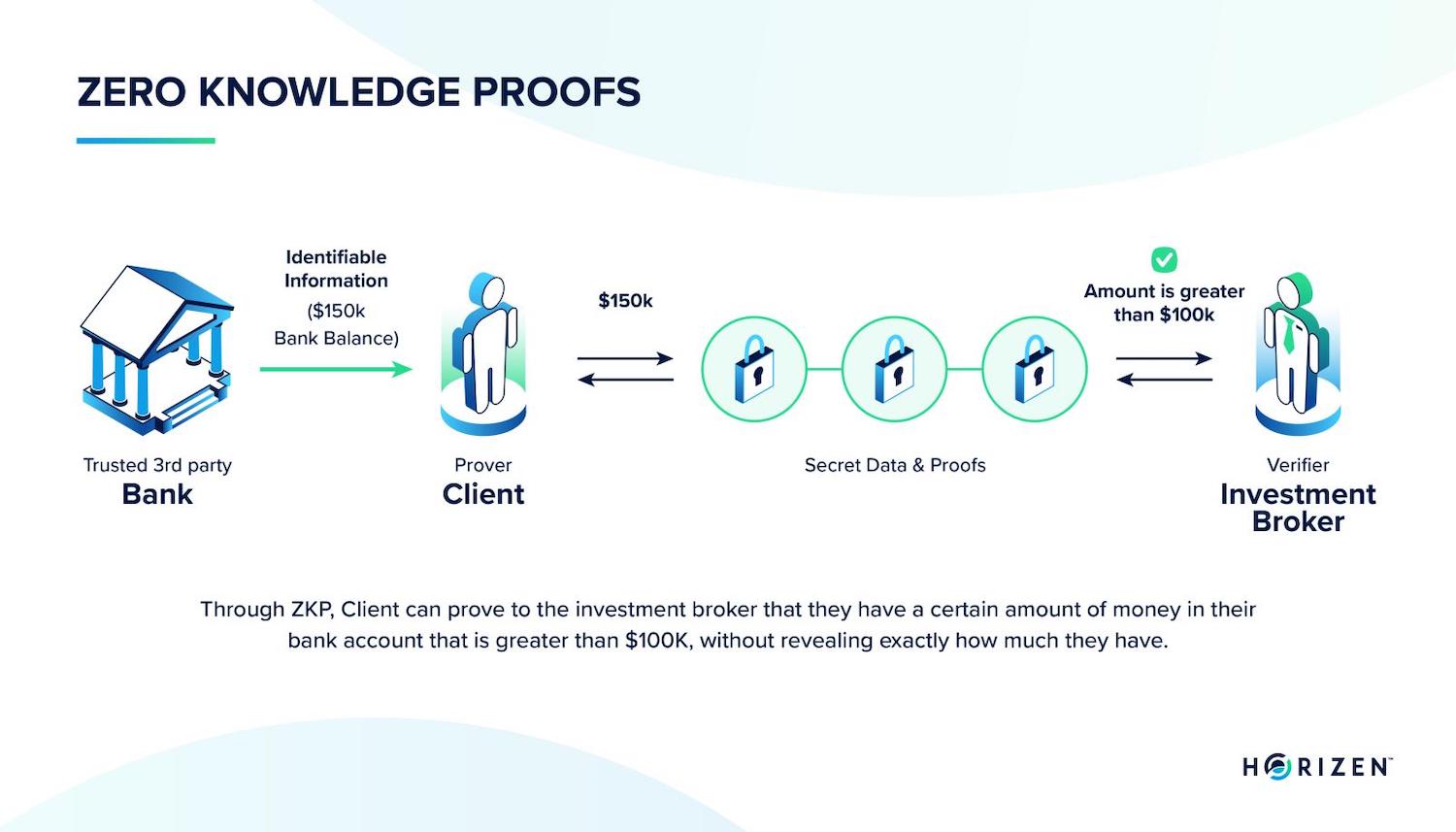
These applications demonstrate that ZKPs are no longer just theoretical cryptographic constructs. They are practical tools for maintaining confidentiality in an increasingly regulated digital economy. As adoption grows, the focus shifts from proof generation speed to seamless integration with existing identity and data infrastructure.
Frequently asked questions about zero-knowledge proofs 2026
As zero-knowledge proofs 2026 implementations move from experimental to mainstream, practical concerns around cost, speed, and trust assumptions dominate the conversation. Below are the most common questions regarding zk-SNARKs and zk-STARKs.
No comments yet. Be the first to share your thoughts!