What zkML actually proves
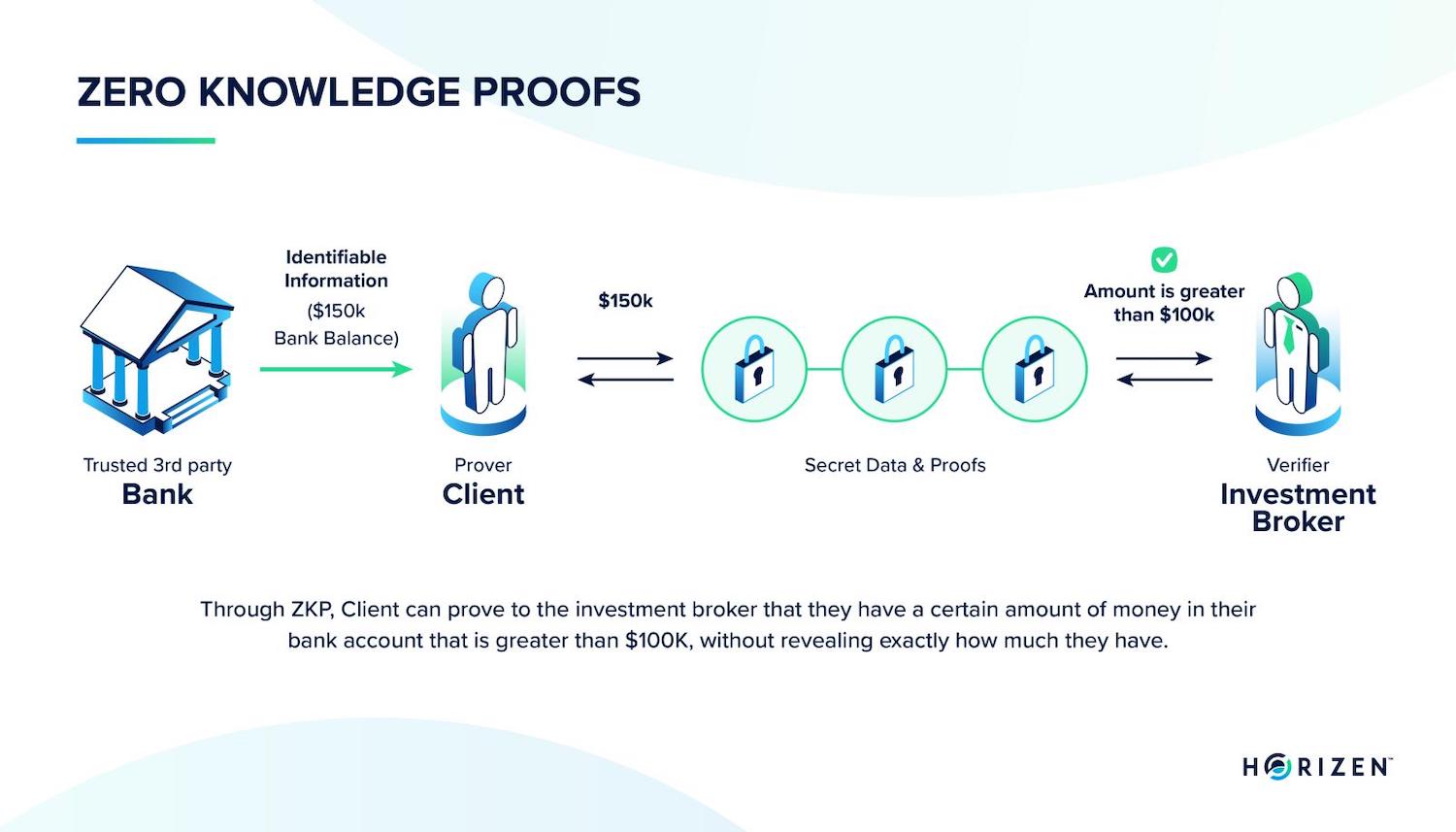
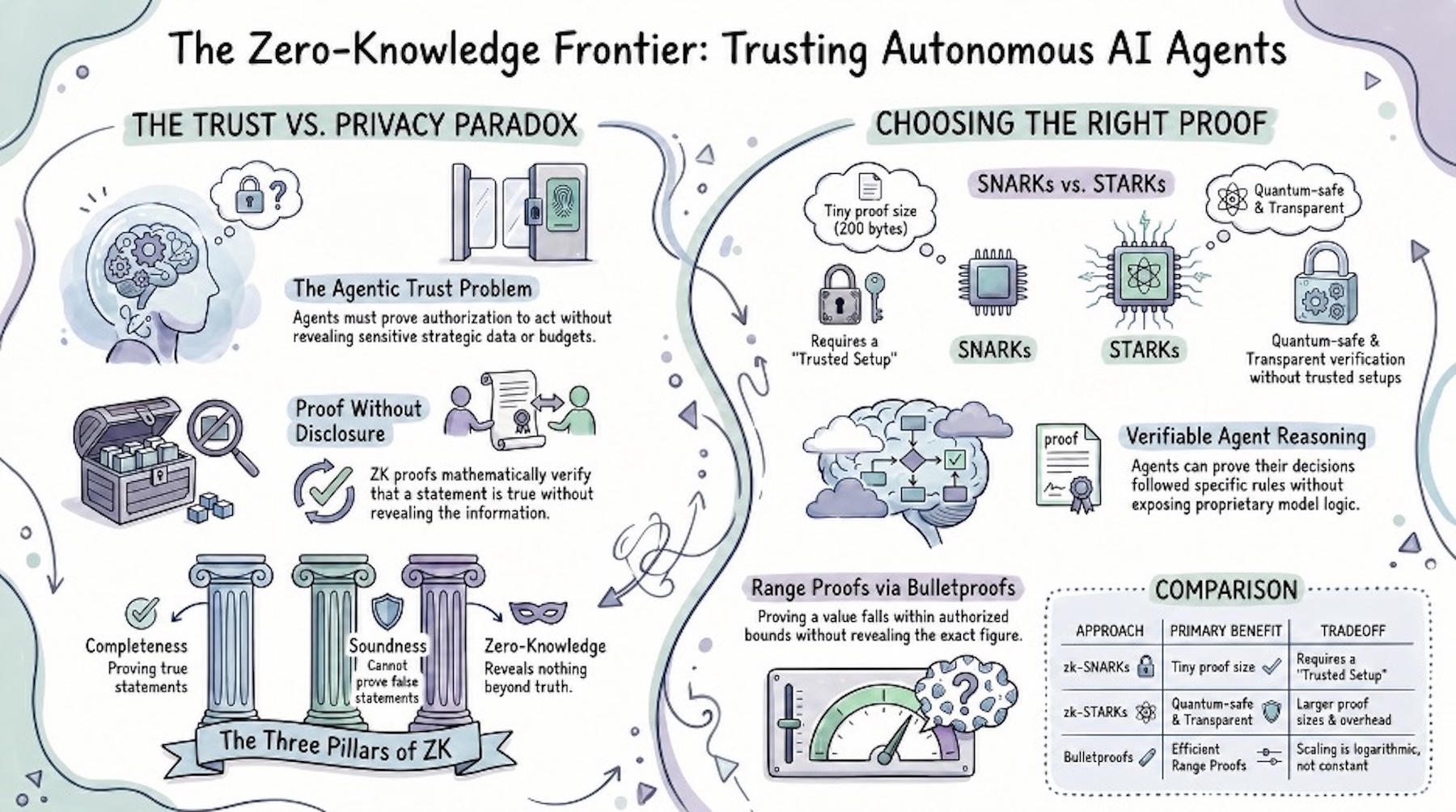
Zero-knowledge machine learning (zkML) introduces a cryptographic verification layer for artificial intelligence. It allows a system to prove that a model executed correctly without exposing the underlying computations, proprietary weights, or sensitive input data. This capability distinguishes zkML from standard security measures, which typically protect data in transit or at rest but do not verify the integrity of the computation itself.
The technology combines zero-knowledge proofs (ZKPs) with machine learning algorithms to address privacy concerns inherent in traditional systems. By leveraging ZKPs, zkML enables one party to certify that a training, testing, or inference result was produced by the claimed computation. This certification occurs without revealing the sensitive data or proprietary model parameters involved in the process 1.
In practical terms, zkML proves correct execution. A service provider can demonstrate that an AI model ran on specific inputs and produced a valid output, while keeping the model's architecture and the user's data confidential. This is critical for high-stakes environments where trust in the AI's decision-making process is required, but proprietary or private information cannot be shared.
The distinction between zkML and traditional AI security is fundamental. Standard security prevents unauthorized access to data. zkML prevents unauthorized modification of the verification process and ensures that the output is mathematically tied to the correct model and inputs. This creates a verifiable trust layer for AI applications, particularly in finance and regulated industries where auditability and privacy are paramount.
Tracking the zKML token market
The zKML token serves as the financial interface for a protocol that uses zero-knowledge proofs to verify machine learning models. Its market performance reflects investor sentiment toward the broader adoption of verifiable AI. As the technology matures, the asset’s liquidity and price action provide a real-time gauge of institutional interest in privacy-preserving computation.
Current market data indicates a live price of $0.008058 USD, with a 24-hour trading volume of $0 USD according to CoinMarketCap. This zero-volume snapshot suggests the token may be in a pre-trading or low-liquidity phase, requiring caution for active traders. The absence of immediate trading activity highlights the early-stage nature of the zKML ecosystem, where technological milestones often precede robust market infrastructure.
For those monitoring the technical trajectory, the ZKML/USD chart offers insight into volatility patterns and support levels. Understanding these metrics is essential for assessing the asset’s potential as the zkML protocol integrates with larger blockchain networks.
Proving inference without revealing weights
Use this section to make the zkML decision easier to compare in real life, not just on paper. Start with the reader's actual constraint, then separate must-have requirements from details that are merely nice to have. A practical choice should survive normal use, maintenance, timing, and budget. If a recommendation only works in an ideal situation, call that out plainly and give the reader a fallback path.
The simplest way to use this section is to write down the must-have criteria first, then compare each option against those criteria before weighing nice-to-have features.
Comparing zkML verification approaches
Verifying AI models on-chain requires choosing a zkML framework that balances proof generation speed, output size, and architectural compatibility. The landscape is fragmented, with different approaches prioritizing either developer ease or cryptographic efficiency.
Polyhedra Network
Polyhedra Network focuses on a universal zkML infrastructure, aiming to support a wide range of AI models and frameworks. Its approach emphasizes developer friendliness and broad compatibility, making it a strong candidate for enterprises integrating existing AI stacks into blockchain environments.
Worldcoin
Worldcoin’s approach leverages zero-knowledge proofs for specific, high-stakes use cases like identity verification and exploit detection. Their work, documented in community resources like the awesome-zkml repository, demonstrates how ZK proofs can certify model integrity without exposing sensitive data, particularly in anomaly detection scenarios.
Comparison of zkML Frameworks
The table below summarizes the trade-offs between leading zkML implementations as of 2026.
| Framework | Primary Focus | Proof Speed | Architecture Support |
|---|---|---|---|
| Polyhedra Network | Universal Infrastructure | Moderate | Broad AI Frameworks |
| Worldcoin | Identity & Security | Fast | Specific ML Models |
| Custom ZK-ML | High-Privacy Audits | Slow | Limited/Custom |
Building a zkML verification checklist
Zero-knowledge machine learning (zkML) moves beyond theoretical cryptography into operational reality. For developers and analysts, the primary goal is verifying that an AI model executed correctly without exposing proprietary weights or sensitive user data. A robust verification checklist ensures that the chosen zkML solution balances computational overhead with cryptographic assurance.
Assess proof generation time
Proof generation is the most computationally intensive phase of zkML. Systems like ZKML optimize circuit layouts to reduce this friction, but latency remains a critical bottleneck for real-time inference [src-serp-1]. Evaluate the time required to generate a proof for your specific model architecture. If generation exceeds acceptable thresholds for your application, consider distilling larger models or using lighter alternatives like GPT-2 variants [src-serp-5].
Analyze verification cost
On-chain verification costs directly impact the economic viability of zkML applications. High gas fees for proof verification can render privacy-preserving AI impractical for high-frequency trading or micro-transaction contexts. Compare the verification costs across different zkML frameworks. Lower-cost verification often requires trade-offs in proof size or circuit complexity, so prioritize solutions that offer efficient recursive proof aggregation [src-serp-6].
Confirm model support
Not all zkML protocols support the same model types. Some frameworks specialize in vision models, while others focus on natural language processing [src-serp-1]. Ensure the zkML solution explicitly supports your model’s architecture, including specific layers and activation functions. Lack of native support often requires complex workarounds that increase both generation time and verification risk [src-serp-2].
Evaluate privacy guarantees
zkML’s core value proposition is privacy preservation. Verify that the zero-knowledge proof system truly hides model parameters and input data. Look for protocols that provide formal privacy definitions and have undergone security audits. Weak privacy guarantees undermine the entire purpose of using zkML in sensitive financial or healthcare applications [src-serp-3].
Identify the specific ML tasks requiring verification. Determine if you need proof of training, inference, or both. This clarity dictates the necessary zkML protocol and circuit complexity.
Choose a framework that supports your model architecture. Compare proof generation times and verification costs. Prioritize frameworks with active development and community support.
Generate proofs for sample inputs. Verify them on your target blockchain or verification layer. Measure latency and cost against your initial requirements. Iterate on circuit design if performance is insufficient.
No comments yet. Be the first to share your thoughts!