What ZK model proofs 2026 mean for AI
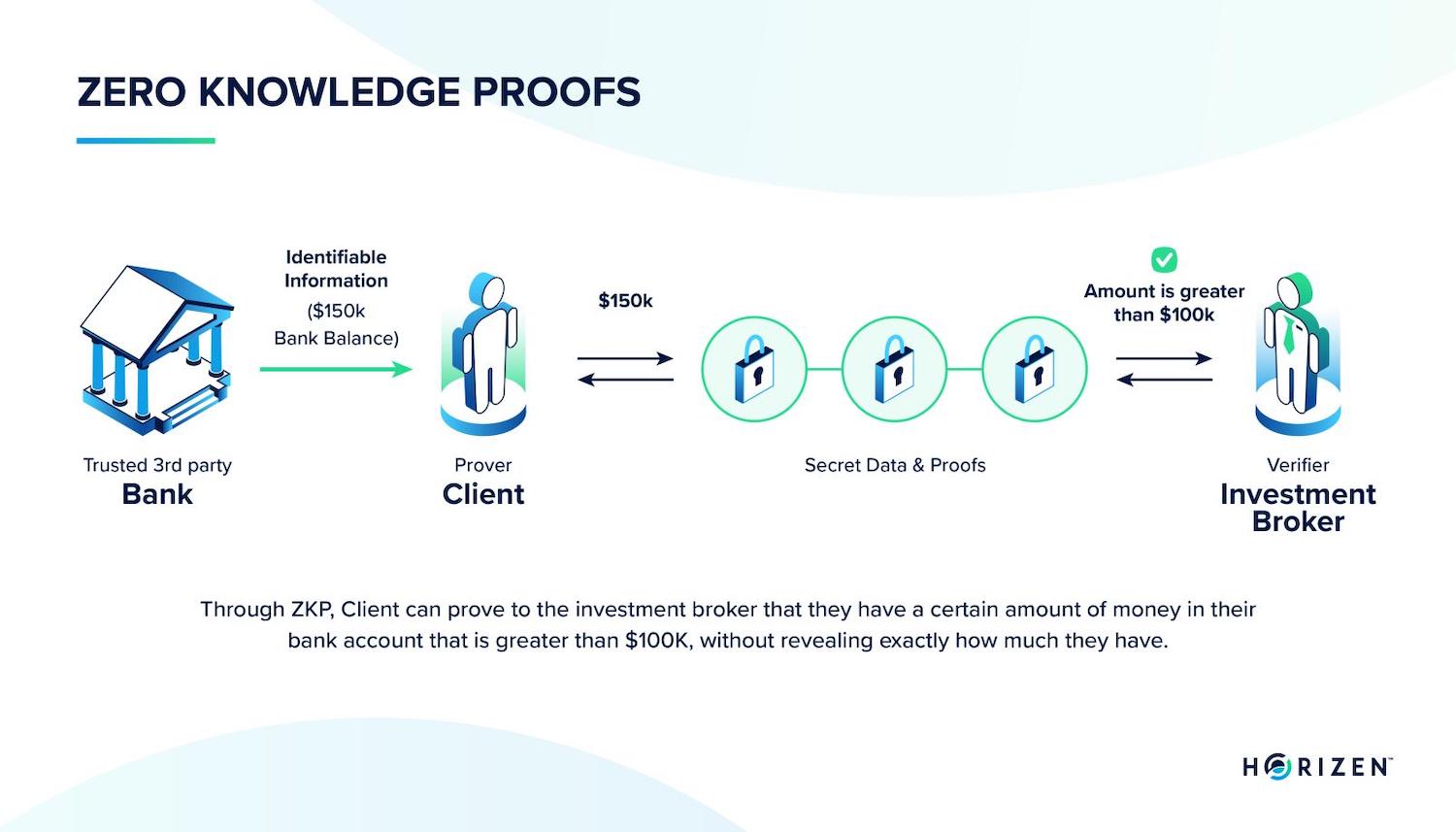
Zero-knowledge proofs (ZKP) allow enterprises to verify the integrity of AI models without exposing proprietary weights or training data. In 2026, this capability shifts from a cryptographic curiosity to a core requirement for enterprise risk management. By using ZK model proofs 2026, organizations can demonstrate compliance with copyright laws, data privacy regulations, and bias mitigation standards while keeping their intellectual property secure.
The mechanism works by generating a mathematical proof that a specific output was derived from a verified dataset and model architecture. A verifier can check this proof instantly without ever seeing the underlying data. This solves the fundamental trust deficit in AI adoption: how to audit a "black box" model without compromising trade secrets.
For financial institutions, healthcare providers, and legal tech firms, this means AI can be deployed with auditable guarantees. Instead of relying on vendor self-certification, companies can cryptographically prove that their models were trained on licensed data and have not been tampered with. This transparency is essential for meeting upcoming regulatory frameworks in the EU and US.
The technology also enables verifiable inference. Clients can confirm that a model executed a specific algorithm without revealing the model's parameters. This is particularly valuable for high-stakes decision-making where accountability is non-negotiable. As the ecosystem matures, ZK model proofs 2026 will likely become the standard for any AI system handling sensitive or regulated data.
zk-SNARKs vs. zk-STARKs for model verification
Verifying large language models requires balancing proof efficiency with cryptographic security. The choice between zk-SNARKs and zk-STARKs defines how enterprises deploy ZK model proofs 2026. zk-SNARKs offer smaller proof sizes and faster verification, making them ideal for on-chain or bandwidth-constrained environments. zk-STARKs prioritize transparency and post-quantum security, trading larger proof sizes for immunity to trusted setups.
Proof Size and Verification Speed
Proof size directly impacts storage costs and network latency. zk-SNARKs typically generate proofs ranging from 200 to 500 bytes, allowing rapid verification on lightweight devices. zk-STARKs produce proofs that can be several kilobytes to megabytes in size, depending on the circuit complexity. This size difference matters significantly when verifying complex neural network weights, where bandwidth is a bottleneck.
Verification time for zk-SNARKs is generally sub-second, even for large circuits, due to optimized elliptic curve pairings. zk-STARKs use hash-based constructions that are slightly slower to verify but scale better with circuit size. For real-time model inference checks, zk-SNARKs provide a speed advantage. For batch verification or archival auditing, zk-STARKs remain viable despite the larger data footprint.
Trusted Setup and Post-Quantum Security
The trusted setup requirement is a critical differentiator. zk-SNARKs like Groth16 require a trusted ceremony to generate public parameters. If the setup is compromised, an attacker could generate fake proofs without detection. This creates a single point of failure that enterprises must manage carefully. zk-STARKs are transparent, meaning no trusted setup is needed. Security relies solely on cryptographic hash functions, which are widely considered post-quantum resistant.
This distinction influences long-term risk assessment. zk-STARKs eliminate the need for ongoing ceremony management and reduce reliance on specific elliptic curve assumptions. zk-SNARKs rely on the hardness of the discrete logarithm problem, which quantum computers could eventually break. For models requiring decades-long verification integrity, zk-STARKs offer stronger future-proofing.
Decision Framework
The selection depends on the verification context. Use zk-SNARKs when proof size, verification speed, and on-chain gas costs are primary constraints. Use zk-STARKs when transparency, post-quantum security, and scalability with circuit size are more important than bandwidth efficiency.
| Feature | zk-SNARKs | zk-STARKs |
|---|---|---|
| Proof Size | Small (200-500 bytes) | Large (KB to MB) |
| Verification Speed | Fast (sub-second) | Moderate |
| Trusted Setup | Required | Not Required |
| Post-Quantum Security | Vulnerable (Elliptic Curves) | Resistant (Hash-Based) |
| Transparency | Private (requires setup) | Transparent |
| Feature | zk-SNARKs | zk-STARKs |
|---|---|---|
| Proof Size | Small (200-500 bytes) | Large (KB to MB) |
| Verification Speed | Fast (sub-second) | Moderate |
| Trusted Setup | Required | Not Required |
| Post-Quantum Security | Vulnerable | Resistant |
| Transparency | Private | Transparent |
ZKProof 8 and the push for standardization
The ZKProof consortium is moving beyond theoretical research to establish formal, enforceable standards for ZK model proofs 2026. By defining rigorous interoperability protocols, the organization aims to eliminate the fragmentation that currently plagues enterprise adoption. Without these standards, integrating zero-knowledge verification into existing AI pipelines remains a costly, error-prone exercise.
The 8th ZKProof Workshop, scheduled for May 9–10, 2026, in Rome, serves as the primary venue for this standardization effort. The event is accepting submissions focused on dynamic zk-SNARKs and sparse proof systems, areas critical for scaling AI model verification. This gathering brings together researchers and engineers to align on the technical specifications that will define the next generation of privacy-preserving AI infrastructure.
Standardization directly reduces integration friction for enterprises. When proof formats and verification APIs are unified, companies can deploy ZK solutions across different blockchains and AI platforms without rebuilding their verification layers. This consistency transforms ZK proofs from experimental prototypes into reliable, auditable components of enterprise software stacks.
For the latest updates on workshop submissions and technical tracks, visit the ZKProof 8 Call for Papers.
Enterprise use cases for model verification
ZK model proofs 2026 are moving from theoretical cryptography to concrete enterprise compliance tools. They allow organizations to verify that AI models were trained on authorized data, meet safety benchmarks, and process private inputs without exposing the underlying information.
Proving training data origin
Copyright compliance is a primary driver for enterprise adoption. ZK proofs allow companies to generate cryptographic evidence that their models were trained exclusively on licensed or public domain datasets. This proves origin without revealing the full training corpus, which is often proprietary or contains sensitive legal information. By attaching these proofs to model weights, enterprises can demonstrate due diligence in copyright audits.
Verifying safety and bias metrics
Regulators are increasingly demanding evidence of model fairness. ZK proofs enable the verification of safety metrics—such as bias scores or toxicity thresholds—without exposing the raw training data or internal model parameters. This allows enterprises to prove compliance with safety standards to auditors and regulators while maintaining competitive secrecy around their proprietary model architectures.
Enabling private inference
Beyond training, ZK proofs facilitate private inference, allowing businesses to run AI models on sensitive client data without the service provider ever seeing the input. This is critical for healthcare, finance, and legal sectors where data privacy laws like HIPAA or GDPR strictly prohibit data exposure. The model computes the result, and the ZK proof verifies the computation was correct, ensuring both utility and confidentiality.
-
Does the proof system support post-quantum security?
-
Is there a trusted setup required?
-
Are there standardized verification interfaces?
FAQs on ZK model proofs 2026
Can Cardano add zk proofs?
Cardano is integrating ZK capabilities by implementing a PLONK verifier in Aiken. This allows smart contracts to verify proofs generated by tools like Circom and SnarkJS, enabling sensitive logic to run off-chain while maintaining on-chain verification integrity.
How do ZK proofs verify AI model training data?
Zero-knowledge proofs allow an AI provider to demonstrate that a model was trained on specific, compliant datasets without revealing the data itself. In 2026, this standardizes enterprise trust by cryptographically proving data lineage and privacy compliance.
Are ZK model proofs 2026 ready for enterprise use?
Yes. The ZKProof 8 conference in Rome (May 2026) highlighted dynamic zk-SNARKs and standardized verification protocols, signaling that infrastructure for enterprise-grade model proofs has matured beyond experimental phases.
No comments yet. Be the first to share your thoughts!