
Get zero-knowledge proofs 2026 right
Before writing a single line of circuit code, you must define the exact privacy boundary your enterprise needs. Zero-knowledge proofs are not a blanket solution; they are a precise cryptographic tool that proves a statement is true without revealing the statement itself. Confusing general encryption with zero-knowledge privacy will lead to architectural failures that cost significant engineering time to fix.
Start by selecting the right proof system for your use case. zk-SNARKs offer smaller proofs and faster verification, making them ideal for on-chain or bandwidth-constrained environments, but they require a trusted setup ceremony. If your organization cannot accept the risk of a trusted setup or needs to avoid polynomial-time assumptions, zk-STARKs provide quantum resistance and transparent setup, though with larger proof sizes. This choice dictates your entire infrastructure stack.
Next, verify your team’s cryptographic literacy. Implementing zk-SNARKs or zk-STARKs requires deep understanding of finite fields, elliptic curves, and polynomial commitments. Do not rely on black-box libraries for core logic. Engage with the ZKProof community standards to ensure your implementation aligns with industry benchmarks for security and interoperability. Skipping this step often results in subtle vulnerabilities that compromise the entire privacy guarantee.
Implementing zero-knowledge proofs
Deploying zk-SNARKs or zk-STARKs for enterprise privacy requires moving from theoretical parameters to a production-ready circuit. The goal is to generate a proof that verifies a statement without revealing the underlying data, ensuring compliance and security. This guide walks through the essential steps to build, test, and deploy a zero-knowledge proof system.

Start by clearly separating what must remain hidden from what is publicly verifiable. Private inputs are the sensitive data (e.g., user balances, transaction amounts) that must never leave the prover’s environment. Public inputs are the parameters that everyone, including the verifier, can see (e.g., the block hash, the contract address). Misclassifying these inputs is the most common source of privacy leaks. Document this separation explicitly in your circuit’s interface to prevent accidental exposure during compilation.
Select between zk-SNARKs and zk-STARKs based on your enterprise constraints. zk-SNARKs offer smaller proof sizes and faster verification, making them ideal for mobile or high-throughput blockchain environments, but they require a trusted setup ceremony to generate public parameters. zk-STARKs are quantum-resistant and do not require a trusted setup, but produce larger proofs and require more computational power for proving. For enterprise privacy where data integrity over decades is critical, zk-STARKs are often preferred despite the overhead.
Translate your business logic into a constraint system using a language like Circom, SnarkJS, or Noir. The circuit defines the mathematical rules that the private inputs must satisfy to generate a valid proof. Focus on minimizing the number of gates (constraints) to reduce proving time. Avoid complex branching logic; instead, use arithmetic constraints to represent conditional statements. This step is where most performance bottlenecks occur, so profile your circuit early.

If you selected zk-SNARKs, you must execute a trusted setup ceremony. This process generates public parameters (a "toxic waste" set) that, if compromised, would allow an attacker to forge proofs. Use a multi-party computation (MPC) ceremony like the one organized by ZKProof to ensure no single party holds the full toxic waste. Record the ceremony’s hash and publish the resulting parameters on a immutable ledger. Never skip this step for production systems.
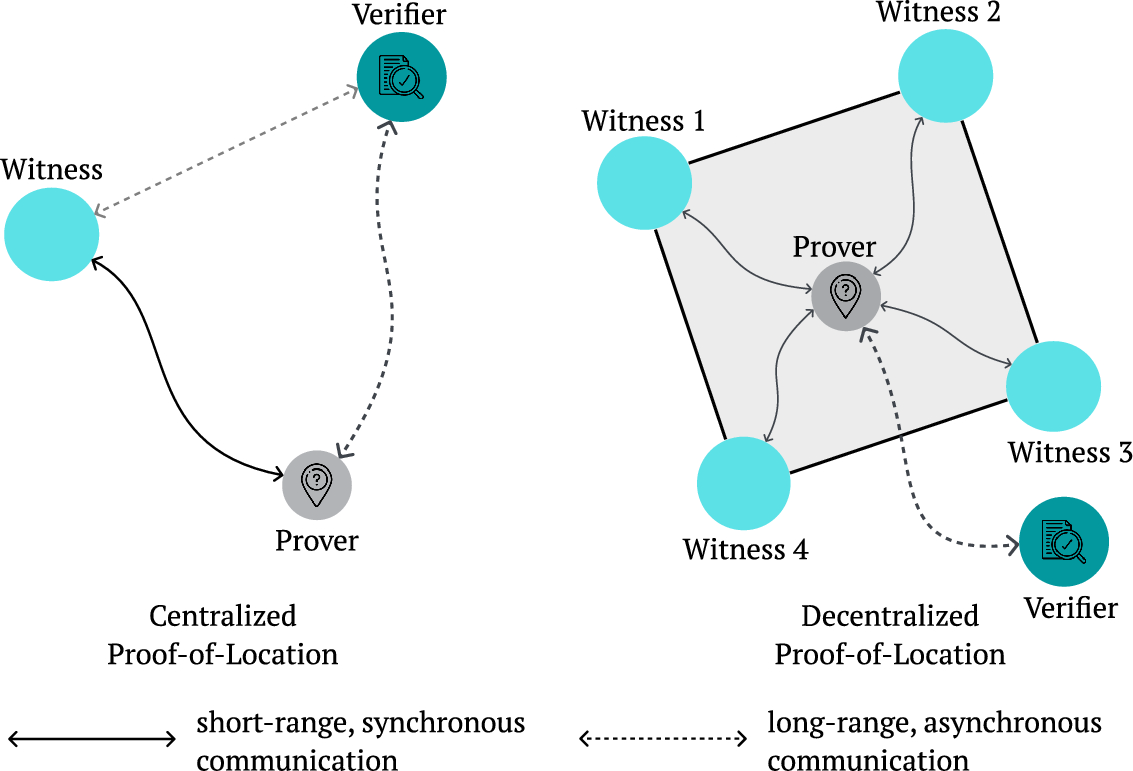
Compile the circuit and generate the proof using your private and public inputs. The prover creates a cryptographic proof that the circuit was executed correctly. The verifier then checks this proof against the public parameters. Ensure your verification logic is integrated into your smart contract or verification service. Test with known failing inputs to ensure the verifier correctly rejects invalid proofs. This step confirms that your system is ready for real-world data.
Common mistakes in zero-knowledge proof implementation
Enterprise teams often treat zero-knowledge proofs as a drop-in privacy layer rather than a complex cryptographic protocol that requires careful parameter tuning and verification logic. The most frequent error is selecting a proof system without matching it to the specific computational constraints of the use case. zk-SNARKs offer small proof sizes but require a trusted setup, which introduces a single point of failure if the ceremony is not managed correctly. zk-STARKs eliminate the trusted setup but produce significantly larger proofs and require more computational power to generate. Choosing the wrong system leads to either unacceptable latency or security vulnerabilities that undermine the entire privacy architecture.
Another critical mistake is neglecting the verifier’s cost. While generating a proof can be optimized, verifying it must be efficient enough for on-chain or high-throughput off-chain environments. Many implementations fail because they generate proofs that are too large for the target chain’s block size limits, causing transaction failures or excessive gas fees. Teams also often overlook the importance of circuit design. Writing inefficient circuits results in unnecessary constraints, slowing down both proof generation and verification. A well-designed circuit should minimize the number of gates and avoid unnecessary branching logic.
Finally, many teams skip rigorous testing of edge cases. Zero-knowledge circuits are deterministic; a single error in constraint definition can lead to false proofs or failed verifications. Without comprehensive test suites that cover boundary conditions and invalid inputs, the system becomes unreliable in production. Always validate proofs against known test vectors and perform stress tests under peak load to ensure stability.
Zero-knowledge proofs 2026: what to check next
Before committing to a zk-SNARK or zk-STARK implementation, teams often hit the same practical walls. Below are the most common objections enterprise architects raise in 2026, along with the tradeoffs that matter for production systems.
No comments yet. Be the first to share your thoughts!