The shift to verifiable AI
For years, artificial intelligence has operated as a black box. Users feed data into massive models and receive answers, but the internal reasoning remains hidden. This opacity creates a trust gap that is becoming impossible to ignore as AI moves from experimental tools to critical infrastructure. In 2026, the industry is turning to zero-knowledge proofs to close that gap, shifting from trusting the model to verifying its output.
Zero-knowledge proofs allow a system to prove that a computation was performed correctly without revealing the underlying data or the model's internal weights. Think of it like a sealed envelope: you can verify the seal is intact and the letter inside matches the expected content without ever opening the envelope to read the private details. This cryptographic guarantee ensures that AI inference is both private and accurate.
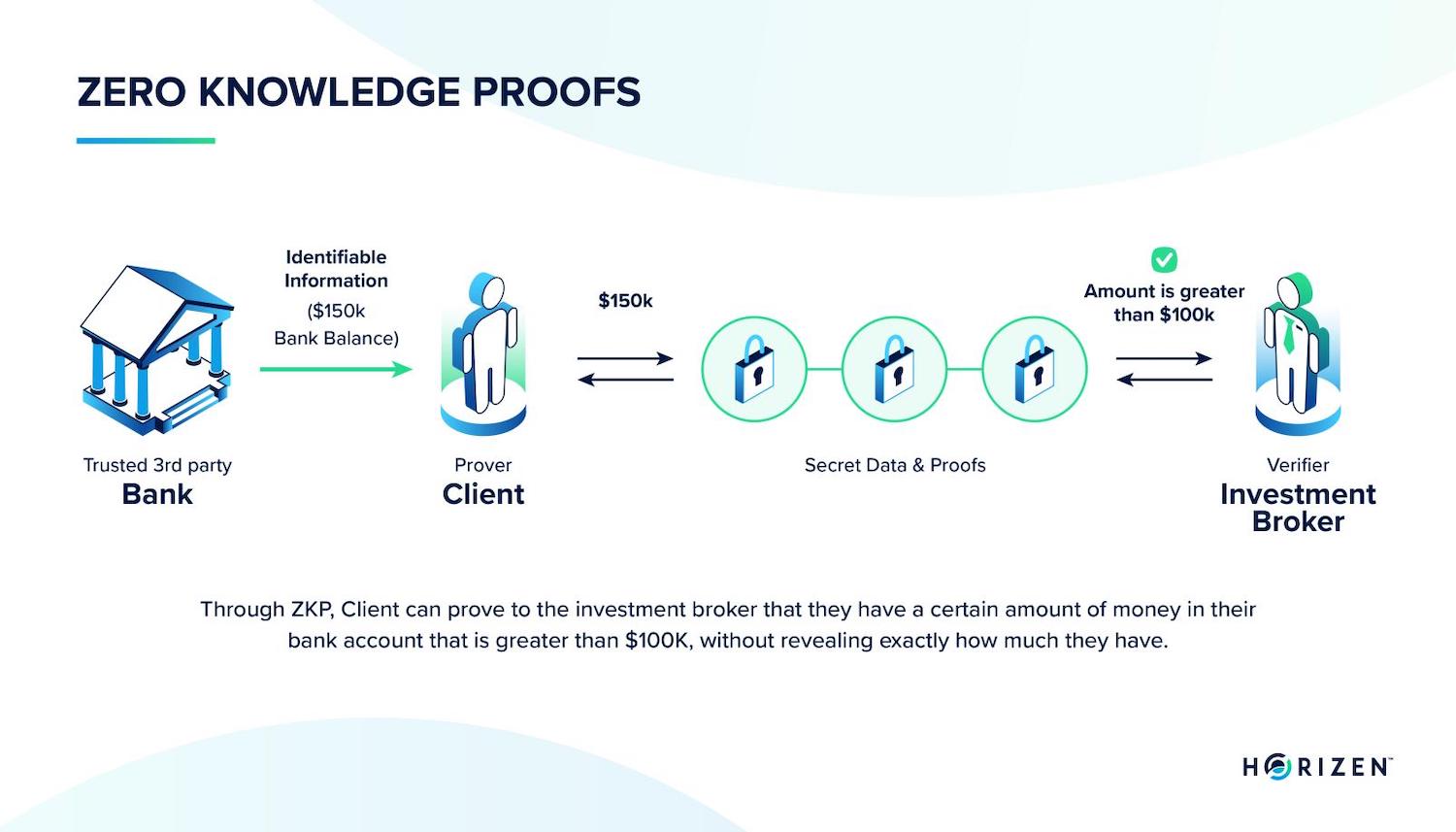
The transition marks a fundamental change in how we interact with machine learning. Instead of relying on the reputation of the provider, we rely on mathematical certainty. This shift enables new applications in finance, healthcare, and governance where transparency and privacy must coexist. The era of blind trust is ending; the era of verifiable intelligence has begun.
How SNARKs Power Real-Time AI Verification
The bottleneck for zero-knowledge machine learning has always been speed. Generating a proof for a large neural network used to take hours, turning what should be an instant verification into a waiting game. In 2026, that dynamic has shifted. New SNARK optimizations have reduced proof generation times from hours to seconds, making it possible to verify AI inferences in real time.
This acceleration is the difference between a theoretical privacy tool and a practical infrastructure layer. By optimizing the circuit complexity of common AI operations, developers can now embed ZK proofs directly into the inference pipeline. The verifier still checks the math in milliseconds, but the prover no longer needs to pause the entire system to compute the proof.
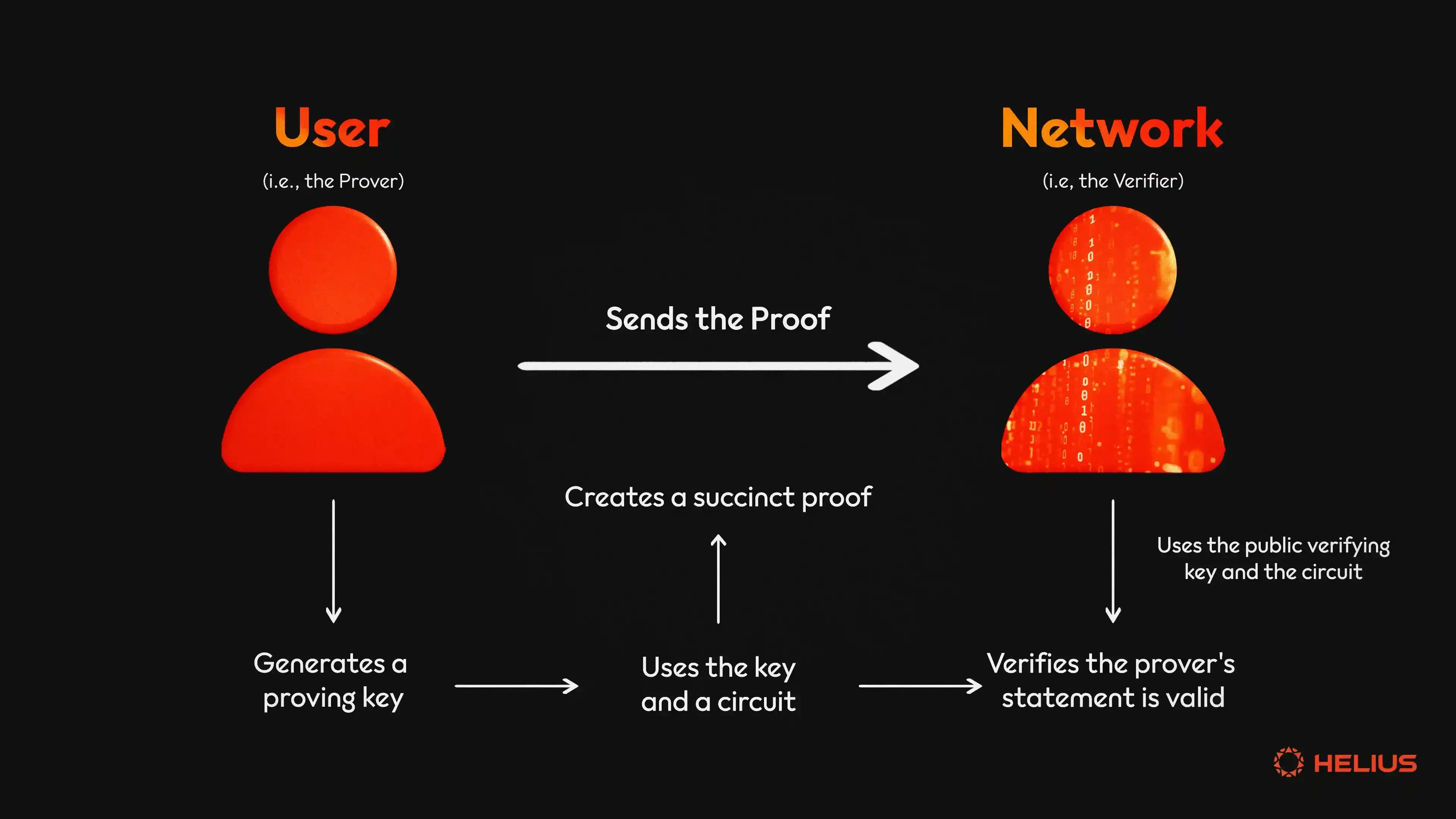
The result is a system where privacy and performance coexist. Users can request an AI prediction and receive a cryptographic guarantee that the model ran correctly and on the correct data, without waiting for a background job to finish. This capability is rapidly becoming a core competency for production-grade decentralized applications, moving ZK proofs from optional extras to essential infrastructure.
As these optimizations mature, we are seeing a surge in applications that were previously impossible due to latency constraints. From private financial trading to secure health data analysis, the ability to verify AI outputs instantly is unlocking new use cases that prioritize both accuracy and confidentiality.
Proving training data origins
ZK Proofs 2026 are reshaping how we verify the history of artificial intelligence. Instead of demanding full access to a model's training corpus, these cryptographic tools allow developers to prove that a model was trained on authorized or specific datasets without exposing the actual data itself. This shift moves the industry away from opaque trust toward verifiable accountability.
Imagine a locked vault containing sensitive data. A ZK proof acts like a small, verified token emerging from that vault. It confirms the contents meet specific criteria—such as copyright clearance or privacy compliance—without ever revealing what is inside. This capability is essential for AI agents that need to operate in regulated environments where data provenance is a legal requirement.
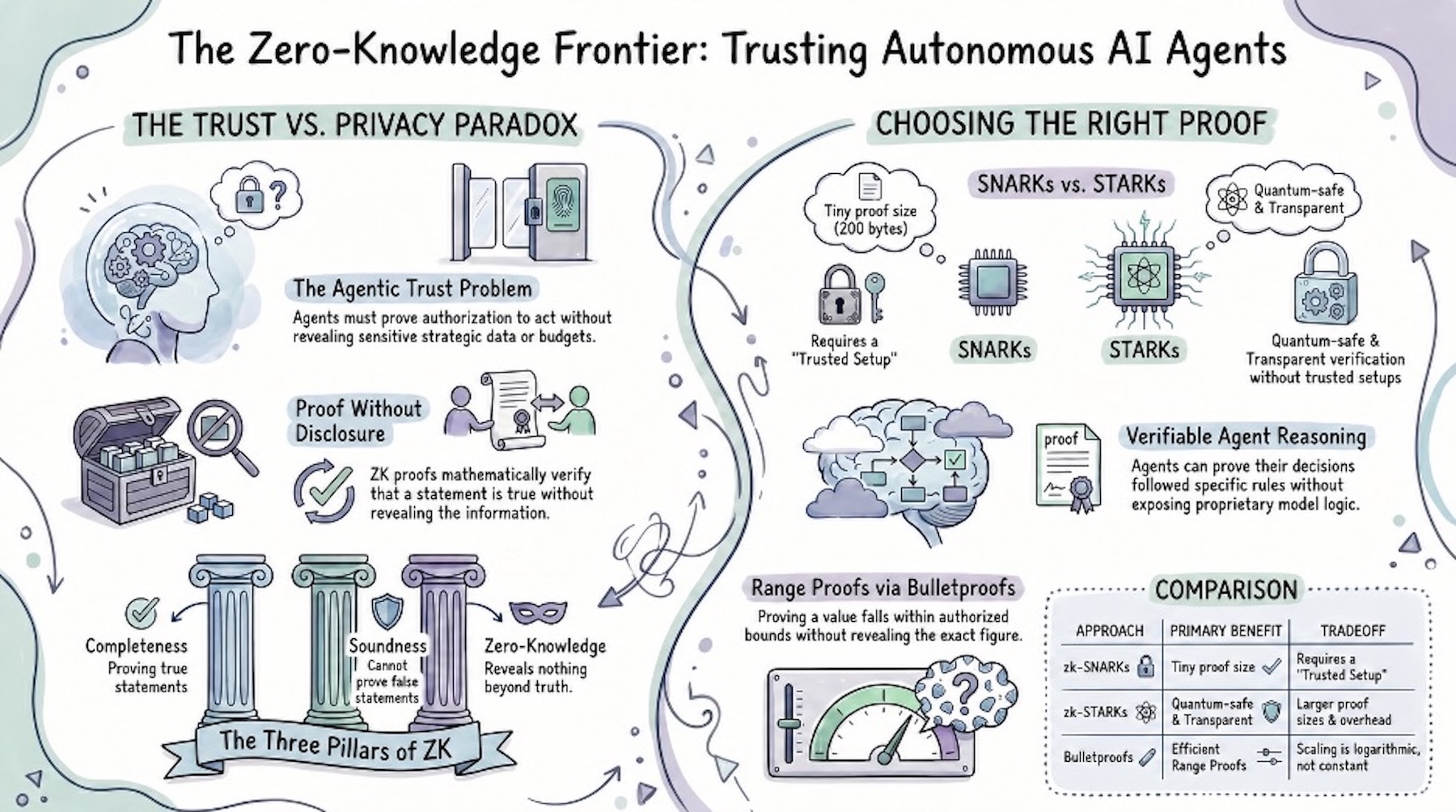
The technology enables a new standard for model transparency. Users can now inspect the cryptographic proof attached to an AI model to ensure it aligns with their ethical or legal guidelines. This verification process happens in the background, allowing the AI to function efficiently while maintaining a clear, immutable record of its origins. As ZK Proofs 2026 become more integrated into development pipelines, this ability to verify without disclosure will likely become the default expectation for trustworthy AI systems.
Standards and Gatherings Fueling the 2026 Wave
The momentum behind zero-knowledge proofs in 2026 isn't just theoretical; it is being forged in real-time by a coalition of researchers and industry leaders. At the center of this movement is the ZKProof standards body, an open-industry academic initiative dedicated to making advanced cryptography accessible and interoperable. Their work ensures that the privacy tools powering AI verification in 2026 are built on shared, robust protocols rather than fragmented, proprietary silos.
This standardization effort is bringing the community together in person, with the next major milestone being ZKProof 8 in Rome. Scheduled for May 9-10, 2026, this gathering will coincide with Eurocrypt 2026, creating a unique convergence of academic rigor and practical application. The event will focus on the intersection of zero-knowledge proofs, fully homomorphic encryption, and threshold cryptography—the very technologies that will enable AI models to prove their integrity without exposing sensitive data.
The following milestones highlight the key standards and events driving this shift toward verified AI:
Key 2026 ZK Milestones
-
ZKProof Standards Body
A global initiative establishing interoperable protocols for zero-knowledge cryptography, ensuring AI verification tools work across different blockchain and computing environments. -
ZKProof 8 in Rome
The upcoming flagship gathering on May 9-10, 2026, co-located with Eurocrypt 2026, focusing on advanced cryptography and the practical deployment of ZK proofs in AI. -
Eurocrypt 2026
A premier academic conference in Rome that will host parallel tracks on threshold cryptography and fully homomorphic encryption, directly supporting the infrastructure needed for 2026 AI verification.
As these standards mature, the barrier to entry for integrating ZK proofs into AI pipelines lowers. Developers no longer need to reinvent the wheel for every privacy layer; they can rely on established benchmarks and community-vetted implementations. This collective progress is what will define the ZK proofs 2026 era, turning complex cryptographic theory into everyday AI safety features.
Common questions about ZK AI
Zero-knowledge proofs are moving from theoretical cryptography to the core of AI infrastructure. As we approach 2026, the focus shifts from whether ZK proofs work to how they scale for heavy AI workloads. These answers address the practical realities of verification, speed, and trust.
No comments yet. Be the first to share your thoughts!