Defining zero-knowledge machine learning
Zero-Knowledge Machine Learning (zkML) enables cryptographic verification of AI computations, allowing organizations to validate model integrity and output correctness without exposing sensitive data or proprietary weights. This section clarifies the practical trade-offs between different zkML implementations to help finance and tech professionals select solutions that balance performance, cost, and compliance requirements.
Why verifying AI models matters now
The rapid deployment of AI in high-stakes sectors like finance, healthcare, and legal compliance has exposed a critical vulnerability: opacity. When an AI system denies a loan application or flags a medical record for fraud, the reasoning is often buried within millions of parameters. This "black box" nature creates significant risk. Regulators and enterprise clients need assurance that models have not been tampered with, that they are using approved data, and that their outputs are mathematically sound. ZK machine learning (zkML) addresses this by providing cryptographic proofs of integrity, allowing organizations to verify AI behavior without exposing sensitive underlying data.
The market driver for zkML is rooted in the need for trust in decentralized and regulated environments. Traditional audit trails are insufficient for dynamic AI models that evolve through continuous learning. As noted in recent surveys, zero-knowledge proofs offer a foundation for verifiable machine learning by allowing one party to certify the correctness of a computation without revealing the inputs or the model weights themselves [1]. This capability transforms AI from a speculative tool into a verifiable utility, essential for institutions that cannot afford unexplained errors or compliance breaches.
The integration of zkML with blockchain infrastructure highlights its practical utility beyond simple verification. ZK proofs on blockchains are already used to scale compute-constrained networks by processing transactions off-chain and submitting compact proofs on-chain [2]. This dual purpose—scaling and verifying—makes zkML a critical component for future AI infrastructure. It enables a new class of applications where AI services can be offered as trustless, auditable commodities, reducing the friction of third-party validation.
For financial and tech professionals, the shift toward verifiable AI is not merely a technical upgrade but a strategic necessity. As regulatory frameworks like the EU AI Act introduce stricter requirements for transparency and accountability, the ability to prove model integrity becomes a competitive advantage. zkML provides the cryptographic machinery to meet these demands, ensuring that AI systems remain both powerful and accountable.
How ZKML proves model integrity
Zero-Knowledge Machine Learning (ZKML) functions as a cryptographic notary for artificial intelligence. It allows a system to prove that a specific machine learning model processed specific input data to produce a specific output, without revealing the underlying data or the model’s proprietary architecture. This mechanism shifts trust from a "black box" provider to mathematical verification.
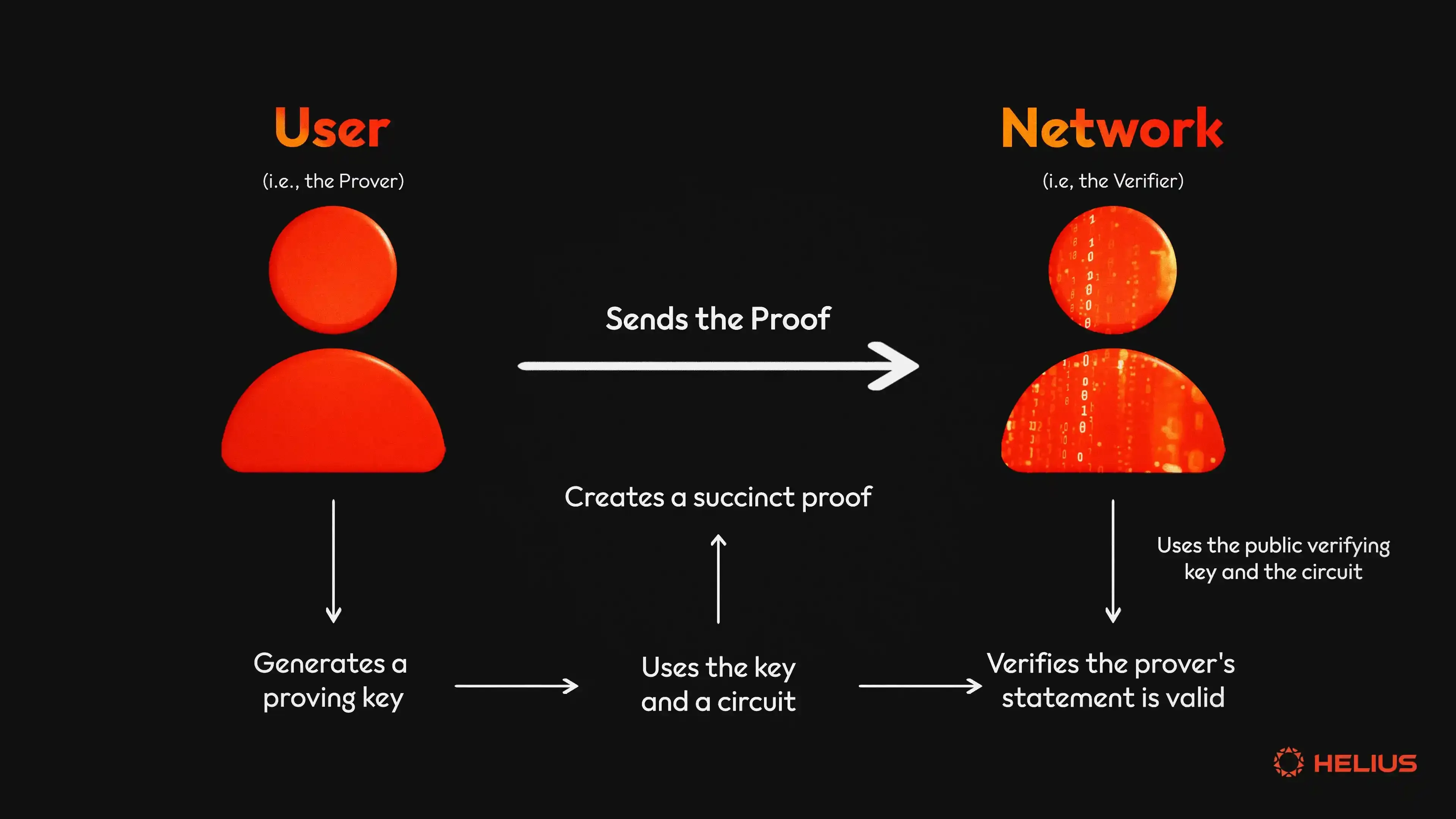
The process relies on a prover-verifier dynamic. The prover, who runs the AI model, generates a Zero-Knowledge Proof (ZKP). This proof is a compact cryptographic artifact that attests to the correct execution of the computation. The verifier, who may be a user, a regulatory body, or another smart contract, checks this proof. If the proof validates, the verifier accepts the result as authentic and untampered, gaining no additional insight into the private data or the model’s internal weights.
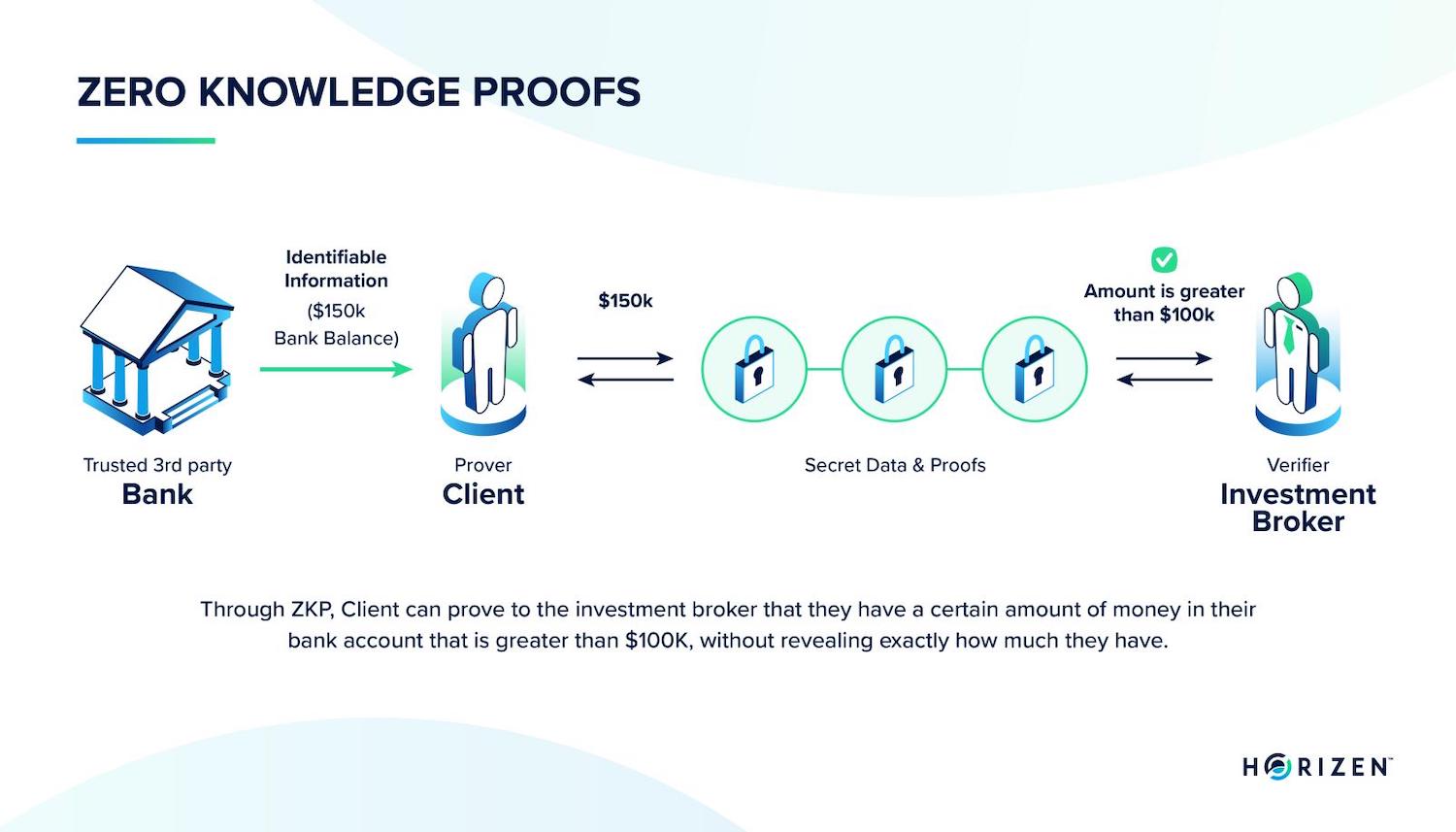
To achieve this, the machine learning model’s operations—typically matrix multiplications and non-linear activations—are translated into arithmetic circuits. These circuits define the computational logic in a format that zero-knowledge protocols can process. When the prover executes the model, they generate a proof that demonstrates the circuit was satisfied for the given inputs. This ensures that the output was not fabricated and that the model used was exactly the one claimed, preserving both data privacy and model integrity.
This capability is critical for high-stakes sectors like finance, where regulatory compliance and algorithmic transparency are mandatory. By decoupling verification from disclosure, ZKML enables institutions to audit AI decisions without exposing sensitive customer information or competitive intellectual property.
ZKML use cases in finance and healthcare
Zero-Knowledge Machine Learning (ZKML) moves beyond theoretical cryptography into high-stakes environments where data privacy and model auditability are non-negotiable. In sectors like finance and healthcare, the ability to verify that a machine learning model produced a specific output without exposing the underlying training data or proprietary algorithms is a critical infrastructure requirement.
Healthcare: Auditing Diagnostic Models
Healthcare providers face strict regulatory constraints, such as HIPAA, which prohibit the sharing of patient data for third-party model validation. ZKML allows hospitals to prove that a diagnostic model was trained on compliant data and has not been tampered with, without revealing the sensitive patient records themselves. This enables collaborative research and model verification across institutions while maintaining absolute patient confidentiality.
Finance: Verifying Trading and Risk Algorithms
In financial services, proprietary trading algorithms and risk assessment models represent significant intellectual property. Institutions need to prove to regulators that their models adhere to compliance guidelines without disclosing the secret strategies that drive their competitive advantage. ZKML facilitates this by generating cryptographic proofs of model execution, ensuring that the input data and the algorithm's internal logic remain private while the correctness of the output is publicly verifiable.
No comments yet. Be the first to share your thoughts!