What ZK model proofs actually verify
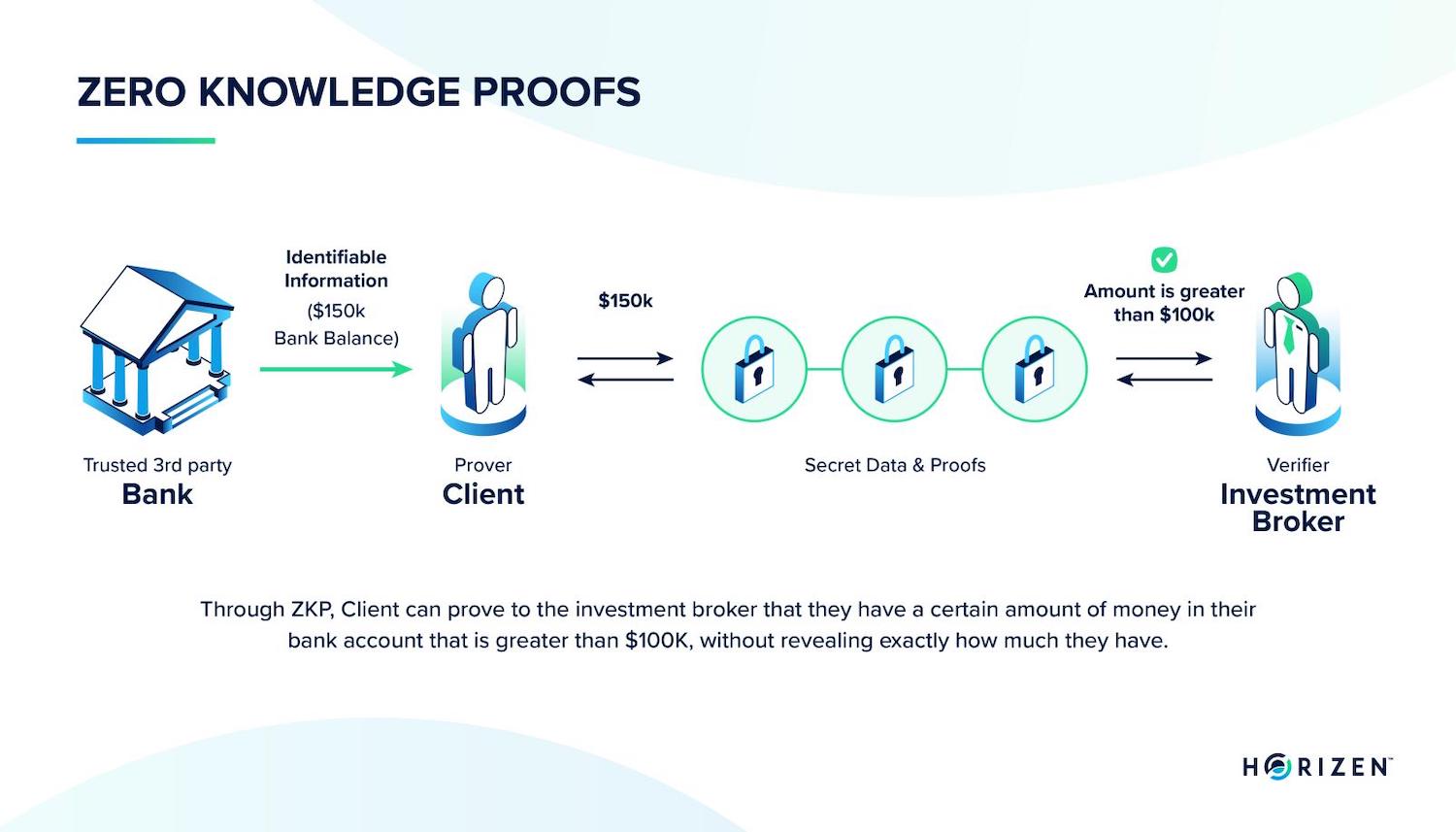
Zero-knowledge proofs (ZKPs) are a cryptographic method used to prove knowledge about a piece of data without revealing the data itself [src-serp-2]. When applied to artificial intelligence, this concept evolves into ZK model proofs: a system that allows a party to demonstrate that an AI model produced a specific output or was trained on a specific dataset, without exposing the model’s weights or the underlying training data.
Think of a ZK model proof like a sealed envelope with a wax stamp. You can verify the stamp is authentic and the envelope hasn’t been opened, proving the contents are intact and original, without ever seeing what is written inside. In the context of AI, this means a service can prove it used a legitimate, unaltered model to generate an answer, while keeping the model’s intellectual property and any sensitive data it processed completely hidden.
This verification process relies on complex mathematical circuits that translate model inference into a format the proof system can handle. The prover runs the AI model and generates a proof that the computation was executed correctly according to the circuit’s rules. The verifier then checks this proof using only public parameters. If the check passes, the verifier knows the output is valid without needing to trust the prover or see the internal mechanics of the model.
The primary value of ZK model proofs lies in their ability to separate verification from visibility. Traditional model auditing requires access to the model’s architecture and parameters, which defeats the purpose of proprietary or privacy-preserving AI. ZK proofs solve this by shifting the burden of proof from transparency to cryptographic assurance. This enables new use cases where AI providers can prove compliance, accuracy, or provenance without risking data leakage or intellectual property theft.
Translating Neural Networks into Arithmetic Circuits
To prove a model's output without revealing its weights, we must first translate the neural network into a format a zero-knowledge prover can understand. This process, known as arithmetic circuit compilation, converts mathematical operations—like matrix multiplications and activation functions—into a sequence of constraints over a finite field. The resulting circuit acts as a digital blueprint, allowing the prover to generate a proof that the computation was executed correctly.
The choice of cryptographic primitive heavily influences this translation. SNARKs and STARKs offer different trade-offs between proof size, verification speed, and setup requirements. While SNARKs produce compact proofs, they often rely on a trusted setup and elliptic curve cryptography. STARKs, by contrast, are post-quantum resistant and require no trusted setup, but typically generate larger proofs. The table below contrasts these approaches for AI verification.
| Feature | SNARK | STARK | PLONK |
|---|---|---|---|
| Proof Size | Small (KB) | Large (MB) | Small (KB) |
| Verification Speed | Fast | Moderate | Fast |
| Trusted Setup | Required (usually) | None | Universal (no trust) |
| Quantum Resistance | No | Yes | No |
The compilation process itself introduces computational overhead. Non-linear operations, such as ReLU activations, are particularly expensive to encode because they require additional constraints or lookup tables. Recent research, such as the framework detailed in Zero-Knowledge Proof Based Verifiable Inference of Models, explores recursive composition to mitigate this cost. By breaking large models into smaller, verifiable sub-circuits, developers can balance the expressiveness of the model against the time required to generate the proof.
Optimizing circuits for real-world scale
Running zero-knowledge proofs on large language models creates a massive computational bottleneck. A single forward pass through a transformer can generate millions of arithmetic constraints, making standard proving methods too slow and expensive for practical use. To make ZK model proofs feasible in 2026, we must optimize the underlying circuits to reduce this overhead.
The most viable path for scaling ZK proofs to transformer architectures is recursive proof composition. Instead of proving the entire model execution in one monolithic step, the circuit is broken down into smaller, manageable segments. Each segment generates a proof, and these proofs are then composed recursively into a single final proof. This approach drastically reduces the proving time and cost, as the verifier only needs to check the final composition rather than re-executing the entire neural network.
Note: Recursive composition is currently the most viable path for scaling ZK proofs to transformer architectures without prohibitive costs.
Gate minimization is the other critical optimization technique. Neural network operations, particularly non-linear activation functions like ReLU or GELU, are computationally expensive in ZK circuits because they require complex arithmetic representations. By minimizing the number of gates—basic logical operations—required to compute these functions, we reduce the overall circuit size. This involves approximating non-linear functions with simpler polynomial curves or using specialized lookup tables that require fewer constraints.
| Optimization Technique | Primary Benefit | Implementation Complexity |
|---|---|---|
| Recursive Composition | Reduces proving time and cost for large models | High (requires careful circuit decomposition) |
| Gate Minimization | Shrinks circuit size and memory usage | Medium (requires function approximation) |
| Sparse Matrix Handling | Optimizes linear layers in transformers | Low to Medium |
Recent research, such as the framework detailed in "Zero-Knowledge Proof Based Verifiable Inference of Models" (arXiv:2511.19902), demonstrates that recursively composed proofs can support both linear and nonlinear neural networks without a trusted setup. This flexibility is essential for real-world deployment, where models vary widely in architecture and size. By combining recursive composition with aggressive gate minimization, we can bring the cost of verifying AI models down to a level where it is economically sustainable for everyday applications.
Tradeoffs in privacy-preserving verification
ZK model proofs offer a powerful way to verify AI outputs without exposing training data or model weights, but they introduce significant engineering constraints. The primary tradeoff lies in the balance between verification granularity and system performance. Generating a zero-knowledge proof for a large language model is computationally expensive, often requiring hours of processing time on specialized hardware. This latency makes real-time inference verification impractical for most consumer applications today.
The computational overhead scales non-linearly with model size. While a simple neural network might generate a proof in minutes, a transformer-based model with billions of parameters can require days of computation. This cost is borne by the prover, not the verifier. As a result, systems must decide whether to prove the entire inference process or only specific critical steps, such as input validation or output safety checks.
| Aspect | Full Circuit Proof | Partial Verification |
|---|---|---|
| Security | High; proves entire execution | |
| Latency | High (hours to days) | |
| Cost | Very high | |
| Use Case | Regulatory compliance, audits | |
| Use Case | Real-time safety checks |
Partial verification strategies attempt to mitigate these costs by only proving specific components of the AI pipeline. For example, a system might prove that input data was sanitized without revealing the model's internal logic. This approach reduces computational load but introduces new attack surfaces. If the unproven components are compromised, the integrity of the entire verification fails.
Another limitation is the complexity of circuit construction. Writing efficient arithmetic circuits for AI models requires deep expertise in cryptography and compiler optimization. Small inefficiencies in the circuit design can lead to exponential increases in proof generation time. This barrier to entry limits the number of organizations capable of deploying ZK-verified AI systems at scale.
Despite these challenges, the technology is advancing rapidly. New proving systems like Halo2 and STARKs are reducing overhead through recursive proofs and parallelization. As hardware acceleration improves, the gap between verification cost and utility will narrow. For now, ZK proofs are best suited for high-stakes, low-frequency verification tasks rather than continuous, real-time monitoring.
Common questions about ZK model proofs
Zero knowledge proofs (ZKPs) are cryptographic methods that allow one party to prove the validity of a statement without revealing any additional information beyond the statement's truth itself [src-serp-7]. In the context of AI, this technology enables verification of model outputs or training data provenance without exposing the underlying proprietary weights or sensitive user data.
Can ZK proofs verify training data provenance?
Yes, ZK proofs can verify that a model was trained on a specific dataset without revealing the dataset's contents. This is achieved by creating a cryptographic commitment to the training data. The verifier can check that the model's parameters are consistent with the committed data, ensuring provenance while maintaining data privacy. This approach is particularly useful for compliance in regulated industries like healthcare and finance.
Is ZK model proof viable for large language models today?
Currently, ZK proofs for large language models (LLMs) are computationally expensive and face scalability challenges. While research is advancing rapidly, generating ZK proofs for LLM inference or training remains significantly slower than standard verification methods. Most practical applications today focus on smaller models or specific verification tasks rather than full-scale LLM verification. However, hardware accelerators and optimized circuits are steadily improving feasibility.
How do ZK proofs protect user privacy in AI services?
ZK proofs protect user privacy by allowing users to prove they meet certain criteria (e.g., age, location, or data quality) without sharing the actual personal data. In AI services, this means a user can verify their input data is valid or that they have the right to access a model without exposing their raw data to the service provider. This ensures that sensitive information remains private while still enabling necessary verification processes.
No comments yet. Be the first to share your thoughts!