What ZK model proofs verify
ZK model proofs address a fundamental trust gap in AI deployment: verifying that a model’s output was generated by a specific, authorized model without exposing its proprietary weights or training data. In 2026, as AI services become financial infrastructure, proving model lineage and training data compliance is as critical as proving solvency in traditional finance.
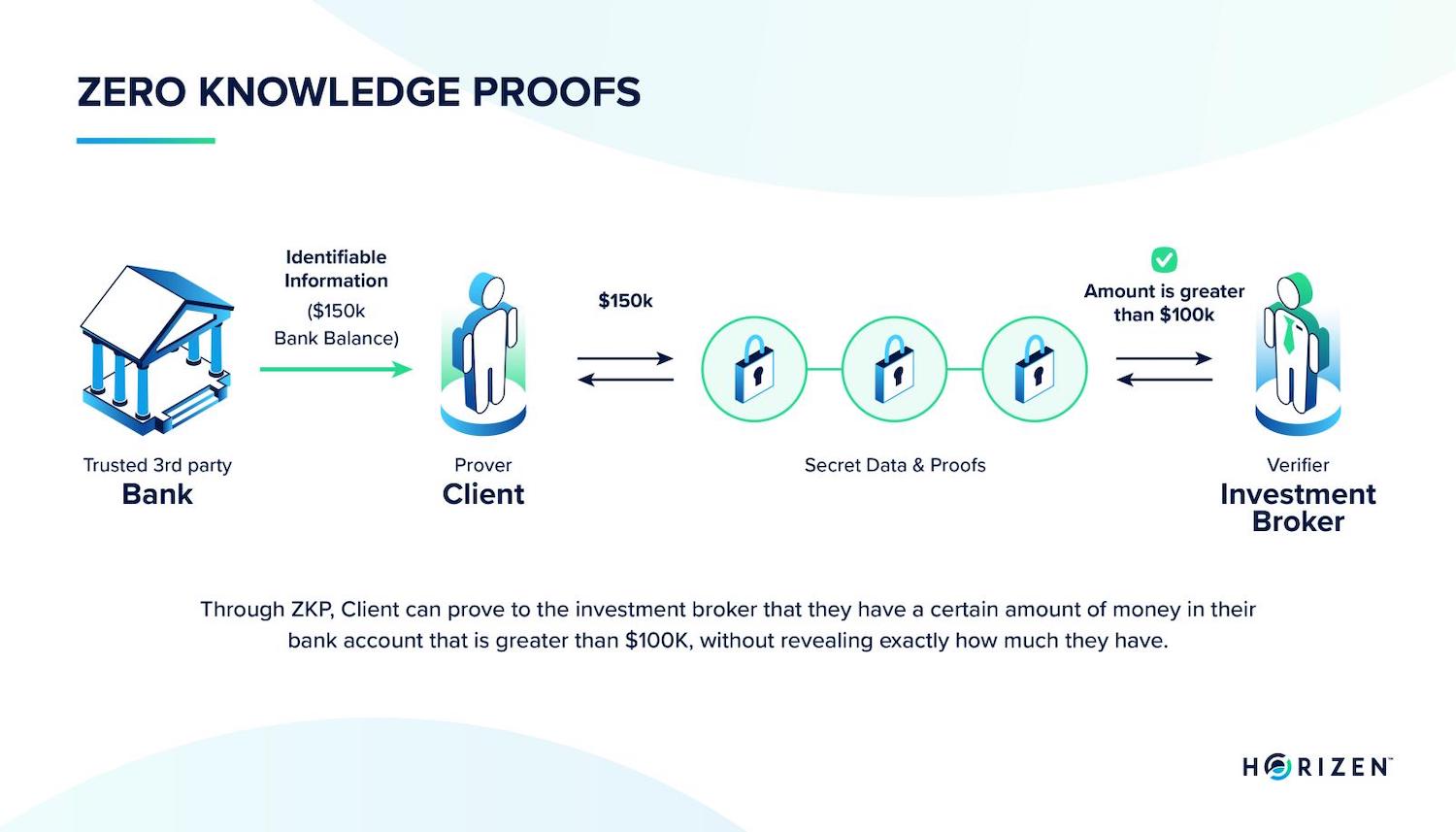
At its core, a zero-knowledge proof allows one party to prove to another that a statement is true without revealing any information beyond the validity of the statement itself. In the context of AI, this means a service provider can mathematically demonstrate that an inference was run on a certified model architecture, using only approved data sources, while keeping the underlying parameters and datasets secret.
This capability enables three primary verification layers. First, it confirms model integrity, ensuring the model has not been tampered with or swapped for a less reliable variant. Second, it validates training provenance, proving that the model was trained on data that meets regulatory or licensing requirements without leaking the data itself. Third, it guarantees execution correctness, verifying that the computation performed matches the claimed model’s logic.
For financial and regulated sectors, this shifts AI verification from a "trust me" black box to a cryptographic guarantee. It allows institutions to audit AI decisions for compliance and risk without compromising competitive advantages or violating privacy laws.
STARKs vs SNARKs for AI verification
Verifying large AI models requires proving that a neural network executed correctly without revealing the model weights or input data. Zero-knowledge proofs (ZKPs) enable this, but the choice between STARKs (Scalable Transparent Arguments of Knowledge) and SNARKs (Succinct Non-interactive Arguments of Knowledge) dictates the system's efficiency and trust assumptions.
The following table compares the core technical trade-offs relevant to AI model verification.
| Metric | STARKs | SNARKs |
|---|---|---|
| Proof Size | Large (typically 100s of KB to MBs) | Small (typically <1 KB) |
| Verification Speed | Fast (sub-second on standard hardware) | Very fast (milliseconds) |
| Setup Cost | No trusted setup (transparent) | Requires trusted setup (one-time) |
| Quantum Resistance | Yes (based on hash functions) | No (relies on elliptic curves) |
| Prover Speed | Slower (O(n log n) complexity) | Faster (O(n log n) with smaller constant) |
Proof Size and Bandwidth
For AI verification, proof size determines the cost of transmitting proof data to a verifier. SNARKs produce extremely compact proofs, making them ideal for on-chain verification where gas costs are proportional to data size. STARKs generate significantly larger proofs, which can be prohibitively expensive to transmit over bandwidth-limited networks or store on-chain without layer-2 rollups.
Quantum Resistance and Security
STARKs rely on collision-resistant hash functions, which are believed to be resistant to quantum computing attacks. SNARKs typically depend on elliptic curve cryptography, which is vulnerable to Shor’s algorithm. As quantum computing advances, STARKs offer a more future-proof security layer for long-term AI model audits.
Prover Efficiency
Generating a proof for a large AI model is computationally intensive. SNARKs generally offer faster proof generation times for smaller circuits, while STARKs scale better for very large, complex computations but require more prover resources. The choice depends on whether the priority is rapid verification (SNARKs) or scalable, quantum-safe auditing (STARKs).
Why STARKs Lead in 2026
Scalable AI verification requires cryptographic primitives that can handle massive state sizes without compromising security. While SNARKs have dominated early adoption due to smaller proof sizes, STARKs (Scalable Transparent Arguments of Knowledge) have emerged as the preferred architecture for large-scale model provenance. This shift is driven by three technical advantages: post-quantum security, the elimination of trusted setups, and more efficient circuit design for complex AI workloads.
Post-Quantum Security
STARKs rely on hash functions rather than elliptic-curve pairings, making them inherently resistant to quantum computing attacks. As AI models grow in complexity, the need for long-term verification integrity increases. Relying on SNARKs today introduces a future risk: once practical quantum computers arrive, existing SNARK-based verifications could be forged. STARKs provide a forward-looking security layer, ensuring that proofs generated today remain valid and tamper-proof in a post-quantum era.
No Trusted Setup
SNARKs often require a "trusted setup" ceremony, where initial parameters must be generated and securely destroyed. If these parameters are compromised, attackers can create fake proofs, breaking the entire system's integrity. STARKs are transparent; they do not require any initial trusted setup. This eliminates a significant point of failure and centralization, which is critical for institutional adoption where trust must be derived from code and mathematics, not from the reputation of the ceremony organizers.
Efficiency in Circuit Design
For AI verification, the "circuit" represents the computation of the model's inference or training steps. STARKs offer better scalability for large, complex circuits. Their proving time scales polylogarithmically with the size of the computation, whereas SNARKs can face bottlenecks as the circuit depth increases. This efficiency gain reduces the computational cost of verifying large language models, making real-time or batch verification economically viable for financial and enterprise applications.
When SNARKs still make sense
Despite the quantum-resistant advantages of STARKs, SNARKs remain the pragmatic choice for several critical infrastructure scenarios. The primary driver is verifier efficiency on constrained devices. SNARK proofs are significantly smaller and faster to verify than STARKs, making them ideal for lightweight clients, mobile wallets, and edge devices where computational resources are limited.
Existing infrastructure is another major factor. Many blockchain networks, including Cardano and XRP Ledger, have already integrated SNARK-compatible verifiers. For instance, Cardano’s smart contract environment supports SnarkJS-compatible verification, allowing developers to move expensive logic off-chain without overhauling the consensus layer. This interoperability reduces deployment risk and cost, offering a clear utility advantage for teams prioritizing adoption speed over theoretical long-term security.
In finance and DeFi, where transaction finality and gas costs matter, SNARKs provide a mature, battle-tested solution. They enable privacy-preserving transactions and scalable rollups with minimal overhead. While STARKs offer a path to post-quantum security, SNARKs currently deliver the best balance of performance, compatibility, and cost for mainstream verification needs.
No comments yet. Be the first to share your thoughts!