The 2026 zkEVM upgrade context
Ethereum’s 2026 roadmap marks a structural pivot in Layer 1 validation, shifting from purely execution-based consensus to hybrid cryptographic verification. The core catalyst is the on-chain integration of ZK proof verification, which allows validators to accept block validity via succinct cryptographic arguments rather than re-executing every transaction. This architectural change fundamentally alters the cost structure of scaling, moving verification overhead from Layer 2 rollups to the Ethereum mainnet.
This transition enables a target throughput of approximately 10,000 transactions per second (TPS) by validating small ZK proofs directly on Layer 1. The rollout follows a phased approach: an opt-in phase begins in 2026, allowing validators to participate in ZK-verified block production, with mandatory adoption scheduled for 2027. This gradual integration minimizes disruption while establishing the cryptographic infrastructure necessary for high-frequency, low-latency block validation across the network.
Market participants are closely monitoring this shift as it redefines the economic incentives for block producers and validators. By reducing the computational burden of verification, Ethereum aims to sustain its dominance in decentralized finance while addressing the scalability trilemma. The integration of zkEVM upgrades represents a significant step toward a more efficient and resilient blockchain infrastructure.
SNARKs versus STARKs for model proofs
The choice between zk-SNARKs and zk-STARKs defines the infrastructure for verifying AI model provenance. For finance_market applications requiring audit compliance, the tradeoff centers on proof size versus quantum resistance. zk-SNARKs offer compact proofs but rely on elliptic curve cryptography, which is vulnerable to future quantum attacks. zk-STARKs provide post-quantum security via hash functions but generate larger proofs, impacting on-chain verification costs.
| Feature | zk-SNARKs | zk-STARKs |
|---|---|---|
| Proof Size | Small (KB) | Large (MB) |
| Verification Time | Fast | Slower |
| Quantum Resistance | No | Yes |
| Trusted Setup | Required | No |
Verification speed is critical for real-time model integrity checks. zk-SNARKs verify in milliseconds, making them suitable for high-frequency trading models where latency matters. However, the need for a trusted setup introduces a single point of failure. If the setup parameters are compromised, the entire proof system collapses. zk-STARKs eliminate this risk, offering transparency and scalability without trusted setups.
| Feature | zk-SNARKs | zk-STARKs |
|---|---|---|
| Proof Size | Small | Large |
| Verification Time | Fast | Slower |
| Quantum Resistance | No | Yes |
| Trusted Setup | Required | No |
For model provenance, the decision hinges on the threat model. If the primary concern is current-day verification efficiency, zk-SNARKs remain the standard. However, for long-term asset integrity in a post-quantum world, zk-STARKs are the only viable option. The larger proof size is a manageable cost for the security guarantee.
Circuit complexity and the gas cost bottleneck
The economic viability of ZK model proofs hinges on the relationship between circuit complexity and on-chain verification costs. Every additional constraint in a proof circuit increases the computational load required for verification, which translates directly into higher gas fees on Ethereum. As model proofs grow to handle larger datasets and more complex cryptographic operations, the linear scaling of these costs threatens to render the technology prohibitively expensive for mainstream adoption.
In 2026, the industry is pivoting toward optimization frameworks like Halo 2 and PLONK to mitigate this pressure. These protocols reduce the proof size and verification time by leveraging more efficient polynomial commitments and recursive proof structures. By minimizing the number of constraints required to validate a proof, developers can significantly lower the gas overhead, making ZK proofs a practical solution for high-frequency financial applications rather than just a niche cryptographic experiment.
To contextualize the current cost of verification against these projected optimizations, we can look at live Ethereum gas metrics. The price of gas directly impacts the bottom line for any ZK-rollup or model proof deployment.
Adjacent use cases in DeFi and identity
Zero-knowledge proofs extend far beyond validating AI model weights. The same cryptographic primitives that ensure model integrity are now securing financial transactions and digital identity. This expansion is critical for ecosystem adoption, as it solves the fundamental trade-off between privacy and regulatory compliance.
Confidential trading and privacy
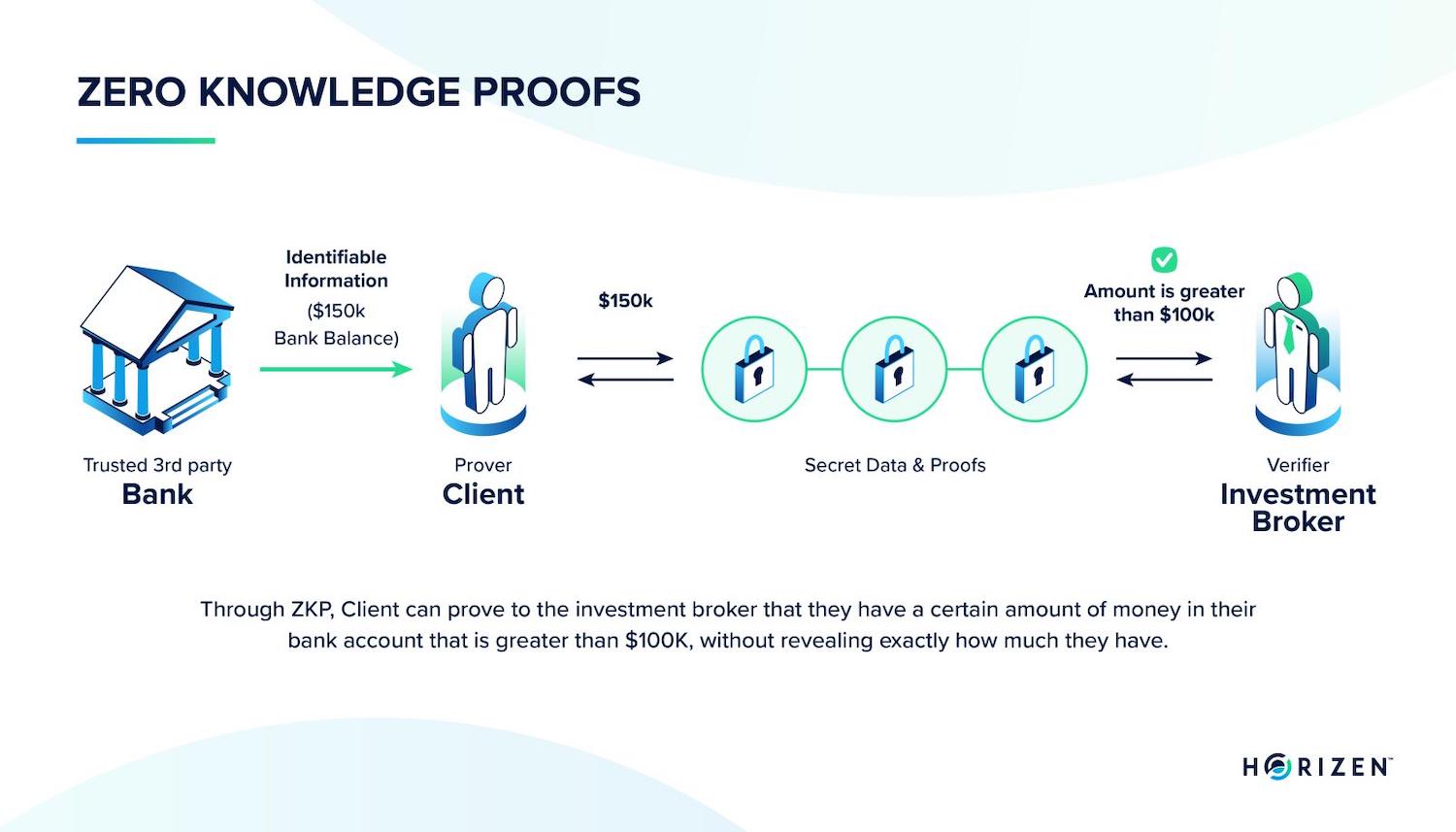
In decentralized finance (DeFi), privacy is often an afterthought. ZK technology enables confidential trading, allowing users to prove solvency or execute trades without exposing their full portfolio or transaction history on-chain. This reduces front-running risks and protects sensitive financial data. For a visual overview of how these proofs function, see the diagram below.
Privacy-preserving identity
ZK-Identity (ZK-ID) allows users to prove specific attributes—such as age, citizenship, or creditworthiness—without revealing the underlying raw data. This selective disclosure is vital for KYC/AML compliance in DeFi, enabling institutions to verify user status without storing sensitive personal information on public ledgers. As noted in industry research, ZK-ID proves properties about a user's status without exposing the identity itself, creating a foundation for trustless, privacy-first financial interactions.
Choosing the right proof system for 2026
Selecting a zero-knowledge architecture requires aligning cryptographic assumptions with specific operational constraints. The decision is not merely technical; it defines the trust model and cost structure of your application. SNARKs and STARKs offer distinct tradeoffs in proof size, verification speed, and long-term security guarantees.
SNARKs (Succinct Non-interactive Arguments of Knowledge) remain the standard for applications prioritizing minimal on-chain data. Their proofs are small, typically under 200 bytes, and verification is fast. However, they rely on a trusted setup ceremony, introducing a point of failure if the initial parameters are compromised. This makes them suitable for high-frequency trading or consumer apps where gas costs are paramount, but less ideal for systems requiring maximal decentralization.
STARKs (Scalable Transparent Arguments of Knowledge) eliminate the trusted setup requirement, relying instead on collision-resistant hash functions. This transparency enhances security, particularly against quantum computing threats, as STARKs are quantum-resistant by design. The tradeoff is larger proof sizes and higher computational overhead during proof generation. They are better suited for enterprise-grade infrastructure or Layer 2 rollups where security assumptions are scrutinized heavily.
The ZKProof initiative provides a framework for evaluating these systems based on formal security proofs and community adoption. Developers must weigh the immediate cost savings of SNARKs against the long-term robustness of STARKs. For most 2026 deployments, the choice hinges on whether the priority is instantaneous, cheap verification or unassailable, setup-free security.
| Feature | SNARKs | STARKs |
|---|---|---|
| Proof Size | Small (~200 bytes) | Large (KB range) |
| Verification Time | Fast | Slower |
| Trusted Setup | Required | Not Required |
| Quantum Resistance | No | Yes |
No comments yet. Be the first to share your thoughts!