
What ZK Model Proofs Mean for 2026
Zero-knowledge proofs (ZKPs) have moved beyond niche cryptography experiments into the core of enterprise AI infrastructure. In 2026, the intersection of ZKPs and artificial intelligence is defined by a specific capability: verifying the integrity of AI model training data and outputs without exposing the underlying sensitive information. This solves the privacy-scalability trilemma that has long hindered enterprise adoption of large language models (LLMs) and generative AI.
Traditionally, verifying that an AI model was trained on compliant, non-infringing, or high-quality data required exposing that data to auditors or third-party verifiers. This created significant legal and security risks. ZK model proofs change this dynamic by allowing a system to generate a cryptographic proof that the training process followed specific rules or used specific datasets, without revealing the datasets themselves. As noted in recent industry research, this capability allows applications to verify results or user credentials without revealing inputs, which is particularly useful for sensitive healthcare, financial, and legal data.
For enterprises, this means they can now deploy AI solutions that are both transparent and private. Compliance officers can audit the proof to ensure regulatory adherence (such as GDPR or HIPAA) without ever seeing the raw customer data. Developers can verify that a model hasn't been poisoned or tampered with during training. This shift from "trust but verify" to "cryptographically verify" is becoming a standard requirement for enterprise-grade AI procurement in 2026.
Top ZK-Rollup architectures for enterprise use
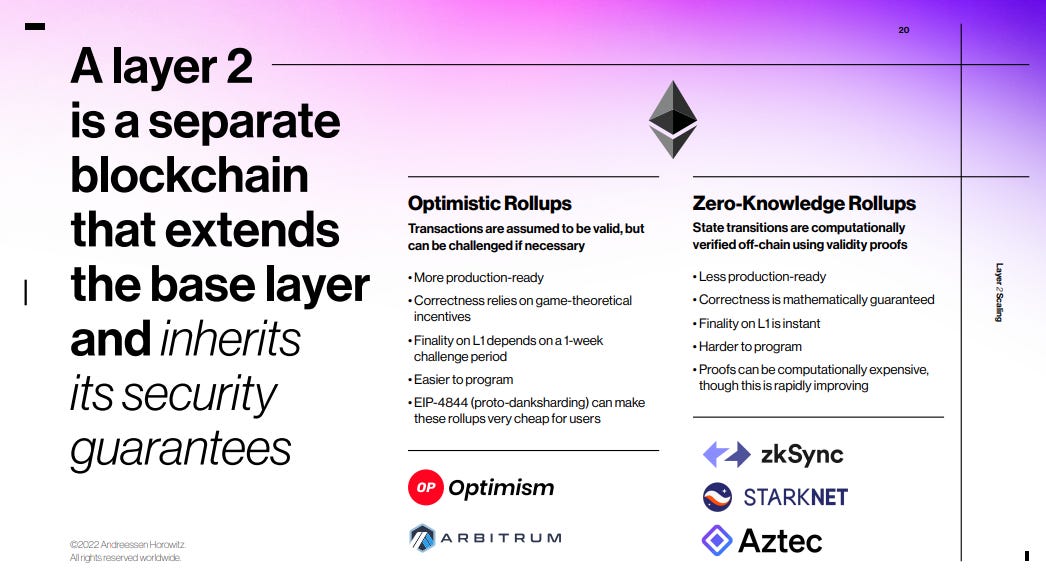
Enterprise teams choosing a ZK-Rollup architecture in 2026 face a clear trade-off between proof generation speed and verification cost. The decision hinges on whether the primary constraint is the cost of producing proofs on a server or the gas cost of verifying them on-chain. Understanding the cryptographic differences between STARKs and SNARKs is essential for aligning the technology with specific business requirements.
STARKs (Scalable Transparent Arguments of Knowledge) offer transparency and quantum resistance but require larger proof sizes. This makes them ideal for applications where on-chain verification costs are secondary to developer flexibility and future-proof security. SNARKs (Succinct Non-interactive Arguments of Knowledge), by contrast, produce smaller proofs that are cheaper to verify on Ethereum, making them the standard for high-throughput payment networks where gas efficiency is paramount.
Hybrid approaches are emerging to balance these constraints. Some enterprise solutions use SNARKs for final settlement while leveraging STARKs for intermediate state transitions, optimizing both developer experience and user costs. The following table compares the leading ZK-Rollup architectures based on key enterprise metrics.
| Architecture | Proof Size | On-Chain Verification Cost | Quantum Resistant | Trusted Setup Required |
|---|---|---|---|---|
| SNARKs (e.g., Groth16, PLONK) | Small (~128-256 bytes) | Low | No | Yes (usually) |
| STARKs (e.g., Cairo, StarkEx) | Large (~10-100 KB) | High | Yes | No |
| Hybrid (SNARK + STARK) | Variable | Medium | Partial | Depends on Layer |
For teams evaluating these solutions, the choice often comes down to the scale of deployment. High-frequency trading platforms may prioritize the low verification costs of SNARKs, while institutions concerned with long-term security and regulatory transparency might prefer the quantum-resistant nature of STARKs.

As an Amazon Associate, we may earn from qualifying purchases.
Enterprise adoption cases
Enterprise adoption is shifting from theoretical proofs to production-grade infrastructure, driven by regulatory pressure for AI transparency. Companies are moving past pilot programs to deploy ZK proofs for model provenance and data privacy in live environments.
Financial institutions are using ZK proofs to verify transaction histories without exposing customer data. This approach satisfies compliance requirements while maintaining user privacy. ZK-ID protocols allow enterprises to prove user status or history without revealing underlying identity information [[src-serp-3]].
AI developers are integrating ZK proofs to verify model outputs without revealing sensitive training data. As AI models generate more sensitive data, these proofs allow applications to verify results or user credentials without exposing the original inputs [[src-serp-8]]. This capability is critical for healthcare and finance sectors where data sovereignty is paramount.
The transition to production requires robust infrastructure. Enterprises are selecting solutions that offer scalability and ease of integration with existing systems. The focus is on practical applications that deliver immediate value in compliance and privacy.
Choosing the right ZK proof for your stack
Selecting a zero-knowledge architecture requires balancing three competing constraints: proof generation latency, on-chain verification cost, and the specific privacy guarantees required by your use case. For enterprise rollups, the choice is rarely binary; it is a trade-off between the raw speed of STARKs and the compact finality of SNARKs.
High-throughput rollups favor STARKs
If your primary metric is transaction throughput and you can tolerate slightly larger proof sizes, STARKs (Scalable Transparent Arguments of Knowledge) are the pragmatic choice. Their polynomial commitment schemes allow for highly parallelizable proof generation, making them ideal for Layer 2 solutions processing thousands of transactions per second. The lack of a trusted setup also removes a significant operational hurdle for teams deploying new chains. However, the larger proof sizes mean higher gas costs for on-chain verification, which can impact user experience on congested networks.
Privacy-sensitive applications lean toward SNARKs
For applications where on-chain verification efficiency and minimal data footprint are paramount, SNARKs (Succinct Non-interactive Arguments of Knowledge) remain the standard. Their small proof sizes allow for cheaper verification on Ethereum, which is critical for consumer-facing apps where gas fees directly affect adoption. The trade-off is the computational intensity of proof generation and, in many cases, the need for a trusted setup ceremony. If your stack requires recursive proof composition to achieve scalability, SNARKs offer a more mature ecosystem of tools and libraries.
Hybrid models for complex enterprise needs
Many modern enterprise stacks are moving toward hybrid architectures that leverage the strengths of both. For instance, you might use STARKs for off-chain computation and data availability, then generate a SNARK to summarize those proofs for on-chain finality. This approach minimizes verification costs while maintaining high throughput. When evaluating vendors, look for support for hybrid proving systems that allow you to switch or combine proving strategies based on the specific transaction type.
| Metric | STARKs | SNARKs |
|---|---|---|
| Proof Size | Large | Small |
| Verification Cost | Higher | Lower |
| Trusted Setup | Not Required | Often Required |
| Generation Speed | Highly Parallelizable | Computationally Intense |
Frequently asked questions about ZK proofs
How does ZK model proof latency compare to traditional verification?
In 2026, ZK proofs have shifted from theoretical benchmarks to production-grade performance. While generating a proof for a large language model still requires significant computational overhead, latency has dropped to acceptable levels for batched enterprise workflows. Unlike traditional verification, which checks every step, ZK proofs verify the final output in milliseconds, making them viable for high-throughput environments despite the initial proving time.
What are the primary computational costs for enterprise ZK deployment?
The cost structure revolves around prover hardware rather than verifier resources. Enterprises typically invest in specialized GPU clusters or ASICs to handle the proving phase. Once the proof is generated, verification is cheap and fast, often running on standard CPU infrastructure. This asymmetry makes ZK proofs ideal for offloading heavy validation tasks from main application servers, reducing overall cloud compute bills for verification-heavy workloads.
Are ZK proofs ready for regulated industries like finance or healthcare?
Yes, regulatory adoption is accelerating as major protocols demonstrate compliance. ZK proofs allow organizations to prove they meet regulatory thresholds—such as KYC checks or data privacy standards—without exposing sensitive underlying data. This capability addresses key GDPR and HIPAA concerns by enabling "data minimization" in audits, making ZK proofs a preferred choice for enterprises handling restricted information.
No comments yet. Be the first to share your thoughts!