What is ZK-ML?
Zero-Knowledge Machine Learning (ZK-ML) is a cryptographic protocol that allows a party to prove the integrity of an AI inference without revealing the model's architecture, weights, or the user's private input. It sits at the intersection of machine learning and zero-knowledge proofs (ZKPs), creating a system where computation integrity can be verified without compromising privacy.
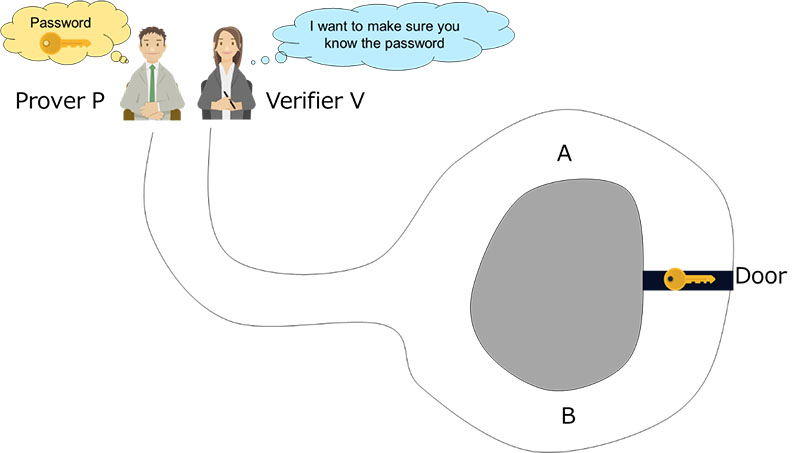
In traditional machine learning, a user submits data to a model and receives an output. The user must trust that the model operator ran the computation as promised and did not tamper with the results or the underlying weights. ZK-ML removes this trust requirement. The party running the computation (the prover) generates a cryptographic proof alongside the output. Another party (the verifier) can then check this proof to confirm the output is valid, without ever seeing the raw data or the model itself.
This capability is particularly valuable in high-stakes environments where data sensitivity and algorithmic transparency are critical. By decoupling verification from visibility, ZK-ML enables verifiable AI models that protect both intellectual property and user privacy. It transforms the black box of machine learning into a transparent, auditable process without exposing the secrets inside.
Why AI Verification Needs ZK-ML
Current methods for auditing AI models rely heavily on transparency that is often illusory. When a model provider claims their system is unbiased or accurate, they typically offer aggregate statistics or high-level summaries. These metrics act like a car’s dashboard lights: they tell you the engine is running, but they do not prove the car is driving to the correct destination or that the driver hasn’t tampered with the fuel line. In sectors like finance or healthcare, this lack of granular proof is a critical failure point.
The "black box" nature of modern neural networks means that even developers cannot always trace exactly how a specific input led to a specific output. Traditional verification requires trusting the provider’s internal logs, which can be altered or are simply too opaque to audit effectively. This creates a trust deficit where users must accept the model’s output on faith rather than evidence. ZK-ML resolves this by shifting the burden of proof from reputation to cryptography.
ZK-ML provides a cryptographic guarantee that the computation adhered to the defined rules. This ensures model authenticity and data privacy simultaneously, solving the core limitations of current transparency methods. As noted in recent surveys, ZKPs provide a compelling foundation for verifiable machine learning by allowing one party to certify the integrity of a computation without exposing the underlying secrets [src-serp-6].
How ZK-ML Proofs Work in Practice
The theoretical promise of ZK-ML collapses without a rigorous engineering workflow. Translating a neural network into a verifiable proof is not a plug-and-play process; it requires converting complex mathematical operations into a format that a zero-knowledge circuit can process. This transformation is the bottleneck that determines whether ZK-ML is a practical tool or a computational luxury.
The first step is arithmetic circuit compilation. Machine learning models rely on floating-point arithmetic, but zero-knowledge circuits operate on finite fields. To bridge this gap, frameworks like ZKML compile the model’s layers—convolutions, matrix multiplications, and activation functions—into arithmetic circuits. This process is computationally expensive. It requires approximating floating-point operations with integer or fixed-point arithmetic, which can introduce slight precision errors if not managed carefully. The resulting circuit represents the entire inference path as a series of logical constraints.
Once the circuit is defined, the prover generates a SNARK or STARK. This cryptographic proof attests that the model executed correctly on the provided input. Recent optimizations have dramatically reduced the size of these proofs. According to the ZKML paper published at EuroSys, the system can achieve up to 22× smaller proof sizes and 5× faster verification compared to prior work. These efficiency gains are critical for moving ZK-ML from research prototypes to production environments where latency and storage costs matter.
Verification is the final, lightweight step. A verifier—whether an on-chain smart contract or an off-chain oracle—checks the proof against the public parameters. This check confirms that the output is valid without revealing the model weights or the input data. The asymmetry of the process is the core value proposition: heavy computation for the prover, negligible computation for the verifier.
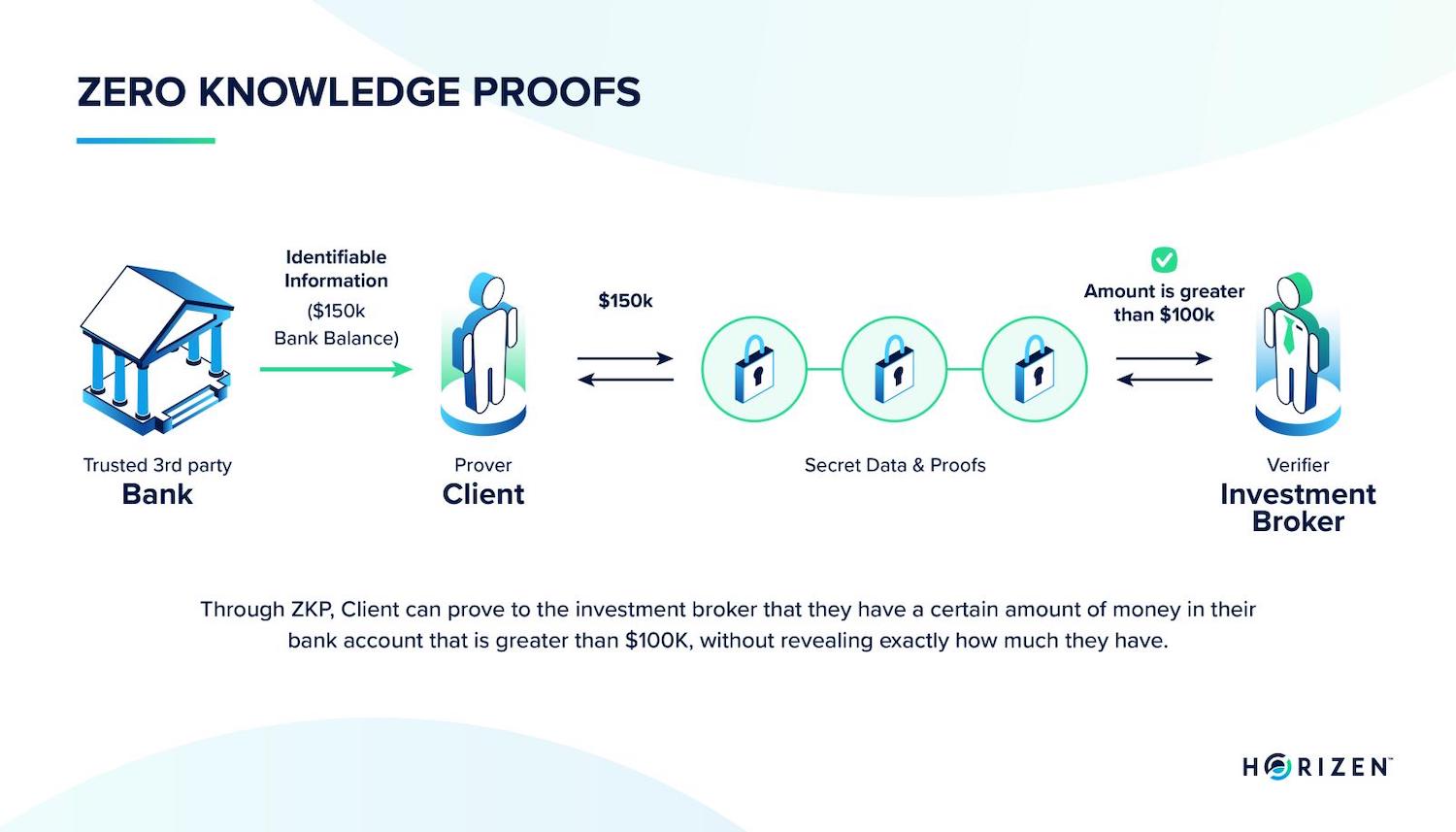
The speed of this verification process is a key differentiator. While generating the proof can take seconds or minutes depending on model size, verifying it typically takes milliseconds. This allows for real-time auditing of AI decisions in regulated industries like finance or healthcare, where trust is paramount but data privacy is non-negotiable.
Real-World ZK-ML Use Cases
The theoretical promise of ZK-ML is now translating into concrete infrastructure for verifiable AI. As the industry matures, the focus has shifted from abstract cryptographic proofs to practical deployments where trust, privacy, and intellectual property protection are non-negotiable. These applications demonstrate how ZK-ML serves as the verification layer for AI systems operating in hostile or untrusted environments.
Verifiable Inference on Blockchains
Smart contracts are immutable, but the AI models they invoke are often opaque. ZK-ML allows a blockchain to verify that an off-chain AI model executed correctly on specific inputs without revealing the model weights or the private data used. This creates a trustless oracle for AI-driven DeFi protocols, ensuring that price feeds or risk assessments generated by neural networks are mathematically guaranteed to be accurate and untampered.
Private Credit Scoring
Traditional credit scoring requires users to disclose sensitive financial histories to third-party agencies, creating privacy risks and data silos. ZK-ML enables a borrower to prove they meet specific credit thresholds (e.g., "income > $50k" or "credit score > 700") without revealing the underlying transaction data. This allows lenders to assess risk with cryptographic certainty while preserving the user's financial privacy, a critical step toward compliant and ethical AI lending.
Secure Model Marketplace Transactions
AI model providers face a significant barrier: sharing proprietary models for inference risks intellectual property theft. ZK-ML allows a model owner to generate a proof that their proprietary model was used to generate a prediction, without exposing the model architecture or weights to the client. This enables a secure marketplace where users can pay for high-quality AI inference without the risk of model extraction or reverse engineering.
| Feature | Traditional ML Auditing | ZK-ML Verification |
|---|---|---|
| Privacy | Data exposed to auditors | Zero data leakage |
| Speed | Slow manual review | Automated cryptographic proof |
| Trust Model | Reliance on third parties | Mathematical certainty |
Common Misconceptions About ZK-ML
ZK-ML is often misunderstood as a privacy-only tool. While it does protect data, its primary value lies in verifying integrity and authenticity. By generating a cryptographic proof that a specific model produced a specific output, ZK-ML allows verifiers to trust the result without needing to inspect the underlying weights or data. This shifts the focus from hiding information to proving correctness.
Another persistent myth is that ZK-ML is too slow for practical use. Early implementations were indeed computationally expensive, but recent advances in proof systems like PLONK and STARKs have significantly reduced overhead. Modern frameworks now allow for real-time or near-real-time verification in many enterprise scenarios, making ZK-ML a viable component for AI deployments where trust is paramount.
No comments yet. Be the first to share your thoughts!