What is a zero-knowledge proof?
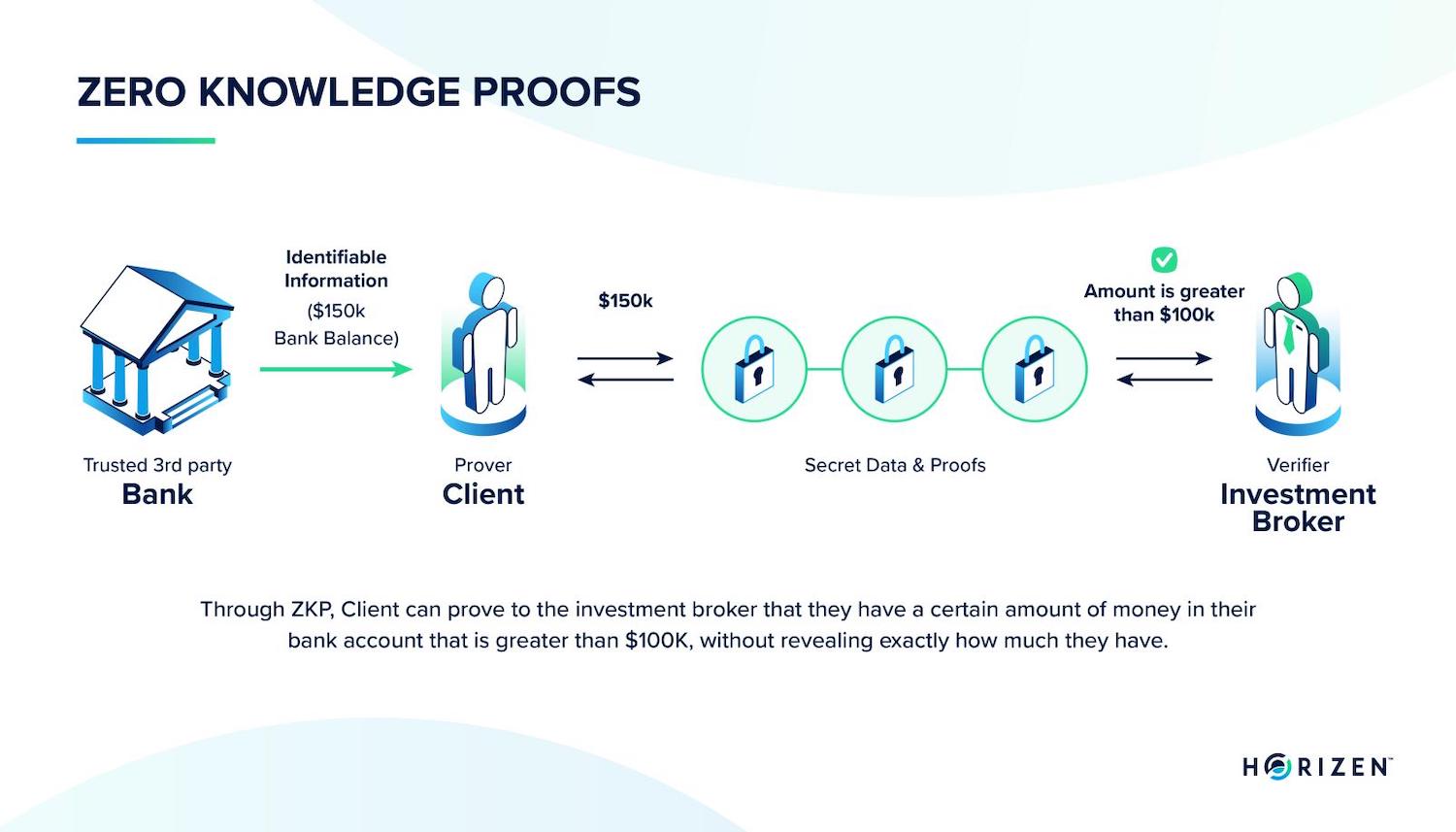
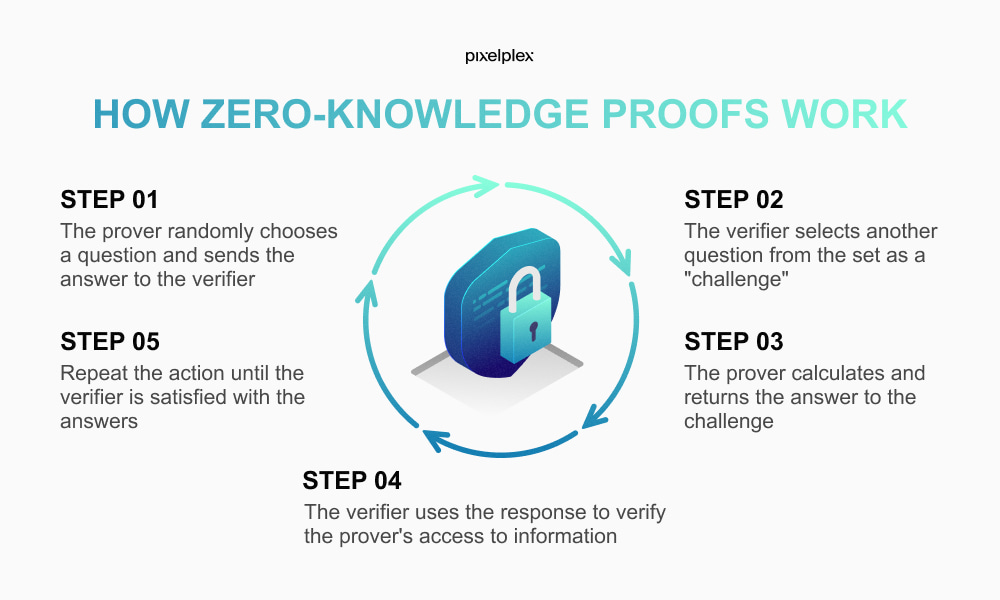
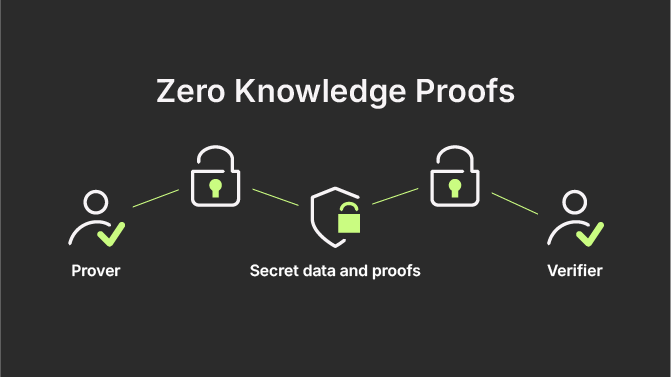
A zero-knowledge proof (ZKP) is a cryptographic protocol allowing a prover to demonstrate the validity of a statement to a verifier without disclosing any additional information. The classic analogy is proving you know the combination to a safe without revealing the numbers themselves.
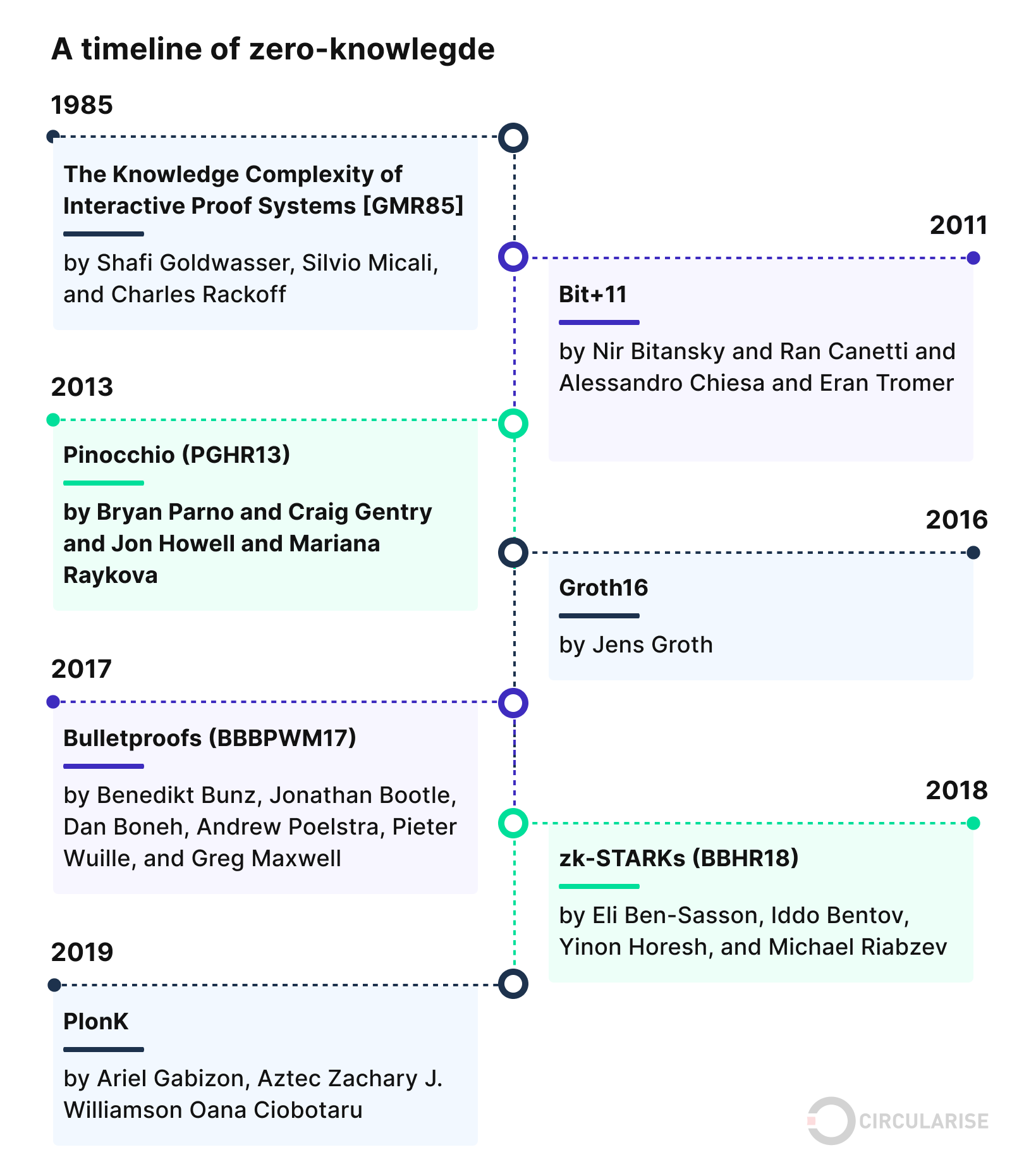
First introduced by MIT researchers in 1985, ZKPs have evolved from theoretical cryptography to practical enterprise applications. In blockchain, they enable privacy-preserving transactions and scalable verification, allowing networks to process thousands of transactions off-chain while posting a single, compact proof on-chain.
| Feature | Traditional Proof | Zero-Knowledge Proof |
|---|---|---|
| Data Revealed | Full transaction details | Only validity |
| Privacy Level | Low | High |
| Verification Speed | Slow (full data) | Fast (proof only) |
| Use Case | Public ledgers | Private enterprise chains |
The primary tradeoff is computational cost. Generating a ZKP is resource-intensive, but verifying it is extremely fast and cheap. This asymmetry makes ZKPs ideal for scaling blockchains and protecting sensitive corporate data.
Zero-knowledge proof choices that change the plan
In enterprise blockchain, ZKPs are essential for privacy but introduce significant engineering friction. The core tradeoff is always between proof generation speed, verification cost, and the complexity of the cryptographic setup.
When selecting a ZKP system for enterprise use, evaluate three concrete factors: the computational overhead for the prover, the gas cost for on-chain verification, and the trust assumptions of the setup phase. A system that is fast to generate may be expensive to verify, and vice versa. There is no single optimal solution; the choice depends entirely on whether your priority is off-chain efficiency or on-chain security.
The table below breaks down the primary tradeoffs between the most common ZKP architectures used in 2026. These metrics reflect typical performance benchmarks for enterprise-grade implementations.
| Architecture | Prover Speed | Verifier Cost | Trust Model |
|---|---|---|---|
| SNARKs | Fast | Low | Trusted Setup Required |
| STARKs | Slow | Medium | Transparent (No Trusted Setup) |
| Plonk | Medium | Low | Trusted Setup Required |
| zkEVM | Varies | High | Depends on Backend |
SNARKs (Succinct Non-Interactive Arguments of Knowledge) are the industry standard for low verification costs. They are ideal for applications where on-chain gas fees are a primary concern, such as scaling Ethereum L2s. However, SNARKs require a trusted setup ceremony, which introduces a one-time security risk if the entropy is compromised.
STARKs (Scalable Transparent Arguments of Knowledge) eliminate the trusted setup requirement, making them more suitable for long-term enterprise deployments where regulatory compliance and transparency are critical. The tradeoff is that STARKs are significantly slower to generate and produce larger proof sizes, which increases data storage and transmission costs.
For enterprises, the decision often hinges on the specific use case. If you are building a high-frequency trading platform where latency matters, STARKs may be too slow. If you are handling sensitive health data where trust assumptions are unacceptable, SNARKs may be too risky. Evaluate your constraints against the table above before committing to a cryptographic standard.
How to choose the right zero-knowledge proof implementation
Deploying zero-knowledge proofs requires balancing cryptographic overhead against business value. The decision framework below guides CTOs and compliance officers through the specific tradeoffs of zkEVMs, post-quantum cryptography, and enterprise privacy layers. Use this ordered checklist to align technical architecture with your primary privacy goal.
Determine whether the proof must be verified on-chain (public, trustless) or off-chain (private, centralized verifier). On-chain verification enables trustless settlement but incurs high gas costs and computational limits. Off-chain verification reduces costs but requires a trusted third party to validate the proof before settlement. For enterprise use cases where speed is critical, off-chain proofs often provide the necessary throughput.
Choose between zk-SNARKs and zk-STARKs based on your data volume and security requirements. zk-SNARKs offer smaller proof sizes and faster verification, making them ideal for mobile wallets and high-frequency trading. However, they rely on a trusted setup phase, which introduces initial trust assumptions. zk-STARKs are post-quantum resistant and require no trusted setup, but they generate larger proofs. For long-term enterprise compliance, STARKs often provide better future-proofing against quantum computing threats.
Assess whether your existing smart contracts can migrate to a zkEVM (Zero-Knowledge Ethereum Virtual Machine). zkEVMs allow developers to deploy unmodified EVM code while generating ZK proofs for transaction validity. This reduces migration risk significantly compared to custom ZK rollups. However, zkEVMs may introduce latency during the proof generation phase. If your enterprise relies on complex, legacy Solidity contracts, a zkEVM solution offers the smoothest path to privacy without rewriting core logic.
Verify that your cryptographic protocols are resistant to quantum decryption. Traditional elliptic curve cryptography (ECC) used in many ZKP systems is vulnerable to Shor's algorithm. Implement hybrid schemes that combine classical ZKPs with post-quantum lattice-based cryptography. This ensures that sensitive enterprise data remains private even if quantum computers become capable of breaking current encryption standards within the next decade.
Spot the Weak Options in Zero-Knowledge Proofs
While ZKPs offer immense privacy, the technology is often marketed with misleading claims about speed and security. Enterprises must look past the hype to identify weak options that could compromise their infrastructure.
The zkEVM Trap
zkEVMs (zero-knowledge Ethereum Virtual Machines) promise Ethereum compatibility with privacy. However, many current implementations are "Type 2" or "Type 3," meaning they are not fully equivalent to the EVM. They may require complex translation layers or lack full opcode support. This creates a false sense of security for developers expecting seamless deployment. Choose only "Type 4" (full equivalence) or "Type 1" (full equivalence with native zk-proof generation) if you need true interoperability.
Post-Quantum Vulnerabilities
Most current ZKP systems rely on elliptic curve cryptography, which is vulnerable to future quantum computers. "Post-quantum" ZKPs use lattice-based or hash-based cryptography. Many vendors claim quantum resistance but rely on untested or narrow mathematical assumptions. Verify that the underlying cryptographic primitives are based on NIST-standardized algorithms, not proprietary or experimental schemes. Weaknesses here can render years of encrypted data vulnerable once quantum computing matures.
Common Mistakes in Implementation
A frequent error is assuming ZKPs eliminate all data risks. The proof verifies the computation, but the underlying data source (oracle) can still be malicious. Additionally, many solutions ignore the cost of proof generation. Proving complex transactions can be exponentially more expensive than verifying them. Always model the total cost of proof generation against your throughput requirements before committing to a provider.
No comments yet. Be the first to share your thoughts!