Why ZK proofs matter for AI in 2026
Verifying that an AI model was trained on authorized data, or that it ran inference without leaking proprietary weights, has long been a theoretical exercise. The barrier wasn't just cryptographic complexity; it was the cost of execution. Until recently, generating a zero-knowledge proof for a large language model was computationally prohibitive, costing more in gas and compute than the model's output was worth.
That dynamic shifted dramatically between 2024 and 2026. Proving costs for complex operations collapsed roughly 45x, bringing the price of an average Ethereum block proof from $1.69 down to under 4 cents. This economic shift makes on-chain verification viable for AI applications that were previously too expensive to secure with ZK technology.
This cost reduction is the primary driver behind the surge in ZK model proofs 2026 adoption. Developers can now embed proofs directly into model serving pipelines, ensuring that the model's behavior matches its training data without exposing the underlying parameters. This capability is critical for enterprise AI, where intellectual property protection and regulatory compliance are non-negotiable.
The focus has moved from abstract proof-of-concept to production-ready libraries. The current landscape is defined by tools that simplify the integration of these proofs into existing AI workflows, allowing teams to verify model integrity without rebuilding their infrastructure from scratch.
SNARKs vs STARKs for model verification
Choosing between SNARKs and STARKs for ZK model proofs 2026 is a decision between speed and scale. SNARKs (Succinct Non-interactive Arguments of Knowledge) remain the industry standard for most AI provenance tasks because they offer tiny proof sizes and fast verification. This makes them ideal for on-chain verification or mobile client validation where bandwidth is limited.
STARKs (Scalable Transparent Arguments of Knowledge) are gaining traction for large-scale model verification. They offer quantum resistance and do not require a trusted setup, which eliminates a significant security risk. However, STARK proofs are larger, requiring more bandwidth to transmit. For most current zkML applications, the trade-off favors SNARKs unless quantum resilience is a strict requirement.
The table below compares these systems across key metrics relevant to verifying machine learning models.
| Metric | SNARK | STARK |
|---|---|---|
| Proof Size | Small (~KB) | Large (~MB) |
| Verification Speed | Fast | Moderate |
| Quantum Resistance | No | Yes |
| Trusted Setup | Required | Not Required |
| Best For | On-chain verification | Large-scale audits |
Top zkML libraries and toolchains
Use this section to make the ZK Model Proofs decision easier to compare in real life, not just on paper. Start with the reader's actual constraint, then separate must-have requirements from details that are merely nice to have. A practical choice should survive normal use, maintenance, timing, and budget. If a recommendation only works in an ideal situation, call that out plainly and give the reader a fallback path.
The simplest way to use this section is to write down the must-have criteria first, then compare each option against those criteria before weighing nice-to-have features.
Optimizing proof generation for large models
Generating zero-knowledge proofs for AI models is computationally expensive. The bottleneck is usually the circuit size required to verify inference steps. Reducing this size directly lowers both time and cost. You can achieve significant savings by focusing on circuit design and hardware acceleration.
Sparse circuits for embeddings
Embedding layers are often the largest part of an AI circuit. They map tokens to high-dimensional vectors, creating dense computation graphs. For ZK proofs, you can optimize this by using sparse circuits. Instead of computing every vector element, the circuit only verifies the non-zero components or uses a more efficient lookup structure. This drastically reduces the witness size, which is the data the prover must generate.
Hardware acceleration
Software-only proving is slow for large models. Hardware acceleration, particularly using GPUs or FPGAs, can speed up the constraint satisfaction process. Libraries like Halo2 and Circom have started supporting GPU backends. These backends parallelize the heavy lifting of polynomial arithmetic. If you are running proofs at scale, investing in GPU-accelerated proving nodes is essential.
Library selection
Not all ZK libraries are created equal for AI workloads. Some are optimized for general-purpose computation, while others have built-in support for matrix operations. Choose a library that aligns with your model's architecture. For example, if you are proving transformer-based models, look for libraries with optimized matrix multiplication gates. This avoids reinventing the wheel and reduces the risk of circuit errors.


As an Amazon Associate, we may earn from qualifying purchases.
By combining sparse circuit designs with hardware acceleration, you can make ZK model proofs viable for production use in 2026. The cost of proving is dropping, but optimization is still key to scaling.
Real-world use cases for ZK model proofs 2026
Zero-knowledge model proofs are moving from academic papers to production environments. In 2026, the primary drivers are DeFi AI agents, private inference, and data provenance. These use cases rely on concrete libraries rather than abstract theory.
DeFi AI agents use these proofs to verify their own capabilities without revealing their source code. This prevents malicious actors from cloning strategies while allowing users to audit risk profiles. ZK-ID protocols enable agents to prove their status or history without exposing raw identity data.
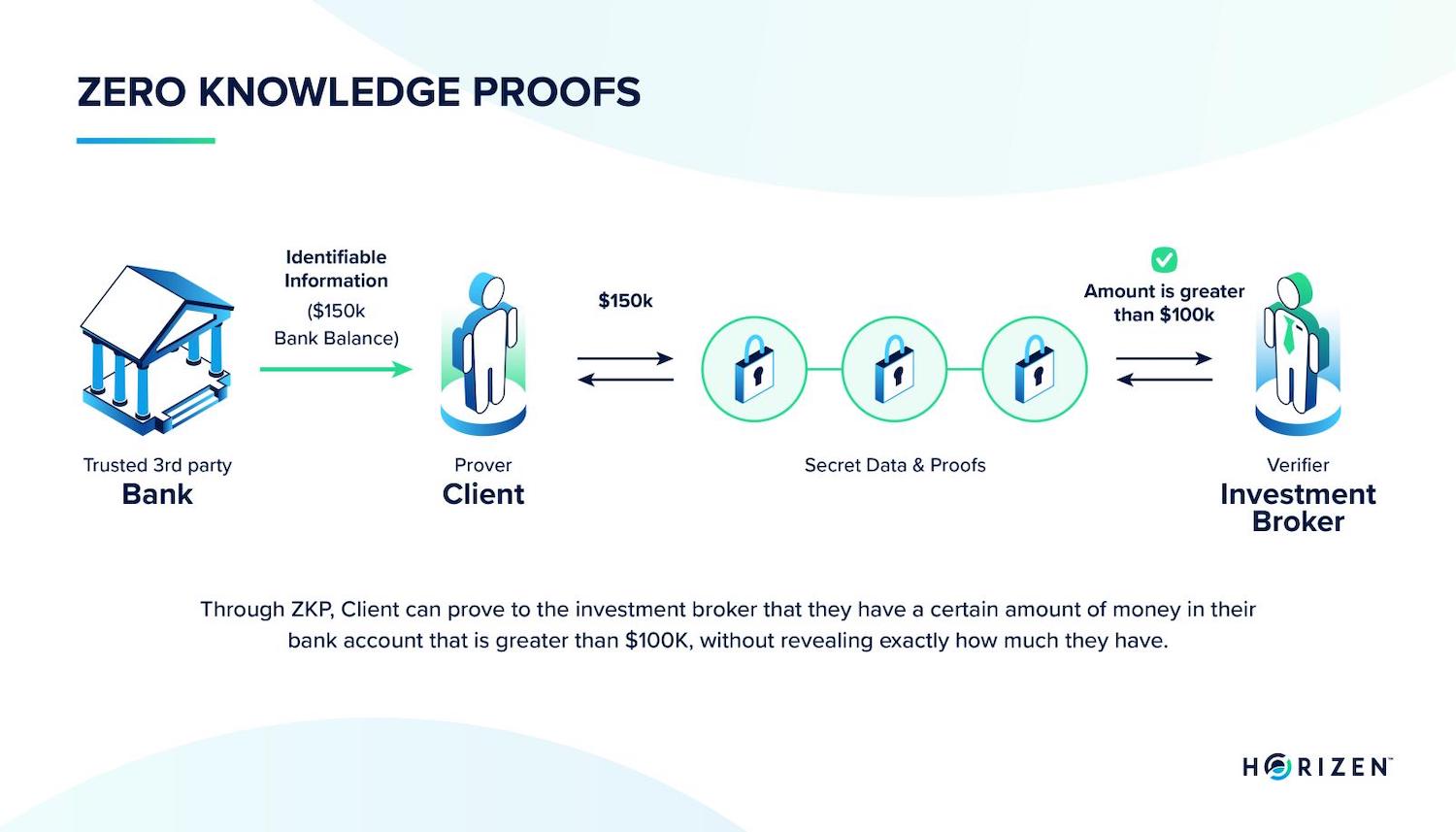
Private inference allows businesses to run AI models on encrypted data. Users get predictions without the model owner seeing the inputs. Data provenance uses similar cryptographic guarantees to verify that training data came from licensed sources, ensuring compliance without leaking proprietary datasets.
Frequently asked questions about zkML
How long does it take to generate a ZK model proof? Proof generation is significantly slower than standard inference. For large language models, generating a proof can take minutes or even hours, depending on the library and hardware. This latency makes ZK model proofs 2026 viable for batch verification or offline auditing rather than real-time chat responses.
Do ZK proofs work with all AI models? Compatibility depends on the underlying zkML library. Tools like Zama’s Concrete ML support specific neural network layers, while others like Halo2 are better suited for custom arithmetic circuits. Most libraries do not yet support the full complexity of modern transformer architectures out of the box.
Is running ZK proofs expensive? Yes. The computational overhead is high, requiring significant CPU or GPU resources to generate the proof. While verification is cheap and fast, the generation cost limits widespread adoption to high-stakes use cases where trust outweighs the expense.
Can I verify a proof on a standard phone? Verification is designed to be lightweight. Once a proof is generated on a powerful server, verifying it on a mobile device or lightweight client is computationally inexpensive and fast, ensuring that trust can be established without heavy local processing.
No comments yet. Be the first to share your thoughts!