The 2026 shift to verifiable privacy
For years, zero-knowledge proofs (ZKP) lived in the realm of theoretical cryptography and niche blockchain applications. That era has ended. By early 2026, the technology has transitioned into essential infrastructure for artificial intelligence compliance, offering a way to verify model provenance without exposing sensitive training data.
This shift is driven by a convergence of regulatory pressure and technical maturity. In 2026, the ZKProof initiative has moved beyond academic workshops to establish production-ready standards. The upcoming ZKProof Standards workshop in Rome on May 9-10, 2026, signals a broader industry commitment to mainstreaming these protocols. The goal is no longer just proving mathematical correctness, but creating a verifiable privacy stack that can handle the complexity of modern AI systems.
The practical application extends beyond simple identity verification. In 2026, ZKPs are increasingly used for age verification, credential checks, and settlement proofs. For AI developers, this means they can demonstrate that a model was trained on compliant, licensed data without revealing the proprietary datasets themselves. This capability is becoming a prerequisite for operating in jurisdictions with strict data privacy laws, such as the EU and California.
The move toward verifiable privacy is not just a technological upgrade; it is a structural change in how AI models are audited. As the ZKProof standards solidify, the burden of proof shifts from opaque internal audits to cryptographic certainty. This allows organizations to comply with emerging AI regulations while maintaining the confidentiality of their intellectual property.
For more details on the current standards, refer to the ZKProof Standards homepage.
How ZK proofs verify training data
Zero-knowledge proofs (ZKPs) allow developers to cryptographically demonstrate that a model was trained on a specific dataset without revealing the underlying data. This mechanism addresses a critical gap in model provenance: verifying compliance with licensing, copyright, or privacy regulations while keeping proprietary or sensitive training information confidential.
The process relies on a trusted setup phase where a "witness" (the training data) and a "statement" (the compliance criteria) are defined. A zk-SNARK or zk-STARK circuit is then constructed to prove that the witness satisfies the statement. For example, a proof can confirm that every data point in the training set has a valid license key, or that no personally identifiable information (PII) from a protected class was included, without exposing the actual content of those records.
This non-interactive approach means auditors do not need to trust the model developer. They only need to verify the mathematical validity of the proof. As noted in recent cybersecurity research, these proofs enable parties to demonstrate ownership or compliance of knowledge without disclosing the data itself, shifting the burden of verification from manual auditing to cryptographic certainty.
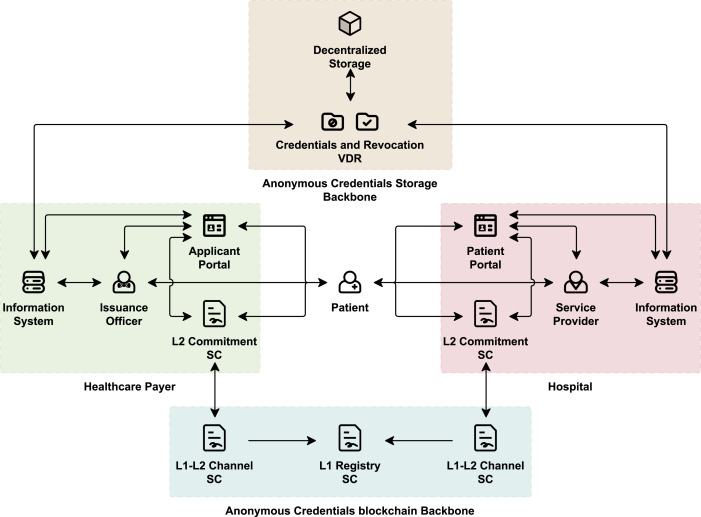
The technical feasibility of this approach is supported by ongoing academic and industry work. Research published in 2025 highlights how ZKPs on blockchain can boost digital trust by providing immutable, verifiable records of compliance. Similarly, studies on "sending zero-knowledge proofs to the future" explore non-interactive variants that allow proofs to be published and verified independently, a key requirement for scalable model provenance systems. These developments suggest that ZK model proofs are moving from theoretical cryptography to practical regulatory tools.
While the technology is promising, it is not yet a universal standard. Most current implementations are experimental or limited to specific use cases, such as verifying the absence of specific keywords or the presence of certain metadata. As of 2026, no single jurisdiction has mandated ZK proofs for all AI models, but regulatory bodies in the EU and US are actively exploring their use in AI governance frameworks. The focus remains on ensuring that the cryptographic proofs are themselves secure and that the "trusted setup" phase does not introduce new vulnerabilities.
For developers, integrating ZK proofs into the training pipeline requires significant computational resources and specialized expertise. The overhead of generating proofs for large-scale datasets can be substantial, though advancements in proof systems like STARKs are reducing these costs. As the technology matures, we can expect to see more standardized protocols for ZK model proofs, similar to how HTTPS became the standard for web security. Until then, these proofs remain a powerful but complex tool for demonstrating model integrity.
Comparing ZK Proof Implementations
As of 2026, the landscape of zero-knowledge proof (ZKP) frameworks has matured from experimental research to production-ready infrastructure. Selecting the right implementation depends on specific compliance requirements, such as proof generation speed, verification cost, and ecosystem maturity. ZKProof.org remains the primary standard-setting body, ensuring interoperability across these diverse tools.
The following comparison highlights leading frameworks relevant to AI model provenance. RISC Zero stands out for its extensive production track record and robust tooling, now capable of running on 16 consumer GPUs. Circom offers a flexible circuit design language suitable for complex arithmetic, while Halo2 provides a modern, modular architecture with strong verification efficiency.
| Framework | Proof Generation Speed | Verification Cost | Ecosystem Maturity |
|---|---|---|---|
| RISC Zero | High (Optimized for CPU) | Low | Production-Ready (2026) |
| Circom | Variable (Circuit-Dependent) | Medium | Mature (Widely Adopted) |
| Halo2 | Medium (GPU-Accelerated) | Low | Growing (Strong Academic Backing) |
These metrics are not static; they evolve with hardware advancements and protocol updates. For AI compliance, the choice often hinges on whether the priority is rapid proof generation for large models or minimal verification costs for on-chain validation. Official documentation from each project should be consulted for the most current performance benchmarks.
Timeline of ZK compliance standards
Use this section to make the Zero-Knowledge Proofs decision easier to compare in real life, not just on paper. Start with the reader's actual constraint, then separate must-have requirements from details that are merely nice to have. A practical choice should survive normal use, maintenance, timing, and budget. If a recommendation only works in an ideal situation, call that out plainly and give the reader a fallback path.
The simplest way to use this section is to write down the must-have criteria first, then compare each option against those criteria before weighing nice-to-have features.
Checklist for privacy-preserving audits
Organizations adopting zero-knowledge proofs (ZKPs) for AI model provenance must align technical implementation with regulatory expectations. As ZKPs move into identity, compliance, and credential verification in 2026, a structured audit trail is essential for demonstrating that private data remains protected while still satisfying oversight requirements.
Confirm that the underlying ZK circuit logic matches the claimed model architecture. Use verified libraries from ZKProof.org to ensure the proof generation process is mathematically sound and free from implementation errors that could invalidate compliance claims.
Map which data attributes are subject to GDPR, CCPA, or sector-specific regulations. Document how ZKPs isolate sensitive fields (e.g., PII) from public model outputs, ensuring that only the necessary proof of compliance is revealed to auditors.
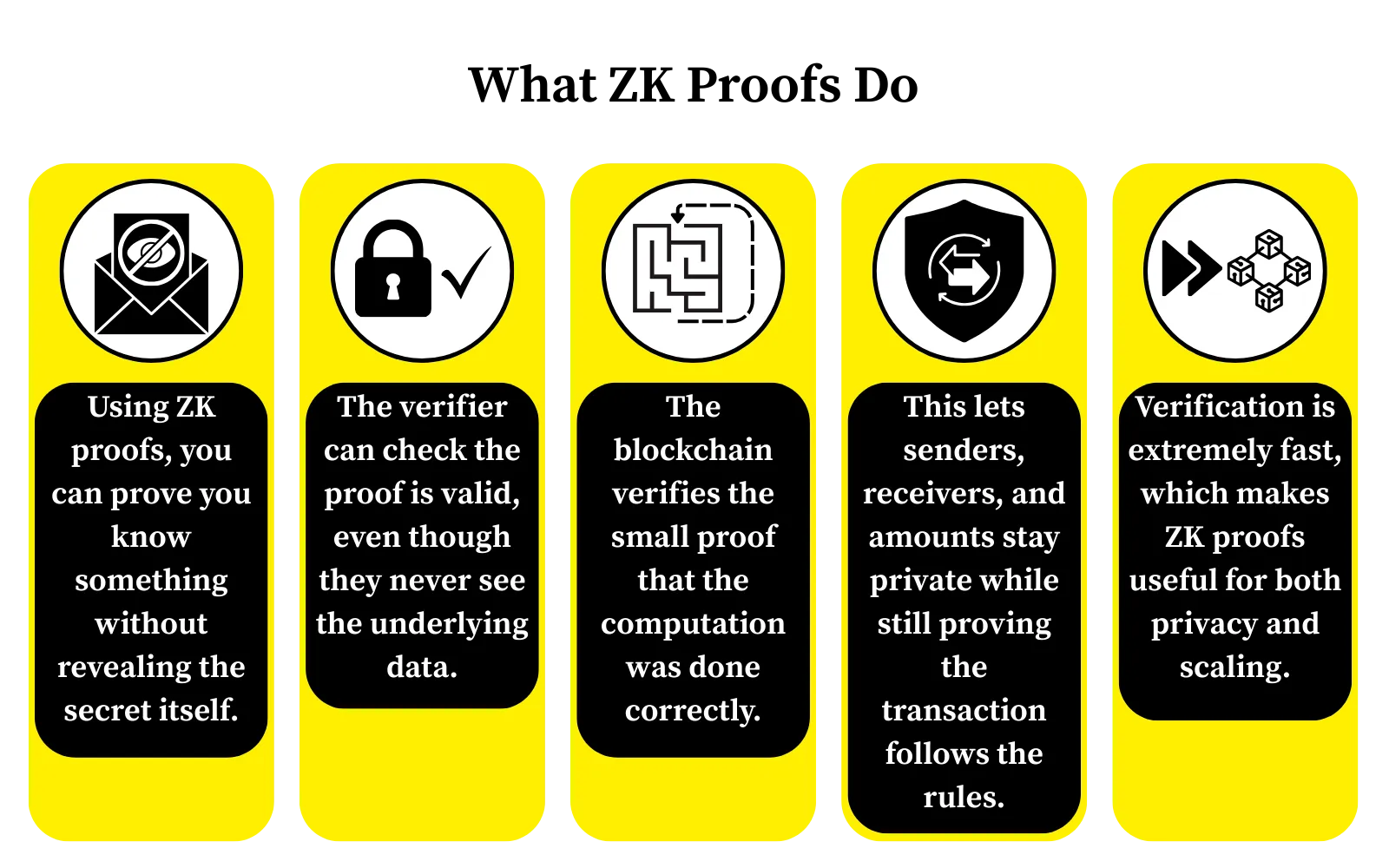
Set up independent verification nodes that can validate ZK proofs without accessing the underlying private data. Ensure these nodes are timestamped and logged to create an immutable record of audit events for regulatory review.
No comments yet. Be the first to share your thoughts!