What zkML Actually Does
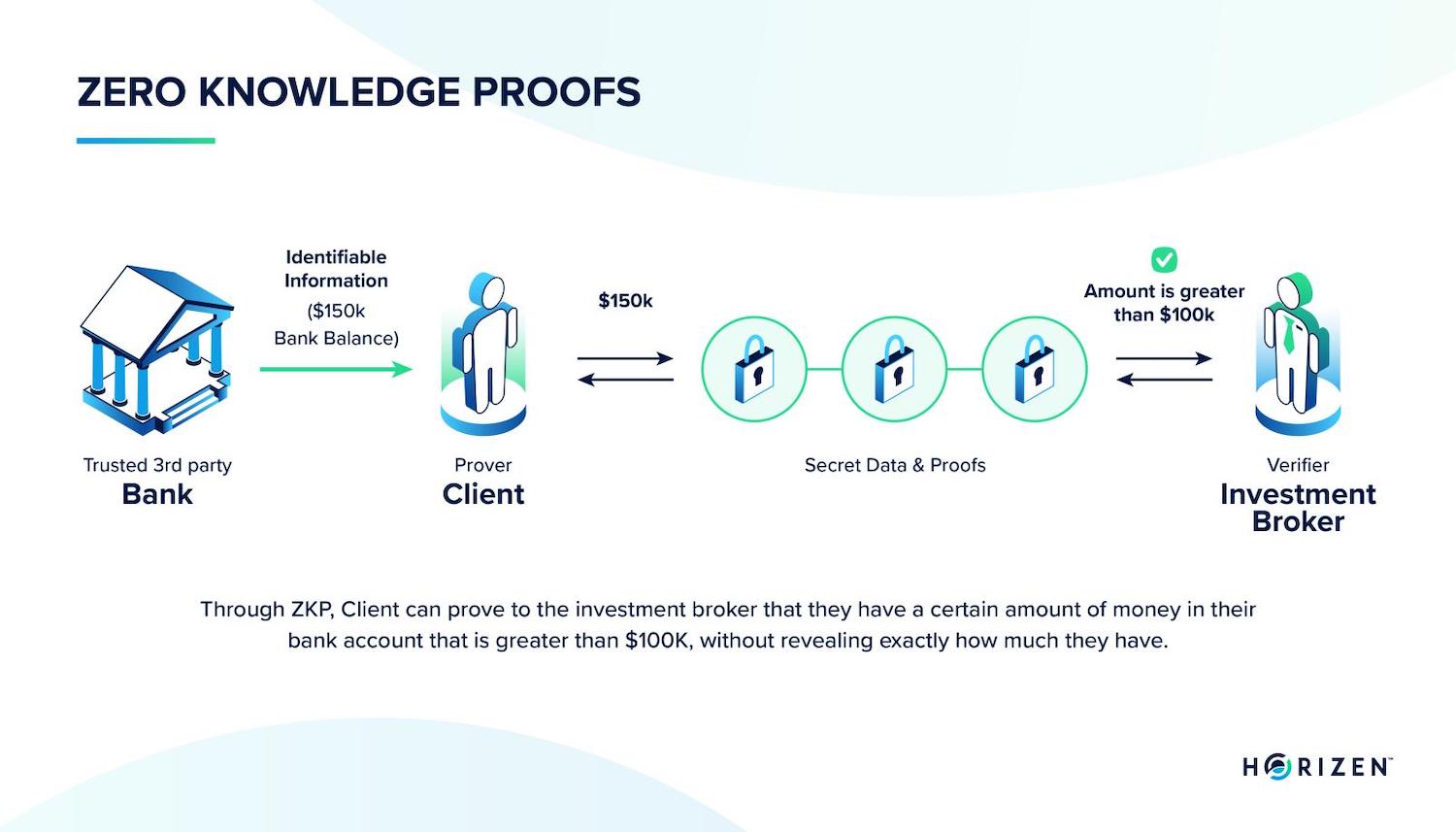
Zero-knowledge machine learning (zkML) verifies that a neural network executed a computation correctly without exposing the model weights or input data. While general zero-knowledge proofs (ZKPs) allow one party to prove a statement is true without sharing evidence, zkML applies this rigor specifically to the arithmetic of machine learning. This distinction is critical because standard ZKPs are often too slow for the massive matrix multiplications required in deep learning. zkML bridges this gap by translating ML operations into a format that can be efficiently proven.
The technology focuses on two primary verification scenarios: inference and training. In inference, a user submits data to a model and receives a prediction alongside a cryptographic proof that the prediction was generated by the claimed model. In training, zkML allows organizations to verify that a model was trained on specific, compliant datasets without exposing the proprietary training data itself. This ensures integrity in high-stakes environments like healthcare or finance, where model accountability is as critical as the prediction itself.
Unlike traditional audit logs that rely on trust, zkML provides mathematical certainty. It answers the question: "Did this specific input produce this specific output using this specific model?" By decoupling verification from revelation, zkML enables a new standard for AI trust, allowing models to operate in public or untrusted environments while keeping sensitive intellectual property and user data private.
Proving Model Integrity Without Leaking IP
Traditional machine learning models operate as black boxes. Once deployed, you can see the inputs and outputs, but the internal logic remains opaque. This opacity creates a fundamental trust gap: users cannot verify if a model is making decisions based on biased data, outdated weights, or unauthorized modifications.
zkML resolves this by applying zero-knowledge proofs to machine learning. Instead of exposing the proprietary weights or the sensitive training data, the model generates a cryptographic proof that it executed the computation correctly according to the specified rules. It is like a sealed envelope that proves a document was read without revealing the text inside.
Traditional AI verification requires exposing model internals. zkML allows third parties to verify correctness without ever seeing the weights or the data.
This mechanism protects intellectual property while ensuring accountability. Model owners retain exclusive rights to their architecture and training datasets. Simultaneously, auditors and users gain mathematical certainty that the output was not tampered with. The proof attests to the integrity of the execution environment, not the content of the secret itself.
By decoupling verification from revelation, zkML enables a new standard for AI trust. It allows organizations to deploy high-stakes models in regulated industries like finance and healthcare, where data privacy and model integrity are non-negotiable. The technology shifts the focus from blind faith to cryptographic proof.
How zkML Optimizes Inference Speed
The primary bottleneck for zkML has historically been computational overhead. Generating a proof for a complex neural network can take minutes or hours, making it impractical for real-time applications. However, recent engineering breakthroughs in constraint generation and layout optimization have significantly reduced this latency, moving zkML from theoretical research toward production viability.
Systems like ZKML, introduced in recent ACM research, address this by decoupling the proof generation process into two distinct phases: efficient constraint gadgets and a layout optimizer. The framework provides specialized gadgets for low-level operations commonly found in deep learning models, such as matrix multiplications and activation functions. Instead of forcing the entire model into a generic arithmetic circuit, the optimizer decides how to lay out these gadgets to minimize the total number of constraints.
This approach yields substantial efficiency gains. By optimizing the gadget layout for specific architectures, including state-of-the-art vision models and distilled language models like GPT-2, the system reduces the computational burden required to generate ZK-SNARKs. For instance, optimized layouts for vision models have demonstrated the ability to cut proof generation time by orders of magnitude compared to naive implementations. This optimization is critical for making zkML viable for production environments where speed is as important as security.
Libraries like EZKL further simplify this process by providing a command-line tool for performing inference on deep learning models within a zk-SNARK framework. EZKL automates the conversion of standard model formats into the constraint systems needed for zero-knowledge proofs, leveraging the underlying optimizations to ensure that even complex computational graphs remain tractable. These tools collectively lower the barrier to entry, allowing developers to verify AI inferences without sacrificing performance.
The shift from generic circuits to optimized, gadget-based layouts represents a fundamental change in how we approach zkML verification. As these tools mature, they promise to make AI verification not just secure, but fast enough to be integrated into everyday applications.
Where zkML Fits in Decentralized AI
Decentralized AI promises to move computation from central clouds to open networks, but this shift introduces a fundamental trust gap. When models run across distributed nodes, verifying that the output actually came from the claimed model and wasn’t tampered with becomes difficult. zkML bridges this gap by providing cryptographic proof of correct execution without revealing the underlying data or model weights.
In a decentralized environment, trust is no longer based on institutional reputation but on mathematical verification. zkML allows any participant to verify that a neural network inference was performed correctly on specific inputs. This capability is essential for open networks where nodes may be untrusted or adversarial. By attaching a zero-knowledge proof to each inference, the network ensures integrity without requiring a central authority to audit every calculation.
This verification mechanism also supports edge inference, where models run on local devices rather than in the cloud. zkML enables these edge nodes to prove their computations to the network, ensuring that decentralized AI systems remain robust and reliable even when computation is distributed globally. The result is a trustless infrastructure where AI services can operate openly, securely, and independently of any single provider.
Common Mistakes When Implementing zkML
zkML verification is still a young field, and the gap between theoretical proofs and practical deployment is wide. Many teams underestimate the computational overhead required to translate neural networks into arithmetic circuits. This section outlines the most frequent implementation errors.
Ignoring Constraint Complexity
The most common pitfall is assuming that any model can be proven with the same efficiency. Neural network layers, particularly those involving non-linear activations like ReLU or sigmoid, introduce significant constraint overhead. Each non-linear operation must be approximated or decomposed into arithmetic gates, which can exponentially increase proof generation time.
Teams often select a proof system based on verification speed alone, ignoring the prover’s cost. For large models, the constraint generation phase becomes the bottleneck. Optimizing the circuit design to minimize gates is more important than choosing the most advanced SNARK variant.
Choosing the Wrong Proof System for Model Size
Not all zero-knowledge proof systems scale equally. zk-SNARKs offer small proof sizes and fast verification but require a trusted setup and can struggle with very large circuits. zk-STARKs remove the trusted setup and scale better with circuit size, but the proof sizes are larger.
Selecting a proof system without benchmarking against your specific model size leads to either unmanageable computation times or bloated proof payloads. Match the proof system to the complexity of your neural network architecture, not just your general privacy requirements.
Neglecting Input Validation
zkML proves that a model executed correctly on provided inputs, but it does not verify the inputs themselves. If the input data is corrupted or maliciously crafted, the proof remains valid, but the output is garbage. Implementing input validation mechanisms outside the proof circuit is essential to ensure the integrity of the entire pipeline.
Frequently Asked Questions About zkML
How does zkML differ from traditional model auditing?
Traditional auditing relies on statistical sampling and access to internal model states, which can leak proprietary data or trade secrets. zkML provides a cryptographic proof that a specific output was generated by a specific model on specific inputs. This allows verification without granting auditors access to the model weights or the raw training data, preserving intellectual property while ensuring compliance.
What is the current performance overhead of zkML inference?
Historically, generating proofs for deep learning models took minutes or hours. Recent optimizations in constraint gadgets and layout engines, such as those in the ZKML framework and EZKL library, have reduced this latency significantly. For smaller models or specific layers, proof generation can now occur in seconds, making real-time or near-real-time verification feasible for many production use cases, though large-scale models still require careful optimization.
Can zkML be used for training, or only inference?
zkML supports both inference and training verification. In inference, it proves the correctness of a single prediction. In training, it can verify that a model was trained on a specific dataset or that the training process followed a prescribed algorithm without exposing the private data used during those epochs. This is particularly useful for regulatory compliance in sectors like healthcare and finance.
Which proof systems are best for zkML?
The choice depends on your constraints. zk-SNARKs are preferred when proof size and verification speed are critical, but they require a trusted setup. zk-STARKs are scalable and do not require a trusted setup, but they produce larger proofs. For zkML, the choice often hinges on whether the model architecture fits efficiently into the arithmetic circuits required by the chosen proof system.
No comments yet. Be the first to share your thoughts!