Why AI needs ZK model proofs
The current trajectory of artificial intelligence is colliding with a fundamental trust deficit. As large language models and generative AI systems ingest petabytes of proprietary and copyrighted data, the opacity of their training pipelines has become a legal and operational liability. Enterprises cannot deploy models that might leak sensitive information or violate intellectual property rights if they cannot prove how those models were built. Traditional auditing methods—scanning weights or inspecting datasets—are either computationally prohibitive or impossible for closed-source proprietary models. This creates a black box where compliance is assumed rather than verified.
Zero-knowledge model proofs (ZKML) resolve this paradox by allowing a party to prove that a model was trained on compliant data without revealing the data itself. By generating a cryptographic proof that the computation adhered to specific rules—such as "no copyrighted material" or "no PII exposure"—organizations can verify integrity on-chain. This approach shifts the burden of proof from manual inspection to mathematical certainty. It allows AI providers to demonstrate regulatory compliance while protecting their most valuable asset: the training dataset.
This capability is particularly critical for high-stakes sectors like finance and healthcare, where data sovereignty is non-negotiable. A ZK proof can attest that a model's output was generated by a specific, audited version of the algorithm, ensuring that the inference process matches the approved training parameters. This prevents "model drift" and unauthorized modifications post-deployment. By embedding these proofs into blockchain infrastructure, companies create an immutable audit trail. This transparency is not just a technical feature; it is a prerequisite for institutional adoption of AI at scale.
How ZKML verifies model execution
To evaluate ZKML for real-world deployment, distinguish between mandatory compliance requirements and optional efficiency gains. A viable architecture must withstand maintenance overhead and budget constraints; if a solution only functions in ideal conditions, identify the fallback path explicitly.
Begin by defining the non-negotiable criteria: data privacy guarantees, regulatory auditability, and proof finality. Compare each ZKML framework against these baselines before considering secondary benefits like proof generation speed or circuit complexity. This disciplined approach prevents over-engineering and ensures the chosen solution aligns with actual operational constraints.
Top use cases for zero-knowledge AI verification
Zero-knowledge model proofs (ZKML) move AI verification from a trust-based assumption to a cryptographically provable fact. This shift is critical for sectors where data integrity, regulatory compliance, and intellectual property rights intersect. By allowing a model to prove its output was generated from specific, unaltered inputs without revealing the inputs themselves, ZKML enables high-stakes applications in finance, healthcare, and copyright.
Regulated Finance and Auditing
In financial services, the opacity of large language models and proprietary trading algorithms poses significant regulatory risk. ZKML allows institutions to prove that their AI-driven decisions—such as credit scoring or fraud detection—adhered to strict regulatory constraints and used only approved, sanitized data. This provides an auditable trail for compliance officers without exposing sensitive customer information or proprietary model weights to the public chain. The verification happens on-chain, ensuring that the model’s behavior matches the certified blueprint.
Healthcare and Patient Privacy
Healthcare AI requires the highest standard of data privacy due to regulations like HIPAA and GDPR. ZKML enables hospitals and research institutions to train or validate models on sensitive patient data without ever exposing that data to the model provider or the public. A hospital can prove that a diagnostic model was trained on a specific, verified dataset and produced a correct result, while keeping the patient records entirely private. This facilitates collaborative research and model validation across institutions without violating patient confidentiality.
Copyright and Content Provenance
For digital media and creative industries, ZKML offers a mechanism to verify the origin and integrity of AI-generated content. Artists and creators can embed zero-knowledge proofs into their models to demonstrate that their work was generated using licensed data or that a specific output is a derivative of their original IP. This helps combat unauthorized scraping and deepfakes by providing a cryptographic certificate of authenticity. It allows platforms to verify that AI-generated images or text comply with copyright laws without needing to inspect the entire training dataset.
Comparison: Traditional vs. ZK Verification
The following table contrasts traditional AI verification methods with zero-knowledge model proofs, highlighting the shift from opaque trust to cryptographic certainty.
The Computational Cost of Trust
Deploying zero-knowledge proofs on large language models introduces a significant computational overhead that challenges current infrastructure. The process requires translating complex neural network operations into arithmetic circuits, a task that is exponentially more demanding than standard cryptographic signatures. As noted in recent research on LLMs for ZK proof code, the translation layer itself becomes a bottleneck, requiring substantial memory and processing power to generate valid proofs for even modest model sizes [[src-serp-7]].
Proof generation time remains the primary friction point for real-time verification. Generating a zk-SNARK proof for a model inference can take minutes or hours, depending on the circuit complexity and hardware. This latency makes real-time validation of training data integrity impractical for high-frequency trading or instant settlement systems. The trade-off is clear: while the proof is succinct and fast to verify, the cost to create it is prohibitive for many applications [[src-serp-5]].
Integrating ZK circuits with large language models also presents architectural complexity. LLMs rely on non-linear activation functions and floating-point arithmetic, which do not map cleanly to the prime fields used in most ZK frameworks. Developers must approximate these operations using polynomial constraints, increasing the circuit size and further slowing down proof generation. This complexity demands specialized tooling and deep expertise in both cryptographic primitives and machine learning architecture.
The Future of ZKML in 2026
By 2026, zero-knowledge machine learning (ZKML) is expected to shift from experimental proofs to standardized infrastructure. The ZKProof initiative is leading the charge in establishing rigorous academic standards for zero-knowledge cryptography, aiming to mainstream these proofs across the industry. This standardization is critical for ensuring that AI model verifications are not just theoretical, but practically deployable on public blockchains.
As standards solidify, the landscape will likely see the emergence of on-chain AI agents capable of self-verifying their own training data and decision-making processes. These agents will operate with a level of transparency previously impossible, allowing users to audit model behavior without exposing proprietary algorithms. The convergence of ZKML and autonomous agents will redefine trust in decentralized systems, moving beyond simple transaction verification to full model accountability.
For developers and investors, the focus now turns to interoperability and efficiency. As the ZKProof community refines its protocols, the computational cost of generating proofs will decrease, making real-time verification feasible for high-frequency trading and automated governance. The next phase of this technology will not just verify data, but verify the integrity of the AI itself, creating a new layer of security for the digital economy.
Common questions about ZK proofs
What are zk proofs?
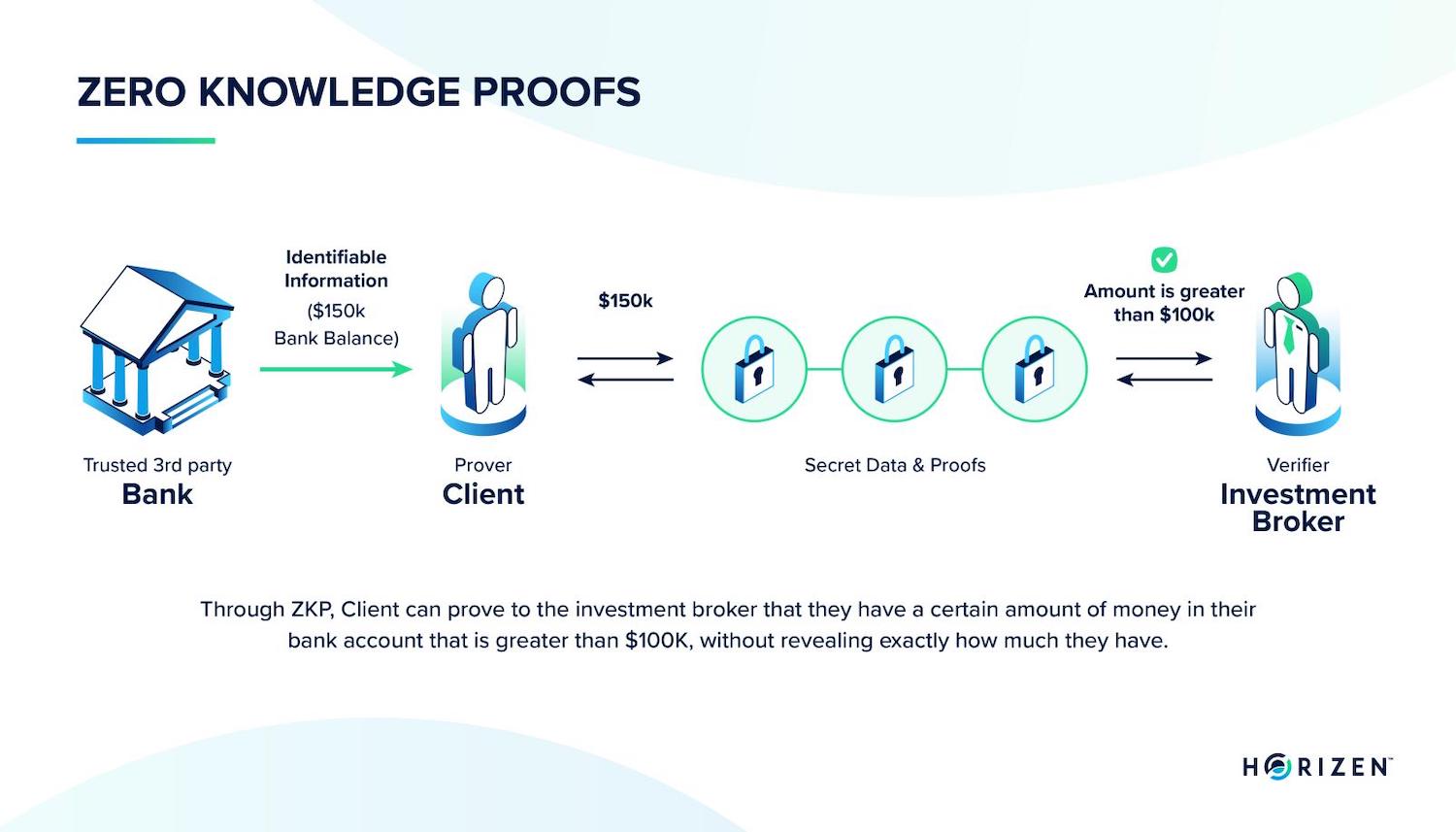
A zero-knowledge proof (ZKP) is a cryptographic protocol where a prover convinces a verifier that a statement is true without revealing any underlying data. In the context of AI training, this allows developers to prove that a model was trained on compliant, verified datasets without exposing the proprietary data or the specific training steps. This preserves intellectual property while ensuring regulatory compliance. See Ethereum.org's guide for a technical breakdown.
What is zk verify?
ZK verification is the computational process where the verifier checks the validity of the proof. It confirms that the prover followed the correct protocol and that the output matches the claimed input, without needing to re-run the entire training process. This verification is often faster and cheaper than the original computation, enabling scalable audits of AI model integrity on-chain.
What is an example of a zero-knowledge proof?
The classic "Ali Baba's Cave" analogy illustrates the concept: a prover must navigate a circular cave with two paths and a locked door. If the prover can always open the door when the verifier randomly calls out a path, the verifier is convinced the prover has the key, even though the key itself is never shown. In AI, this translates to proving a model's accuracy or data source without revealing the model weights or raw dataset.
Can Cardano add zk proofs?
Cardano supports zero-knowledge proofs through its Plutus smart contract platform and ongoing research into SNARKs (Succinct Non-interactive Arguments of Knowledge). While not yet a native feature in the same way as some Ethereum Layer 2s, the Cardano ecosystem is actively developing ZK capabilities to enhance privacy and scalability for on-chain AI verification.
No comments yet. Be the first to share your thoughts!