What zero-knowledge proofs verify
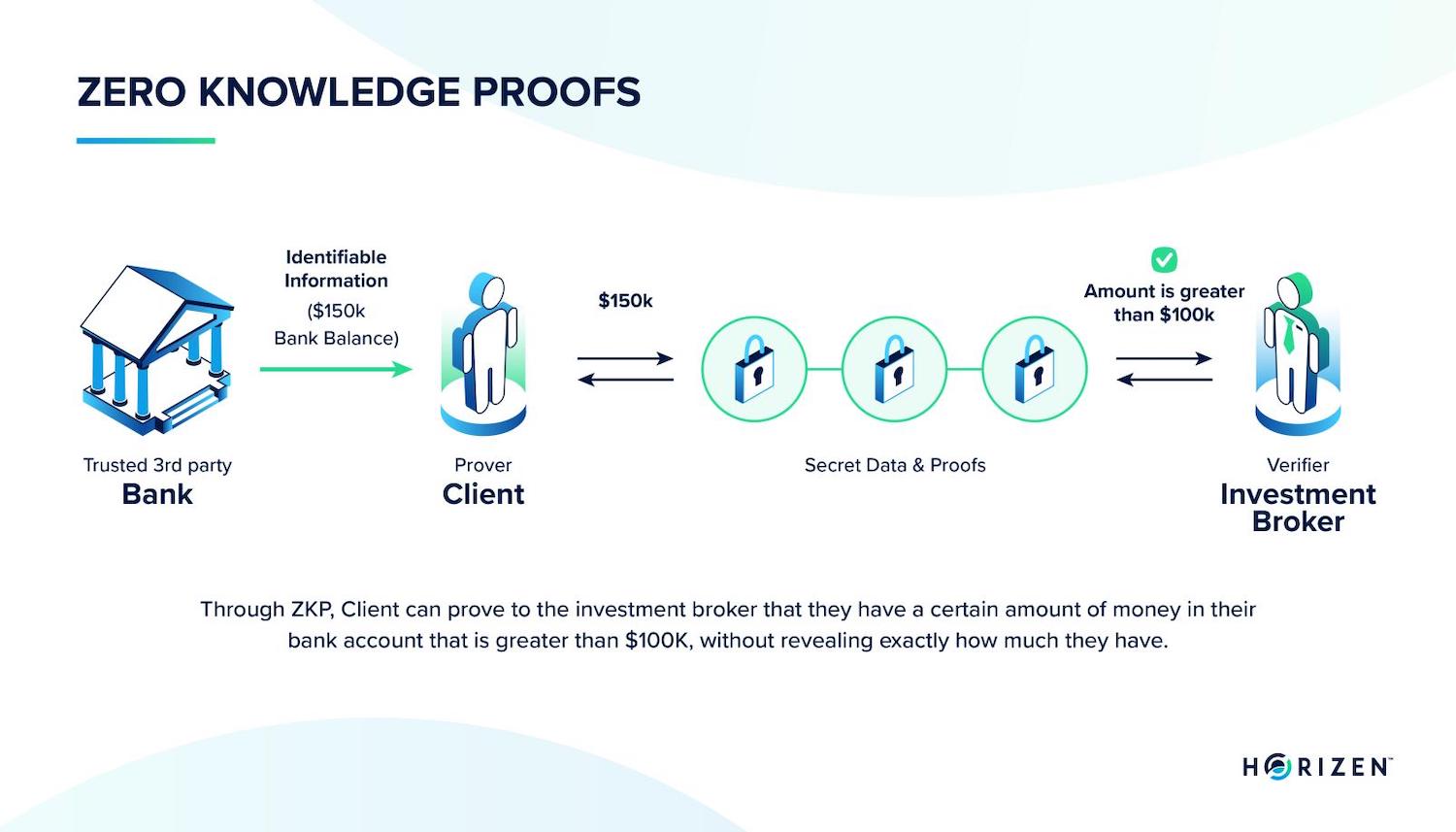
Zero-knowledge proofs (ZKPs) are a cryptographic method that allows one party to prove they know a specific piece of information without revealing the information itself. In the context of artificial intelligence, this capability solves a fundamental tension: how to verify that a model has processed private data correctly without exposing that data to the public or the model provider. This concept, originating in 1980s cryptography research, has evolved into a critical tool for maintaining data privacy in AI systems [src-serp-3].
When an AI model processes sensitive data—such as personal health records or financial transactions—the traditional approach requires the data to be visible to the system performing the verification. Zero-knowledge proofs change this dynamic. They enable a "prover" to demonstrate that a statement about the data is true, such as "this training data complies with GDPR" or "this model was trained on legitimate sources," without ever displaying the underlying data [src-serp-1].
This verification process is essential for model integrity. Stakeholders need assurance that an AI system has not been poisoned with malicious data or trained on copyrighted material without permission. ZKPs provide a mathematical guarantee that the training process adhered to these constraints, ensuring the model's output is trustworthy. The proof is verified independently, allowing third parties to audit the model's behavior without accessing the proprietary or private data that fuels it.
The implications for AI governance are significant. By decoupling verification from visibility, organizations can collaborate on AI development while maintaining strict data silos. This approach supports regulatory compliance and builds user trust, as individuals can be confident their data contributes to model improvements without being exposed to potential leaks or misuse.
ZKML vs traditional model auditing
Traditional model auditing relies on two primary approaches: open-weight transparency and black-box testing. Open-weight models allow researchers to inspect the architecture and weights directly, but this exposes the underlying data patterns and intellectual property. Black-box auditing treats the model as a sealed unit, testing inputs and outputs to verify compliance. This method protects the model's internal structure but offers no guarantee that the training data or inference logic adheres to privacy or safety standards.
Zero-Knowledge Machine Learning (ZKML) shifts this dynamic by enabling verification without exposure. Instead of revealing the model or the data, ZKML generates a cryptographic proof that the computation was performed correctly on valid inputs. This allows an auditor to confirm that a model followed specific rules or used compliant data without ever seeing the proprietary weights or sensitive information. It transforms auditing from a process of inspection to one of mathematical verification.
The trade-offs between these methods are significant for enterprise and financial applications. Traditional auditing is often faster and cheaper for simple checks but fails to provide privacy guarantees. ZKML offers superior privacy and trust but incurs higher computational costs and slower verification times due to the complexity of generating zero-knowledge proofs.
| Feature | Traditional Auditing | ZKML |
|---|---|---|
| Data Privacy | Low (requires data access for black-box or reveals weights for open-weight) | High (proofs reveal nothing about inputs or model internals) |
| Verification Speed | Fast (direct inspection or simple input/output testing) | Slow (complex cryptographic proof generation and verification) |
| Computational Cost | Low (standard hardware suffices) | High (requires specialized hardware or significant CPU/GPU overhead) |
| Trust Model | Trust-based (relies on auditor integrity and access control) | Cryptographic (mathematically guaranteed correctness without trust) |
The choice between traditional auditing and ZKML depends on the sensitivity of the data and the regulatory environment. For public-facing models where transparency is valued over privacy, traditional methods remain practical. However, for high-stakes financial or healthcare applications where data leakage is unacceptable, ZKML provides the necessary assurance, despite the current performance overhead.
Proving training data provenance
Large language models are often trained on massive, mixed datasets that include copyrighted material, private user data, or restricted corporate records. Proving that a model was trained on a specific, authorized dataset without revealing the dataset contents is a critical use case for zero-knowledge proofs (ZKPs). This capability allows organizations to demonstrate compliance and data lineage while maintaining the confidentiality of their proprietary information.
The process begins by creating a cryptographic commitment to the training data. Instead of sharing the raw text, the model creator generates a hash or Merkle tree of the dataset. A ZKP protocol then verifies that the model's weights are consistent with this committed dataset. If the proof verifies, the verifier knows the model was trained on the authorized data, but learns nothing about the actual content within it.
This approach is particularly valuable for licensed content providers. For example, a news agency licensing its archives to an AI company can require a ZK proof that the resulting model was trained exclusively on their licensed corpus. This prevents the model from being used to compete with the original content source or to generate unlicensed derivatives. The proof acts as a digital notary, confirming the origin of the model's knowledge base without exposing the source material.
The technical implementation typically involves zk-SNARKs or zk-STARKs, which allow for efficient verification of complex computations. The model training process is represented as an arithmetic circuit, and the ZKP proves that the circuit was executed correctly on the committed input data. This ensures that the model's behavior is traceable to specific, authorized sources, providing a new layer of accountability in AI development.
While the concept is still emerging, several research initiatives are exploring practical applications. Projects like Midnight by Cardano are investigating how ZKPs can be used to verify data provenance in AI models. These efforts aim to create a standardized framework for proving data lineage, which could become a requirement for enterprise AI deployments where data privacy and compliance are paramount.
The computational cost of verification
Generating zero-knowledge proofs for large language models carries a heavy price tag in terms of time and processing power. On standard hardware, creating a single proof for a complex AI inference can take hours. This latency creates a significant barrier to adoption, as it makes real-time verification impractical for most current applications. The computational overhead required to mathematically guarantee that an AI model executed correctly without revealing its weights or input data is immense.
Newer zkVMs (zero-knowledge virtual machines) are actively working to mitigate this bottleneck. By optimizing the circuits and leveraging specialized hardware, these platforms are reducing proof generation times from hours down to minutes. While still not instantaneous, this improvement marks a critical step toward making zero-knowledge verification feasible for more dynamic AI interactions. The tradeoff remains: you gain absolute privacy and verification, but you pay for it with significant computational resources.
ZKML adoption timeline
Zero-knowledge machine learning (ZKML) is transitioning from academic experiments to regulated infrastructure. The timeline for mainstream adoption hinges on two factors: regulatory mandates for model transparency and the maturity of proving hardware. Currently, the technology is in a "trust-but-verify" phase, where early adopters use ZKML for high-stakes audits rather than real-time inference.
Regulatory drivers (2025–2026)
The primary catalyst for near-term adoption is regulatory compliance. Agencies like the NIST are actively defining standards for privacy-enhancing cryptography (PEC) and zero-knowledge proofs [src-serp-4]. As AI regulations tighten, organizations will need to prove model integrity without exposing proprietary weights or sensitive training data. ZKML provides the mathematical guarantee required for these audits, making it a compliance necessity rather than a luxury.
Infrastructure maturity (2026–2028)
Widespread adoption awaits improvements in proving speed and cost. Current ZKML systems can be slow and expensive to run. However, as hardware accelerators and optimized circuits mature, the latency gap will narrow. This infrastructure shift will enable ZKML to move from batch verification to near-real-time validation, unlocking its use in high-frequency trading, healthcare, and autonomous systems.
Market context
The broader crypto and AI markets are closely watching this convergence. The technical complexity of ZKML often correlates with market sentiment in related asset classes. Below is a technical view of market volatility, which can influence investment in AI infrastructure.
Key takeaways
- Regulation first: Compliance needs will drive initial ZKML adoption before consumer demand.
- Hardware matters: Proving speed and cost are the main barriers to real-time use.
- Trust but verify: ZKML offers a new standard for auditing AI models without data leakage.
No comments yet. Be the first to share your thoughts!