Set up the ZKML environment
Implementing zero-knowledge model proofs requires bridging machine learning inference with cryptographic verification. This section establishes the technical foundation by selecting an appropriate ZKML framework and configuring the development environment.
Choose a ZKML framework
The choice of framework dictates which model architectures you can verify and which blockchains you can target. Popular options include RiscZero, which uses a microVM approach to prove arbitrary code execution, and Clio, which specializes in proving neural network computations on-chain. Alternatively, you can build custom SNARK circuits for specific layers, though this requires significant cryptographic expertise.
Configure the development environment
Once a framework is selected, configure your local environment to compile and test proofs. This typically involves installing the framework’s SDK, setting up a local prover node, and ensuring your machine learning runtime (such as PyTorch or TensorFlow) is compatible with the ZKML compiler. Start with a simple model, like a linear regression or a small MLP, to verify the end-to-end flow from inference to proof generation before scaling to complex architectures.
Define the proof statement and limits to account for
Before writing any circuit logic, you must specify exactly what the zero-knowledge proof verifies. In the context of zero-knowledge model proofs, ambiguity here leads to security gaps or unusable systems. You need to determine whether the goal is proving the model architecture, verifying training data integrity, or confirming the correctness of a specific inference output.
1. Identify the verification target
Start by isolating the specific claim you want to make public. If you are proving model architecture, the circuit must verify that the public weights match a known model definition without revealing proprietary hyperparameters. If the goal is training data integrity, the proof must demonstrate that the model was trained on a dataset meeting specific compliance criteria, such as containing no PII, without exposing the data itself. For inference verification, the circuit checks that a given output is the correct result of applying the model weights to a specific input.
2. set circuit limits to account for
Once the target is clear, define the constraints that the ZK circuit will enforce. These constraints act as the rules of the cryptographic protocol. For example, if verifying inference, constraints must ensure that the arithmetic operations in the circuit match the neural network’s forward pass. If verifying data integrity, constraints might involve hash comparisons or membership proofs. Keep the constraint set minimal; every additional constraint increases the computational cost of generating the proof.
3. Document the public vs. private inputs
Clearly separate what is public (visible to the verifier) from what is private (kept secret by the prover). In zero-knowledge proofs, the verifier only learns that the statement is true, not the underlying data. Document these inputs explicitly to avoid accidental information leakage. This separation is critical for maintaining the privacy guarantees that make zero-knowledge model proofs useful for AI verification.
Generate the zero-knowledge proof
Generating a zero-knowledge proof for an AI model involves translating the model’s execution into a mathematical circuit that can be proven. This process turns the AI’s inference steps into constraints, allowing a verifier to check the result without seeing the underlying data or model weights.
Compile the model into a circuit
The first step is to translate the model’s forward pass into a circuit format. This involves breaking down matrix multiplications and activation functions into basic arithmetic gates that the ZK system understands. Tools like Circom or Plonky2 help define these constraints, ensuring that every operation in the AI’s execution is mathematically verifiable.
Generate the witness data
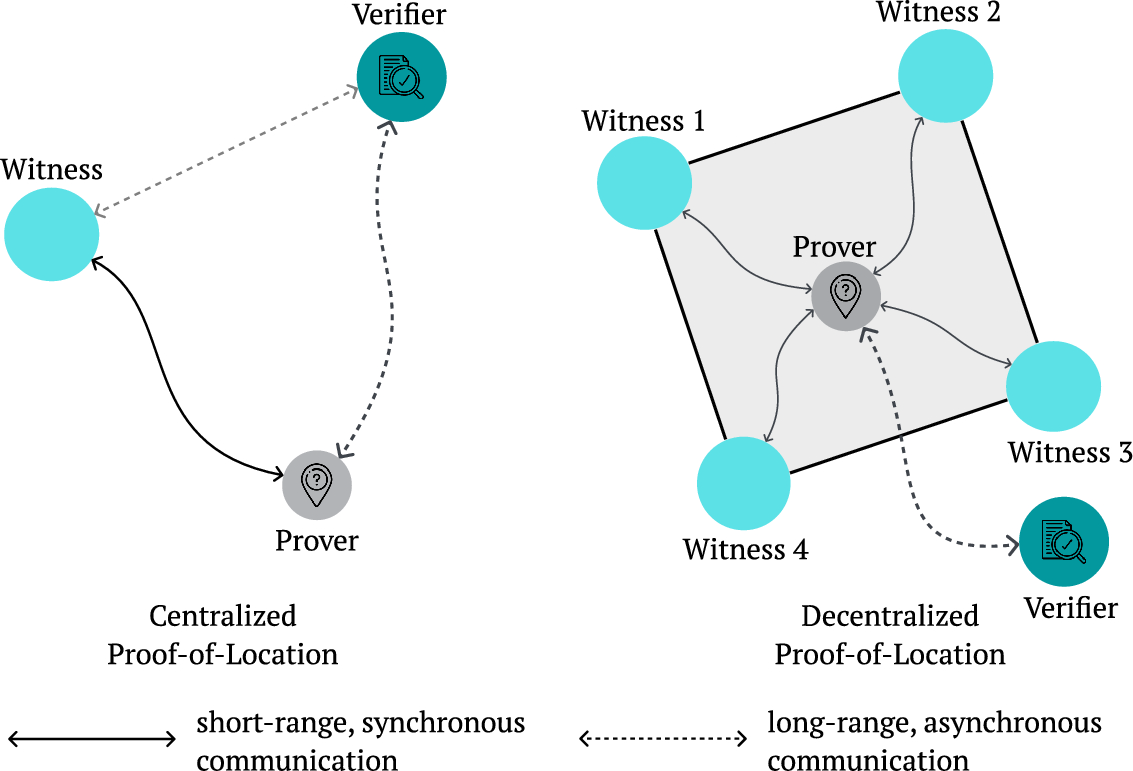
Once the circuit is defined, you need to provide the witness data. This includes the input data, the model weights, and the intermediate values computed during inference. The prover uses this data to calculate the specific values for each gate in the circuit, creating a complete record of the model’s execution that will be used to generate the proof.
Produce the SNARK or STARK
With the circuit and witness data ready, the prover generates the actual proof. This step uses a trusted setup (for SNARKs) or a transparent setup (for STARKs) to create a compact cryptographic proof. The proof attests that the witness data satisfies the circuit constraints, meaning the AI model produced the correct output for the given input. This proof is then ready for verification.
Verify computational feasibility
Before deploying, ensure the proof generation is computationally feasible for your use case. Large AI models can result in complex circuits that are slow to prove. Consider using optimizations like recursive proofs or choosing a ZK system that supports larger circuits efficiently. Testing with a smaller model first can help estimate the time and resources required for full-scale inference.
Translate the AI model’s arithmetic operations into a ZK-friendly circuit using a framework like Circom. Ensure all matrix operations and non-linear activations are correctly constrained.
Feed the input data and model weights into the circuit to compute the witness. This involves calculating the values for each gate in the circuit based on the model’s execution path.
Use a ZK prover to generate a SNARK or STARK proof from the circuit and witness. This creates a compact, cryptographic proof of correct execution that can be verified efficiently.

Test the proof generation with realistic model sizes. Ensure the proof size and generation time are acceptable for your application, optimizing the circuit if necessary to maintain performance.
Verify the proof on-chain or off-chain
Once the AI model generates a zero-knowledge proof, you must deploy verification logic to confirm the output is authentic. This step ensures the AI followed the correct computational path without exposing the underlying training data or inference inputs.
You generally have two paths for verification: on-chain smart contracts or off-chain verifiers. On-chain verification offers maximum security and transparency but incurs higher gas costs. Off-chain verification is faster and cheaper but requires trust in the verifier infrastructure.
Choose the approach that matches your threat model. If you need a public, immutable guarantee of AI integrity, deploy to a blockchain. If you prioritize speed and cost for internal or partner-facing checks, use an off-chain service.
Comparison of verification methods
| Feature | On-Chain Verification | Off-Chain Verification |
|---|---|---|
| Security Model | Trustless (blockchain consensus) | Trust-based (verifier integrity) |
| Cost | High (gas fees per proof) | Low (server computation) |
| Latency | Slower (block confirmation time) | Fast (milliseconds) |
| Transparency | Publicly auditable | Private or semi-private |
| Use Case | Public AI marketplaces, DAOs | Internal audits, high-frequency trading |
Deploying on-chain verification
On-chain verification requires a smart contract that implements the zero-knowledge proof verification algorithm. The contract checks the proof against the public parameters and the claimed AI output. If the proof is valid, the contract emits an event or updates a state variable indicating the AI result is authentic.
This method is ideal for applications where trustlessness is paramount. However, be aware that ZK proof verification is computationally expensive on-chain. You may need to use optimized verification circuits or layer-2 solutions to keep costs manageable.
Implementing off-chain verification
Off-chain verification involves a separate service that receives the proof and the AI output. This service runs the verification algorithm locally and returns a result to the requesting client. The client then trusts this result based on the reputation and security of the verifier.
This approach is suitable for high-throughput scenarios where on-chain costs are prohibitive. To mitigate trust issues, you can use multiple verifiers or integrate with decentralized oracle networks that aggregate verification results.
Common pitfalls in zero-knowledge model proofs
Building zero-knowledge model proofs (ZKML) often collapses under its own complexity. The gap between a standard neural network and a ZK circuit is rarely a simple translation. It requires rewriting logic to fit arithmetic constraints, which introduces specific failure points that can derail verification entirely.
Incorrect circuit limits to account for
The most frequent error is assuming a model’s floating-point operations map directly to ZK arithmetic. Neural networks rely heavily on non-linear activations like ReLU and sigmoid. In a circuit, these must be approximated using polynomials or split into conditional logic. If you skip this step, the prover will generate a proof for a different mathematical statement than the one intended, rendering the verification useless for security.
Poor witness generation
Witness generation is the process of filling in the missing data (the "private inputs") needed to create the proof. This step is often the primary bottleneck. If your witness generator is not optimized, it can take hours to produce a single proof for a modest-sized model. Ensure your witness computation is parallelized and that memory usage is capped, or the system will fail under production loads.
Ignoring computational overhead
ZK proofs are computationally expensive. A common mistake is deploying a proof system without accounting for the latency it adds to the inference pipeline. If your application requires real-time verification, a slow proving time will break the user experience. Benchmark your proving speed against your latency requirements early. If the overhead is too high, consider using recursive proofs or lighter-weight proof systems like STARKs instead of SNARKs.
-
Verify circuit constraints match the model architecture
-
Test witness generation speed and memory usage
-
Optimize gas costs for on-chain verification
-
Audit verification logic for edge cases
Frequently asked questions about ZKML
How do zero-knowledge model proofs work?
Zero-knowledge proofs allow a prover to demonstrate that an AI model executed correctly on specific data without revealing the model weights or the input data itself. This ensures privacy while verifying computational integrity. Learn more about zero-knowledge proofs.
Are zero-knowledge proofs secure for AI verification?
Yes, ZKML provides cryptographic guarantees that the computation was performed according to the specified circuit. As long as the underlying cryptographic assumptions hold, the proof is secure against tampering, even if the verifier has no prior knowledge of the model architecture.
What is the performance cost of ZKML?
Generating ZK proofs is computationally expensive and can be slower than native inference. However, verification is fast and constant-time. Recent advances in zkVMs and specialized circuits are reducing generation latency, making real-time applications more feasible.
Can ZKML be integrated with existing AI pipelines?
Integration requires wrapping the model inference in a zkVM or using a compiler that translates model operations into arithmetic circuits. While this adds complexity, libraries like Circom and Plonky2 are simplifying the process for common neural network layers.
Does ZKML protect against model inversion attacks?
By design, ZKML does not expose the model weights or training data during verification. This inherent privacy protection helps mitigate risks like model inversion or membership inference attacks, as the internal state remains hidden from the verifier.
No comments yet. Be the first to share your thoughts!