What zero-knowledge proofs verify
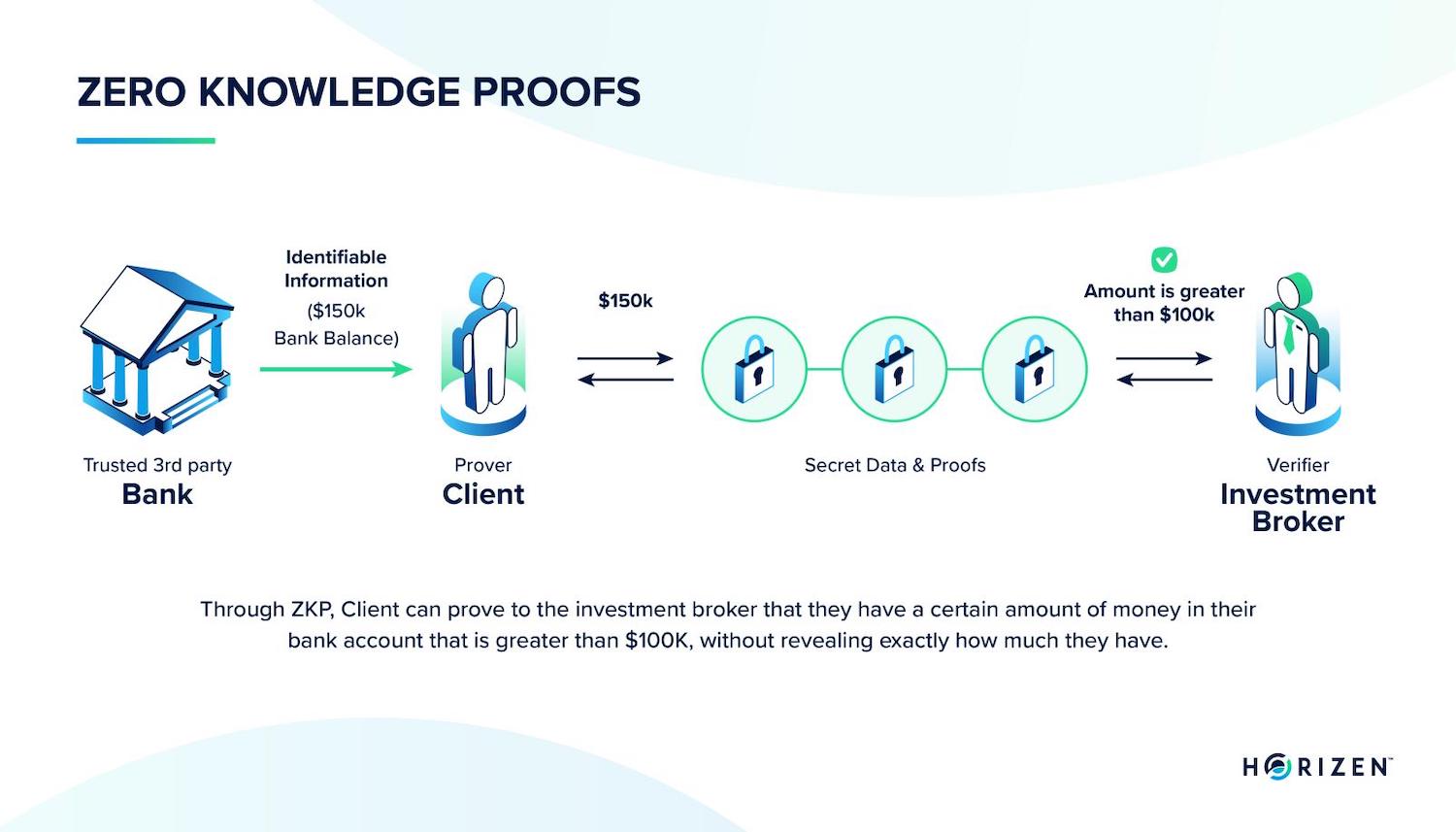
Zero-knowledge proofs (ZKPs) are a cryptographic method that allows one party to prove the truth of a statement without revealing the underlying data or the method used to derive that truth. Unlike zero-trust security models, which assume breach and verify every access request, ZKPs verify the validity of a computational result. This distinction is critical for AI verification, where the goal is to confirm that a model operated correctly without exposing proprietary training data or sensitive user inputs.
The mechanism functions by generating a proof that satisfies three core properties: completeness, soundness, and zero-knowledge. If the statement is true, an honest prover can convince an honest verifier. If the statement is false, no prover can convince the verifier, except with negligible probability. Most importantly, the verifier learns nothing other than the fact that the statement is true. This allows institutions to audit AI behavior without compromising the intellectual property or privacy that the AI relies on.
In practice, this enables verifiable computation. For example, a financial institution can request proof that an AI model’s credit scoring decision was made using only approved variables, without revealing the customer’s actual financial history or the bank’s proprietary scoring algorithm. This capability transforms AI from a "black box" into a verifiable component of regulated workflows, aligning computational integrity with strict compliance requirements.
Official definitions from NIST and the ZKProof community emphasize that ZKPs are a primary tool of Privacy-Enhancing Cryptography (PEC). They enable the truthfulness of mathematical statements to be proven cryptographically, providing a foundation for trust in systems where data sensitivity and computational transparency are in direct conflict.
Comparing ZKPs Against Traditional Audit Trails
Traditional audit trails rely on transparency as a security feature. Auditors verify integrity by examining raw data logs, transaction hashes, and system states. This approach requires granting access to the underlying information to confirm that no tampering has occurred. In high-stakes financial environments, this transparency often conflicts with privacy regulations and competitive secrecy.
Zero-knowledge proofs invert this model. They allow a prover to demonstrate that a statement is true without revealing the data itself. As defined by ZKProof.org, ZKPs are a cryptographic primitive ensuring validity without sacrificing confidentiality [src-serp-8]. Instead of sharing logs, the system shares a mathematical proof that the logs were processed correctly according to predefined rules.
The shift from transparency to verification changes the cost structure of compliance. Traditional audits are linear; as data volume grows, the time to review increases proportionally. ZKPs offer constant-time verification. The proof size remains relatively stable regardless of the dataset size, enabling scalable verification for large-scale AI and financial models.
| Feature | Traditional Audit Trails | Zero-Knowledge Proofs |
|---|---|---|
| Data Privacy | Low: Requires full data exposure | High: Data remains confidential |
| Verification Speed | Linear: Slows with data volume | Constant: Fast regardless of size |
| Computational Cost | Low: Simple hashing and logging | High: Intensive proof generation |
| Trust Model | Trust in auditors and logs | Trust in cryptographic mathematics |
The primary trade-off is computational intensity. Generating a ZKP requires significant processing power, whereas logging data is computationally cheap. However, for AI verification, where the cost of a false positive is high, this upfront cost is often justified. ZKPs enable "license compliance" proofs, where an AI can prove it used only licensed training data without revealing the proprietary datasets themselves [src-serp-1].
This distinction is critical for AI systems operating in regulated sectors. While traditional methods protect against external tampering, they do not protect against internal data leakage. ZKPs provide a mechanism to verify AI behavior and data provenance while keeping the underlying intellectual property hidden from auditors and competitors alike.
Verifying AI Model Provenance
Zero-knowledge proofs provide a mechanism to verify the origins of AI models without revealing the underlying training data. This capability addresses a critical gap in the AI supply chain: proving that a model was trained on compliant, licensed, or specific datasets while maintaining the confidentiality of that data. For financial institutions and regulated entities, this is not merely a technical feature but a compliance necessity.
The process works by generating a cryptographic proof that attests to the model's training history. A provider can demonstrate that the model's weights were derived from a specific, authorized dataset—such as a licensed financial corpus or a privacy-compliant medical record set—without exposing the raw data itself. This allows third parties to audit the model's provenance for regulatory adherence, such as GDPR or copyright compliance, without accessing the proprietary information.
This approach shifts the verification paradigm from trusting the provider to mathematically verifying the training process. It enables a "proof of origin" where the validity of the data source is guaranteed by the zero-knowledge protocol. This is particularly valuable in high-stakes environments where data leakage is unacceptable, yet regulatory scrutiny is intense.
The market infrastructure supporting these verifiable AI computations is growing. Projects like ZKP (Layer 1) are building networks specifically designed for private, verifiable AI computation, indicating a trend toward integrating ZKP technology directly into AI model deployment pipelines. This integration allows for seamless verification of model integrity and provenance at scale.
Market Context for ZK Infrastructure
The development of zero-knowledge infrastructure is closely tied to the broader cryptocurrency and AI markets. Investors and developers are increasingly looking at assets that support ZK technology, such as Ethereum (ETH), as foundational layers for these advanced verification systems.
The computational cost of verification
Implementing zero-knowledge proofs introduces a significant computational overhead that financial institutions must account for in their infrastructure planning. While the cryptographic guarantees are robust, the process of generating a proof is resource-intensive. As noted by NIST, ZKPs are a primary tool of Privacy-Enhancing Cryptography, enabling the truthfulness of a mathematical statement to be proven without revealing the underlying data. However, this privacy comes at the price of processing power and time.
The cost is not uniform; it varies drastically depending on the complexity of the statement being proved. For instance, verifying a simple license compliance check requires far fewer cycles than validating a complex transaction history across a distributed ledger. This variability means that a one-size-fits-all approach to ZK infrastructure is rarely efficient. Institutions must carefully map their specific verification needs to the appropriate proof system to avoid unnecessary expenditure.
Scalability solutions are currently evolving to address these bottlenecks. Initiatives like ZKProof.org are working to standardize these systems, aiming to make them more accessible and efficient for mainstream adoption. Until these standards are fully mature and widely implemented, the computational cost remains a primary tradeoff. Organizations must weigh the benefits of enhanced privacy and verification against the immediate impact on their operational latency and cloud computing budgets.
No comments yet. Be the first to share your thoughts!