What zero-knowledge proofs actually do
A zero-knowledge proof (ZKP) is a cryptographic method that allows one party to prove they know a specific piece of information without revealing the information itself. Imagine you want to prove you are over 21 to enter a club, but you do not want to show your driver's license or reveal your exact birthdate. A zero-knowledge proof lets you demonstrate that the data on the ID satisfies the condition (age ≥ 21) while keeping the rest of the document private. The verifier receives a mathematical "receipt" confirming the statement is true, with no underlying data exposed.
In the context of AI verification, this technology solves a critical trust problem. AI models are often trained on sensitive, proprietary, or copyrighted datasets. Model creators need to prove that their AI was trained on authorized data without publishing the training set, which could expose trade secrets or violate privacy laws. Zero-knowledge proofs enable a developer to generate a cryptographic signature that attests to the model's lineage and compliance. This signature can be verified by anyone, confirming the AI's origin without leaking the raw training data.
This approach shifts verification from a trust-based model to a mathematically proven one. Instead of relying on audits or self-reported claims, stakeholders can cryptographically verify that an AI model adheres to specific constraints. For example, a healthcare AI can prove it was trained only on HIPAA-compliant datasets without exposing patient records. This balance of transparency and privacy is essential for deploying AI in regulated industries where data confidentiality is paramount.
How ZK proofs verify AI training data
Verifying that an AI model was trained on specific, compliant data usually requires exposing the entire dataset. This approach is impractical for proprietary models and raises serious privacy concerns. Zero-knowledge proofs solve this by allowing a prover to demonstrate that the training process adhered to a specific protocol without revealing the underlying data or the model weights themselves [src-serp-5].
The mechanism relies on three distinct cryptographic steps. The prover generates a proof that the model’s weights are the correct mathematical result of training on a verified dataset. The verifier then checks this proof using public parameters. If the check passes, the verifier is certain the model is compliant, having learned nothing about the data used to create it.
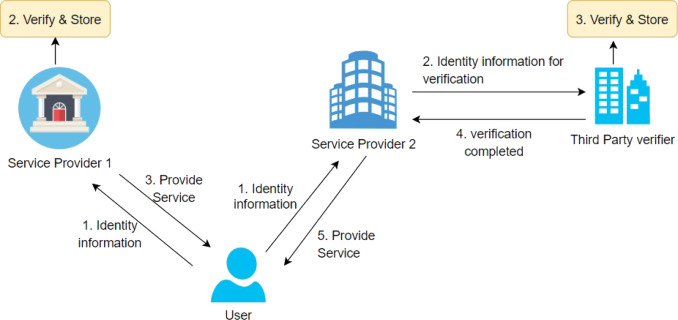
The process begins by encoding the training rules into a mathematical circuit. This circuit defines exactly what constitutes valid training data—for example, ensuring all images are licensed or that no prohibited personal data was included. The prover commits to this policy, creating a public reference point for verification.
During training, the prover executes the algorithm on the private dataset. Instead of sharing the data, the prover runs the computation through a specialized prover engine. This engine generates a compact cryptographic proof attesting that the output weights are the valid result of the defined policy. This proof is often significantly smaller than the original dataset.
The verifier receives the model weights and the ZK proof. Using a verification key, the verifier runs a quick mathematical check against the public policy circuit. This check confirms that the weights were generated correctly without the verifier ever seeing the training data. This step is computationally efficient, allowing for rapid validation of complex AI models.
ZK proofs versus traditional AI audits
Traditional AI audits rely on transparency that often compromises privacy. Manual reviews require exposing raw data, while digital watermarks can be stripped or altered. Zero-knowledge proofs offer a different path: they allow an AI system to prove its output is compliant without revealing the underlying model weights or training data.
The core difference lies in what is verified. In a standard audit, a human or automated tool inspects the "black box" directly. With ZK proofs, the system generates a cryptographic receipt. This receipt confirms the AI followed its rules without showing the work. This shift is critical for scalability, as it removes the bottleneck of human reviewers for every single inference.
To see how these methods compare in practice, consider the trade-offs in privacy, speed, and cost. Traditional methods are resource-intensive and data-leaky. ZK proofs are computationally heavy upfront but offer instant, private verification at scale.
| Feature | Traditional Audit | ZK Proofs |
|---|---|---|
| Privacy | Low (raw data exposed) | High (data remains hidden) |
| Speed | Slow (manual or batch review) | Fast (instant verification) |
| Cost | High (labor-intensive) | Medium (computational overhead) |
| Scalability | Low (bottlenecked by humans) | High (automated and parallelizable) |
| Trust Model | Trust the auditor | Trust the cryptography |
This comparison highlights why ZK proofs are becoming the standard for high-volume AI verification. As noted by ZKProof.org, the industry is moving toward cryptographic standards that prioritize privacy by design rather than as an afterthought. For AI providers, this means meeting compliance requirements without sacrificing user trust or operational efficiency.
Real-world ZK proof use cases in AI
Zero-knowledge proofs are moving from theoretical cryptography into practical AI infrastructure. They allow systems to verify that an AI model or inference process followed specific rules without exposing the underlying data or proprietary algorithms.
Verifying copyright compliance
AI models trained on copyrighted material face increasing legal scrutiny. ZK proofs can verify that a model was trained on licensed datasets without revealing the training data itself. This allows companies to prove compliance with copyright laws while keeping their training pipelines private.
Proving model lineage
In enterprise settings, organizations need to know exactly which model version generated a specific output. ZK proofs can create a verifiable chain of custody, proving that an inference came from a specific, approved model version without exposing the model weights or the input prompt.
Enabling private inference in regulated industries
Healthcare and finance sectors handle sensitive data that cannot leave secure environments. With ZK proofs, a bank can query an AI model to assess credit risk without revealing customer data to the model provider. The model returns a decision while the bank retains full privacy over its sensitive information.
The technology acts like a tamper-proof stamp on an opaque envelope: it confirms the contents were handled correctly without showing what is inside. As AI verification becomes critical for trust, ZK proofs offer a way to validate integrity without compromising privacy.
Common questions about zero-knowledge proofs
Zero-knowledge proofs are no longer theoretical concepts. They exist and are actively being integrated into AI verification systems to allow models to prove their training data or inference results without exposing sensitive source material.
Does zero-knowledge proof exist?
Yes. ZKPs were introduced in 1985 by Goldwasser, Micali, and Rackoff, and have since evolved into practical cryptographic protocols. Today, they are used in blockchain networks and AI verification to demonstrate validity without revealing underlying data. For foundational research, see the original paper on Knowledge Complexity of Interactive Proof Systems.
Is XRP a ZKP?
The XRP Ledger is not a zero-knowledge proof itself, but it now supports them. The network integrated Boundless, a ZK proving network, to enable native verification of ZK proofs. This allows for private transactions on a public blockchain, bridging institutional privacy needs with public ledger transparency.
What is the main idea behind zero-knowledge proofs?
The core concept is simple: one party (the prover) convinces another (the verifier) that a statement is true without revealing any information beyond the truth of that statement. In AI, this means a model can prove it used specific data for training without disclosing the data itself, ensuring both verification and privacy.
No comments yet. Be the first to share your thoughts!