Why enterprises need ZK model proofs
The 2026 regulatory landscape demands verifiable proof of AI integrity without compromising trade secrets. Zero-Knowledge Model Proofs allow enterprises to demonstrate that training data meets compliance standards and that proprietary algorithms function as intended, all without exposing the underlying datasets or source code. This capability is essential for high-stakes industries like healthcare and finance, where data privacy laws are strict and competitive advantage relies on proprietary models.
Historically, the cost of generating these proofs was prohibitive. Between 2024 and 2026, ZK proving costs collapsed roughly 45x, with the average Ethereum block proof falling from $1.69 to under 4 cents. This dramatic reduction in computational overhead has transformed ZK proofs from a theoretical curiosity into a production-ready tool for enterprise auditing. Companies can now routinely attach cryptographic guarantees to their AI outputs, satisfying auditors and regulators in real-time.
Adopting these tools shifts the burden of trust from blind faith to mathematical verification. Instead of relying on third-party black-box audits, enterprises can integrate ZK proof generators directly into their MLOps pipelines. This ensures that every model update is accompanied by a verifiable certificate of integrity, creating a transparent yet secure environment for AI deployment.

As an Amazon Associate, we may earn from qualifying purchases.
Top ZK proof frameworks for AI verification
The landscape for ZK model proofs in 2026 has shifted from theoretical research to concrete tooling. Enterprises auditing machine learning models now rely on specialized frameworks that balance verification speed with the complexity of neural network operations. These tools allow organizations to prove that a model’s output is correct without exposing the underlying weights or training data.
The following frameworks represent the current standard for ZK model proofs, each addressing specific bottlenecks in AI verification. Understanding their distinct architectures helps teams select the right stack for their compliance and performance needs.
Spartan: Low-Latency Verification
Spartan focuses on reducing the time required to generate proofs for large-scale models. By utilizing succinct non-interactive arguments of knowledge (SNARKs), it minimizes the computational overhead typically associated with verifying complex neural network inferences. This makes it particularly suitable for high-frequency trading algorithms or real-time fraud detection systems where latency is critical.
Plonky2: Fast Proving for ML Workloads
Plonky2 offers a different approach by optimizing for the prover’s speed rather than just the verifier’s. This framework is designed to handle the heavy lifting of ZK proving, allowing developers to train and verify models with minimal delay. Its ability to process large matrices efficiently makes it a strong candidate for enterprise-scale AI auditing where throughput matters more than absolute minimal proof size.
Halo2: Flexible Arithmetic Circuits
Halo2 provides a modular arithmetic circuit library that supports flexible verification structures. This flexibility is essential for AI models that combine various layers, such as convolutional and recurrent networks. By allowing developers to customize the circuit design, Halo2 ensures that the ZK proof accurately reflects the model’s specific architecture without unnecessary bloat.
Comparison of ZK Proof Tools
| Framework | Primary Strength | Ideal Use Case | Verification Speed |
|---|---|---|---|
| Spartan | Low-latency proofs | Real-time inference | High |
| Plonky2 | Fast proving time | Large-scale training | Very High |
| Halo2 | Flexible circuits | Complex hybrid models | Medium |
Selecting the Right Stack
Choosing a framework depends on your specific ZK proving requirements. If you are auditing a model for regulatory compliance where proof size is less important than generation speed, Plonky2 is often the preferred choice. For applications requiring immediate verification of individual predictions, Spartan’s low-latency approach provides the necessary efficiency. Halo2 remains the go-to for researchers building custom verification circuits for novel AI architectures.


As an Amazon Associate, we may earn from qualifying purchases.
Hardware accelerators for ZK proving
Selecting hardware for ZK proving requires balancing compute intensity with cost efficiency. The simplest way to evaluate options is to define must-have criteria first, then compare each option against those criteria before weighing nice-to-have features.
A practical choice should survive normal use, maintenance, timing, and budget constraints. If a recommendation only works in an ideal situation, call that out plainly and give the reader a fallback path. Start with the reader's actual constraint, then separate must-have requirements from details that are merely nice to have.
Integrating ZK proofs into AI pipelines
Integrating ZK proofs into AI pipelines works best as a clear sequence: define the constraint, compare the realistic options, test the tradeoff, and choose the path with the fewest hidden costs. That order keeps the advice usable instead of decorative.
After each step, pause long enough to check whether the recommendation still fits the reader's actual situation. If it depends on perfect timing, unusual access, or a best-case budget, include a simpler fallback.

Frequently asked questions about ZK proofs
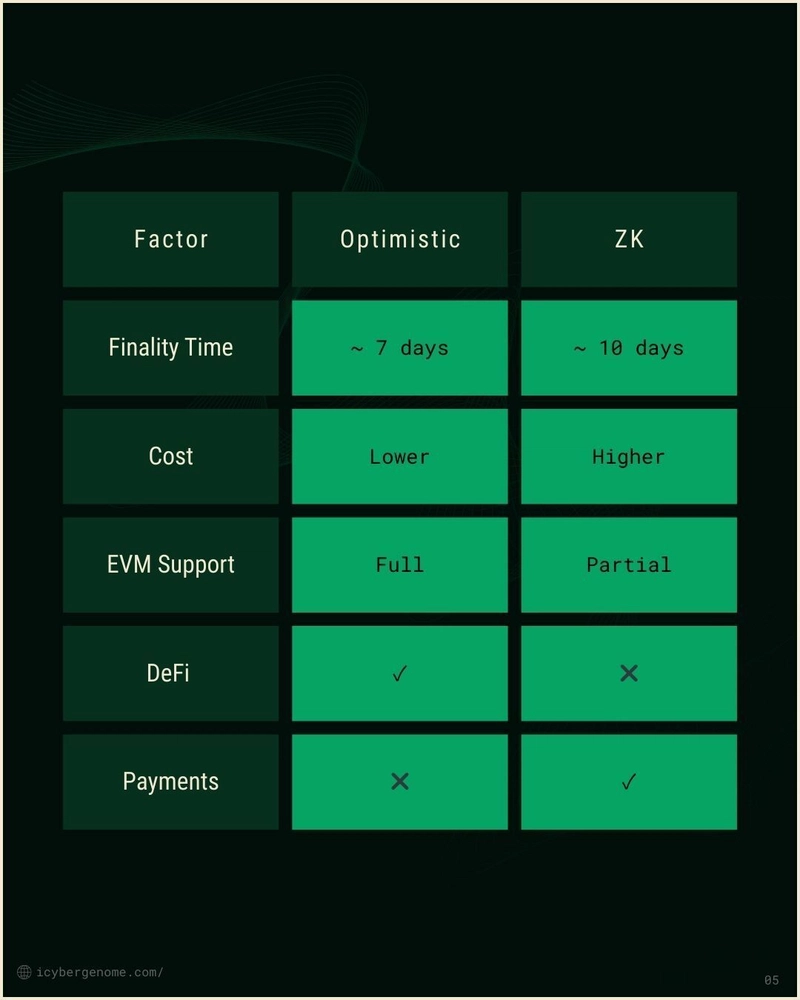
How much do ZK Model Proofs cost to run in 2026? Costs have dropped significantly, but they vary by framework. Tools like zkSync and Polygon zkEVM offer competitive gas fees for L2 transactions. However, proving complex AI models still requires substantial compute power, making it more expensive than standard verification. Enterprise budgets should account for both infrastructure and developer time.
Are ZK proofs fast enough for real-time AI auditing? Verification is near-instant, but generating the proof takes time. Modern tools like Halo 2 and STARK-based systems have reduced generation times, but they are not yet suitable for millisecond-latency requirements. For enterprise AI auditing, batch processing proofs is the current standard for balancing speed and security.
Which tools are best for enterprise adoption? Enterprise readiness depends on language support and documentation. Polygon zkEVM and zkSync are popular for their Ethereum compatibility. For AI-specific auditing, frameworks like Risc0 and SP1 offer efficient prover libraries. Choose tools that integrate with your existing CI/CD pipelines to minimize friction.
Can ZK proofs replace traditional security audits? No. ZK proofs verify computational integrity, not code logic or security vulnerabilities. They ensure the output matches the input without revealing the data, but they do not catch bugs or malicious intent in the model itself. A comprehensive audit requires both ZK verification and traditional security reviews.
No comments yet. Be the first to share your thoughts!