Why model proofs matter now
Zero-knowledge proofs are moving from experimental research to the backbone of enterprise AI trust. In 2026, regulators and institutional buyers are demanding verifiable provenance for the models powering critical decisions. The shift from opaque black-box claims to mathematically auditable proofs is no longer optional; it is a compliance requirement for any organization deploying AI at scale.
The urgency stems from the high stakes of model integrity. Financial institutions, healthcare providers, and government agencies cannot rely on vendor assurances alone. They need cryptographic evidence that a model’s output was generated by a specific version, trained on approved data, and has not been tampered with. ZK proofs provide this certainty without exposing proprietary weights or sensitive training data.
Standardization efforts are accelerating this transition. The ZKProof consortium, hosting its 8th workshop in Rome this May, is finalizing the technical specifications that will allow these proofs to be interoperable across different AI platforms. This standardization is the catalyst that turns theoretical cryptography into a practical enterprise tool, enabling seamless verification of AI models across diverse systems.
ZKProof 8 sets the technical baseline
The ZKProof Standardization effort is consolidating its technical foundations at the 8th ZKProof Workshop in Rome, scheduled for May 9–10, 2026. This gathering is not merely a conference; it is the working group where the specific protocols for enterprise-grade zero-knowledge systems are being codified. The focus has shifted from theoretical possibility to practical implementation, specifically targeting the bottlenecks that have historically prevented widespread adoption.
Two technical pillars are driving this standardization: dynamic zk-SNARKs and sparse proofs. Dynamic circuits allow for variable-length inputs and computations, a requirement for real-world applications like blockchain scaling and private smart contracts. Previous standards often required static, fixed-size circuits, forcing developers to pad data inefficiently or recompile systems for every change. By standardizing dynamic zk-SNARKs, ZKProof aims to create a unified interface that reduces development friction and interoperability costs.
Sparse proofs address the complexity of verifying large datasets without processing every single element. In enterprise finance, where transaction logs can be massive, sparse proofs enable auditors to verify specific subsets of data—such as a single transaction or a user’s balance—without downloading or processing the entire ledger. This efficiency is critical for low-latency financial settlements and regulatory compliance checks.
The market is watching these developments closely, as standardized zero-knowledge infrastructure will likely underpin the next wave of institutional blockchain adoption. The performance of related crypto assets often reflects investor sentiment toward these underlying technological milestones.
Three enterprise use cases for ZK proofs
Moving beyond theoretical benchmarks, enterprises are deploying zero-knowledge model proofs to solve specific friction points in compliance, privacy, and verification. The following use cases represent the most mature applications of this technology in 2026, where the cost of proof generation has dropped sufficiently to justify real-world implementation.
Private financial audits and compliance
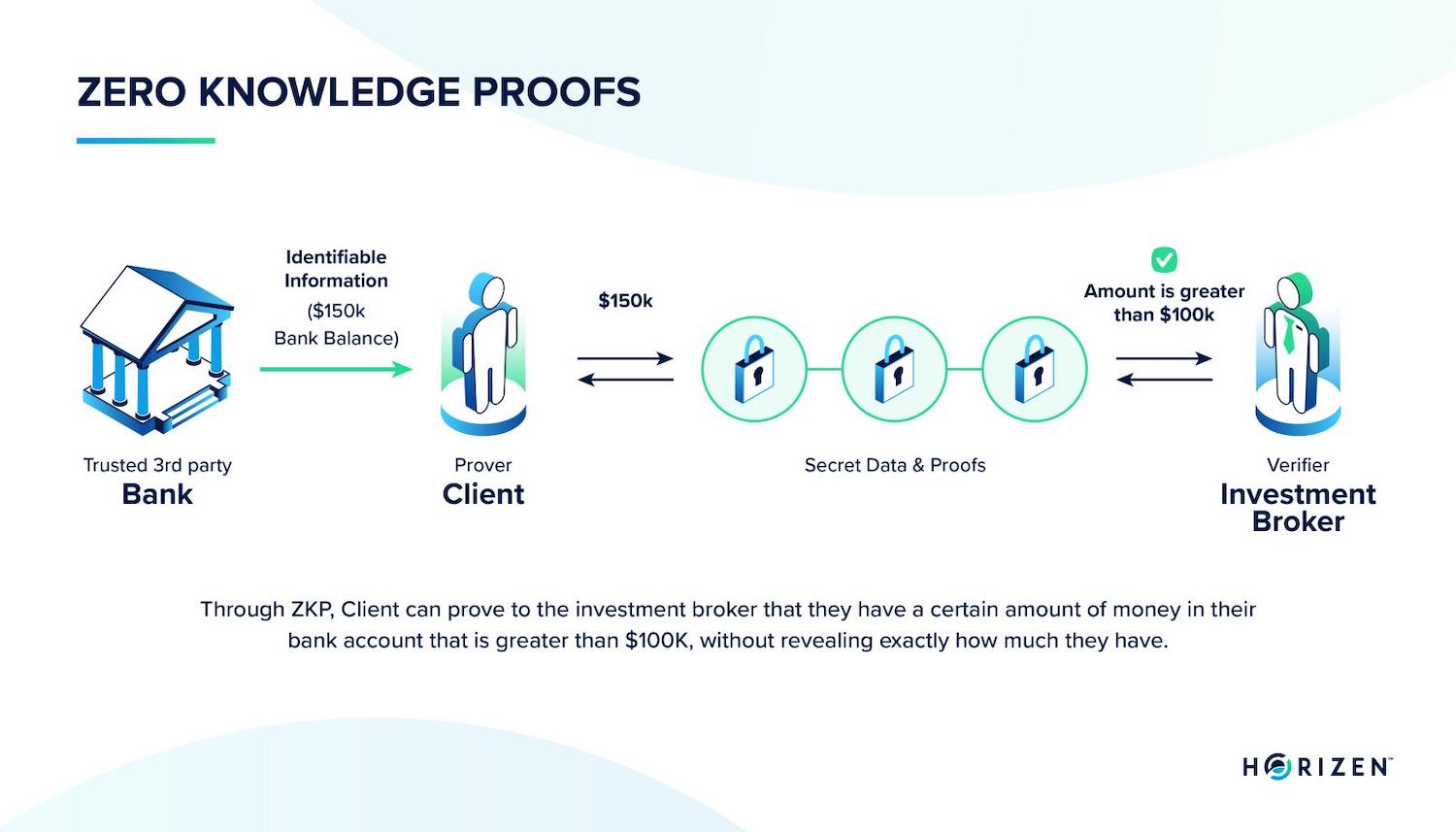
Traditional financial audits require exposing sensitive transaction ledgers to external auditors, creating a significant data privacy risk. ZK proofs allow institutions to generate a cryptographic certificate that verifies the integrity of their financial statements without revealing the underlying transaction details. This approach satisfies regulatory requirements for transparency while protecting competitive intelligence and client confidentiality. The XRP Ledger’s recent integration with Boundless demonstrates this shift, enabling institutions to verify transactions without revealing amounts, senders, or receivers [src-serp-paa-3].
Secure identity verification (ZK-KYC)
Know Your Customer (KYC) processes typically require users to upload government IDs and biometric data to centralized servers, creating high-value targets for data breaches. ZK-KYC allows users to prove they meet specific criteria—such as being over 18 or residing in a permitted jurisdiction—without disclosing their actual identity or document contents. This reduces liability for financial institutions and builds trust with users concerned about data privacy. Projects like Cardano are leveraging decentralized identity solutions to enable users to prove credentials without exposing personal information [src-serp-paa-2].
Verifiable AI model inference
As AI models become more complex, enterprises face challenges in verifying that a model’s output is genuine and untampered, especially when the model is proprietary. ZK proofs enable a service provider to demonstrate that an AI model processed specific input data and produced a valid output, without revealing the model’s weights or the raw data used. This is critical for high-stakes industries like healthcare and finance, where accountability and data security are paramount. This capability is increasingly seen as a bridge between AI and ZK, allowing apps to verify results or user credentials in sensitive environments [src-serp-5].
Comparison: Traditional Audit vs. ZK Verification
The shift to ZK proofs represents a fundamental change in how enterprises handle verification. Below is a comparison of traditional methods versus ZK-based verification across key operational metrics.
| Metric | Traditional Audit | ZK Proof Verification |
|---|---|---|
| Data Exposure | Full ledger/data visible to auditor | Zero data exposed; only validity proven |
| Verification Speed | Days to weeks for manual review | Minutes to hours for cryptographic proof |
| Privacy Risk | High; centralized data storage risk | Low; data remains with the owner |
| Scalability | Linear cost increase with data size | Constant cost regardless of data size |
Market signals and adoption trends
The financial momentum behind zero-knowledge proofs is shifting from experimental pilots to measurable market growth. Independent research projects that zk proof generation will become a $10 billion market by 2030, driven by the urgent need to verify sensitive data in AI and finance without exposing the underlying information [[src-serp-5]]. This valuation reflects a broader institutional pivot: enterprises are no longer asking if ZK technology works, but how quickly they can integrate it into compliant, high-throughput systems.
Adoption is accelerating across major blockchain networks. The XRP Ledger recently integrated with Boundless, enabling native zero-knowledge proof verification for the first time. This allows institutions to verify transaction authenticity without revealing amounts, senders, or receivers, effectively bridging the gap between public ledger transparency and private financial privacy [[src-serp-10]]. Similarly, Cardano is expanding its use of ZKPs to support decentralized identity solutions, allowing users to prove credentials without exposing personal data [[src-serp-11]].
Market liquidity for ZK-focused assets is also signaling confidence. While static price data ages quickly, live market indicators show sustained interest in projects at the forefront of this standardization. The following widget displays the current price of Zcash (ZEC), a foundational privacy protocol that has long served as a benchmark for ZK utility.
No comments yet. Be the first to share your thoughts!