Diagnose AI provenance failures
Financial institutions and compliance teams are waking up to a stark reality: current AI models are opaque black boxes. When an AI denies a loan, flags a transaction, or generates a regulatory report, the reasoning is often inaccessible. This opacity creates immediate trust deficits. Auditors cannot verify the logic, and regulators cannot confirm that protected data wasn't leaked during inference. The result is a system where decisions are accepted on faith rather than evidence.
Traditional auditing methods fail here because they rely on inspecting the model's internal weights or training data. In high-stakes environments, this is either impossible due to intellectual property protections or dangerous because it reveals sensitive information. You cannot audit what you cannot see without exposing what you must keep secret. This paradox stalls progress in sectors like healthcare and finance, where privacy and transparency are equally mandatory.
Zero-knowledge proofs (ZKPs) solve this by allowing a model to prove its output is valid without revealing the underlying data or algorithm. As noted by experts analyzing the 2026 privacy stack, ZKPs are moving beyond identity verification into core compliance workflows, including settlement proofs and credential checks [1]. This shift enables "trust without disclosure," a critical capability for AI agents that handle sensitive financial data [2].
For 2026, the fix is not better documentation but cryptographic verification. By integrating ZKPs, institutions can verify that an AI model adhered to specific privacy standards and produced a legitimate result, all while keeping the proprietary logic and user data completely hidden. This moves the industry from checking boxes to verifying mathematical truth.
Compare ZK-SNARKs vs STARKs for AI
When verifying massive AI training datasets, the choice between ZK-SNARKs and STARKs often comes down to a trade-off between proof size and setup complexity. SNARKs produce compact proofs that are fast to verify, but they require a trusted setup ceremony—a potential single point of failure if the cryptographic parameters are compromised. STARKs eliminate the trusted setup and offer quantum resistance, but their proofs are significantly larger, which can slow down verification on standard hardware.
For AI model verification, where dataset integrity is paramount, the transparency of STARKs is increasingly preferred despite the storage overhead. SNARKs remain viable for lightweight checks or mobile verification, but the industry is shifting toward transparent solutions to avoid the trust assumptions inherent in SNARKs.

| Feature | ZK-SNARKs | ZK-STARKs |
|---|---|---|
| Proof Size | Small (KB) | Large (MB) |
| Verification Time | Fast | Slower |
| Trusted Setup | Required | Not Required |
| Quantum Resistance | No | Yes |
| Transparency | Low | High |
Verify training data without exposure
AI models frequently face trust failures when copyright holders or regulators demand proof that training data was legally sourced. Traditional audits require providers to hand over raw datasets, exposing proprietary algorithms and user privacy. Zero-knowledge proofs (ZKPs) solve this by allowing a model to mathematically prove it was trained on compliant data without revealing the data itself.
This mechanism shifts verification from transparency of content to verification of process. A provider can generate a cryptographic proof that every token in the training corpus passed specific compliance checks—such as copyright status or privacy filters—without exposing the underlying text or images.

Before generating a proof, the provider must formalize what "compliant data" means. This involves creating a deterministic set of rules, such as a whitelist of authorized sources or a blacklist of known infringing content. These rules become the public parameters for the zero-knowledge system.
The provider creates a cryptographic commitment to the entire training dataset. This is often done using a Merkle tree, where each data point is hashed and combined into a single root hash. This root acts as a fingerprint of the dataset, ensuring that any change to the data would invalidate the subsequent proof.
Using a zero-knowledge circuit (often built on SNARKs or STARKs), the provider runs the training process or a sampling of it through a verifier. The circuit takes the private training data and the public compliance rules as inputs. It outputs a proof that attests: "The data used for this model satisfies all defined compliance rules."
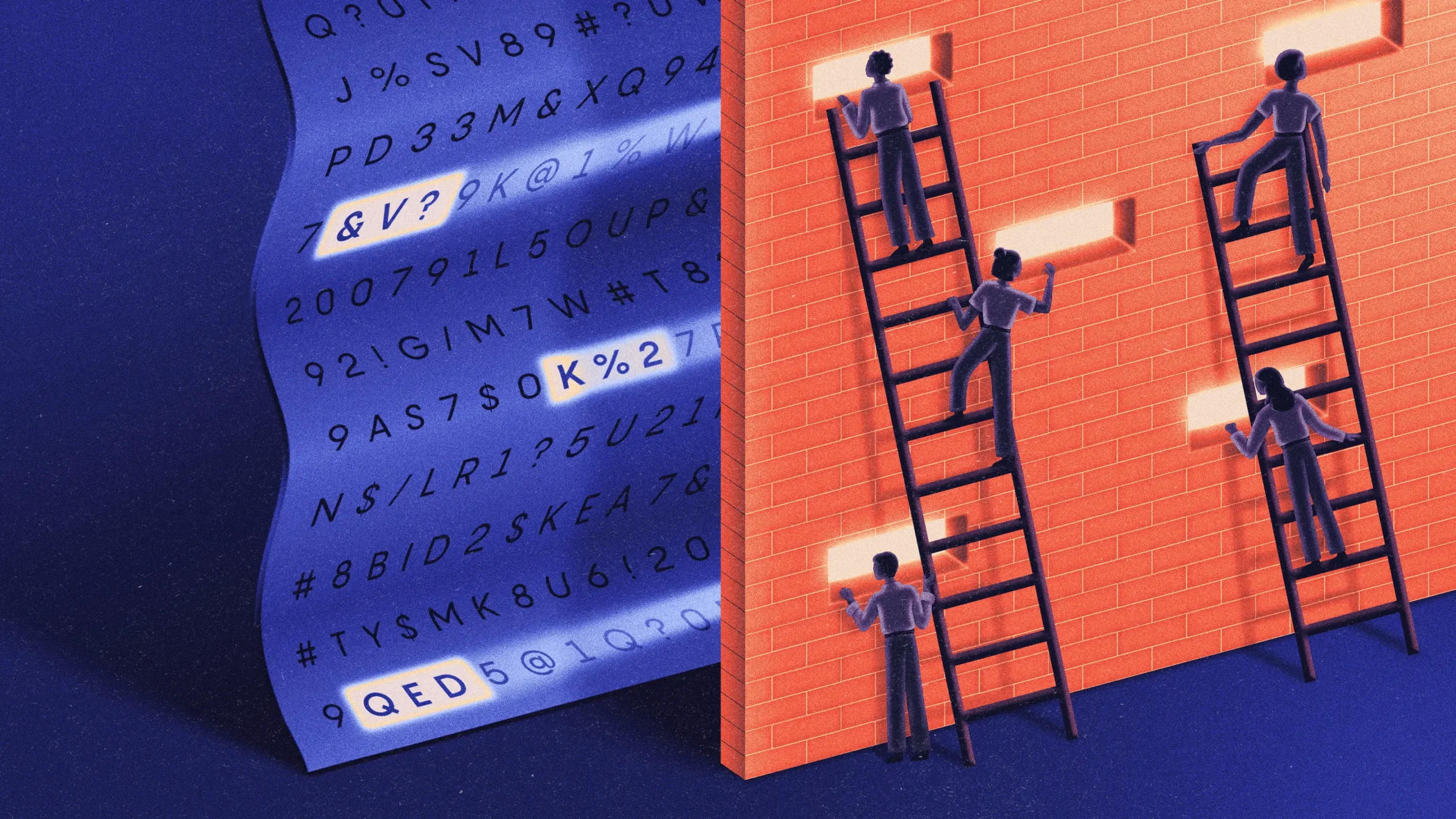
The final proof and the model’s public parameters are published on-chain or in a public registry. Auditors, regulators, or users can verify the proof in milliseconds. The verification confirms that the model was trained on compliant data, without the auditor ever seeing the raw training examples or the model weights.
This approach aligns with the growing standard for digital privacy and integrity. As noted by IEEE researchers, ZKPs allow parties to demonstrate ownership or compliance of knowledge without disclosing the actual data, making them ideal for high-stakes AI verification. This method protects intellectual property while satisfying regulatory demands for transparency.
Check 2026 ZKProof standards compliance
When a zero-knowledge proof fails verification, the immediate symptom is often a transaction revert or a trust failure in the model audit. Before escalating to legal or security teams, developers and compliance officers must verify that the implementation aligns with the emerging 2026 ZKProof standards. These standards, driven by the 8th ZKProof Workshop outcomes in Rome, focus on interoperability and formal verification rigor.
Use the checklist below to ensure your cryptographic primitives and circuit constraints meet the baseline requirements for 2026 compliance. This process mitigates the risk of deploying vulnerable proof systems that cannot be validated by third-party auditors.
-
Verify that the proof system (e.g., STARKs, PLONK) is listed in the current ZKProof standards registry.
-
Confirm that the circuit contains no private inputs that violate the privacy-preserving guarantees of the chosen protocol.
-
Ensure that the verification key is immutable and stored in a transparent, auditable location.
-
Check that the implementation passes all formal verification tests defined in the ZKProof specification.
-
Validate that the proof size and verification time meet the performance thresholds outlined in the 2026 workshop guidelines.
-
Review the cryptographic hash functions used in the commitment scheme against the NIST post-quantum recommendations.
No comments yet. Be the first to share your thoughts!