
Hybrid ZK-SNARKs for Efficient Model Provenance in Distributed AI Training

In the sprawling ecosystem of distributed AI training, where models are forged across countless nodes and datasets sourced from shadowy corners of the web, trust has become the scarcest resource. Enter hybrid ZK-SNARKs, a fusion of zero-knowledge wizardry and practical engineering that promises efficient ZK proofs for model provenance ZK. These proofs don’t just verify that your AI model was trained on licensed data; they do so without spilling a single byte of sensitive information, all while scaling to the demands of collaborative environments.

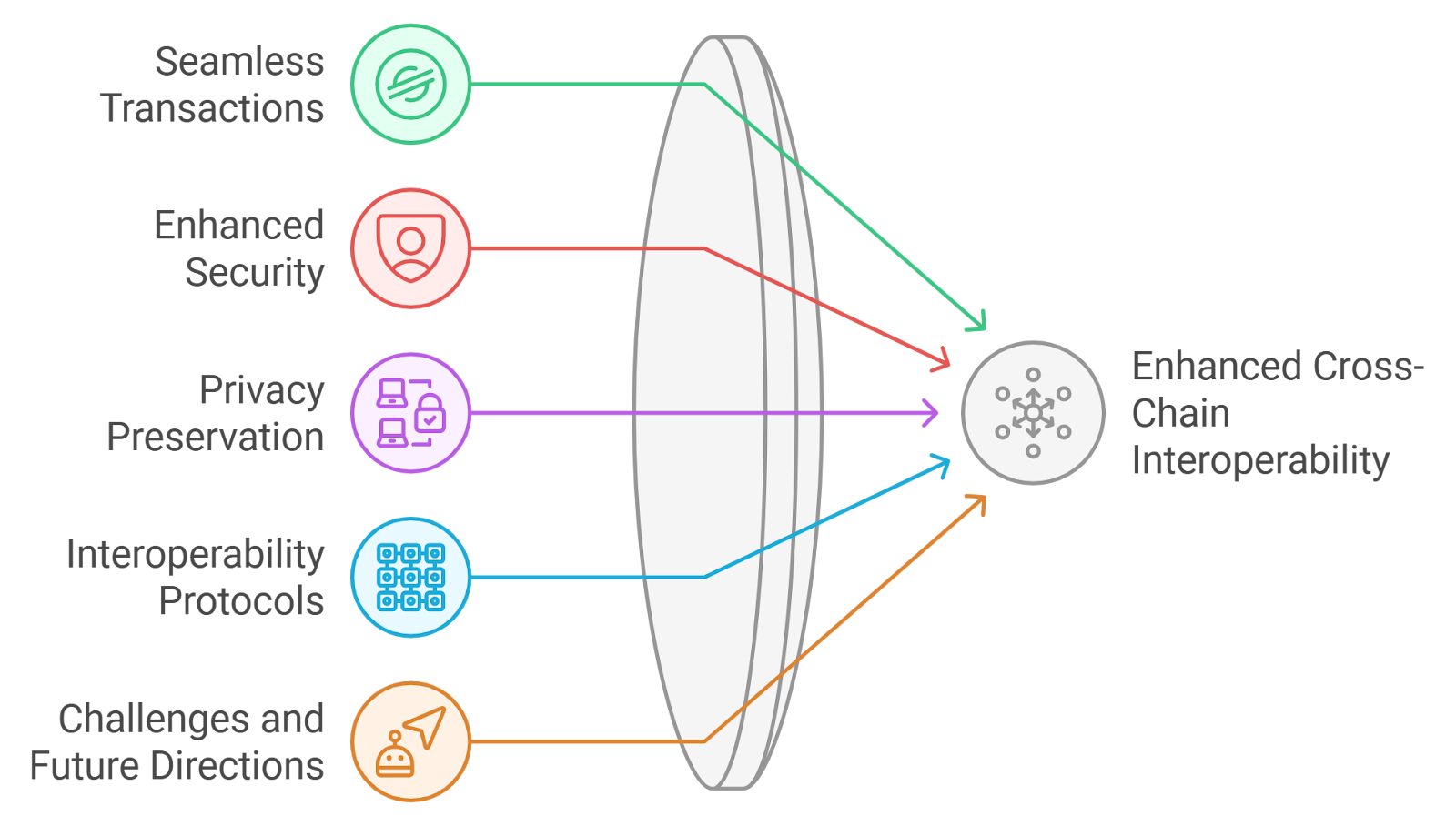
Picture this: a consortium of researchers pooling petabytes of proprietary datasets to train a frontier language model. Each contributor demands ironclad assurance that their data fueled the final weights, yet no one wants to expose trade secrets. Traditional approaches falter here – cryptographic hashes prove integrity but leak metadata, while full audits demand untenable access. Hybrid ZK-SNARKs provenance flips the script, leveraging succinct non-interactive arguments of knowledge to attest to training pipelines in a privacy-preserving dance.
Unpacking the Distributed Training Dilemma
Distributed AI training isn’t a monolith; it’s a symphony of shards. Data is federated, computations parallelized across GPUs in data centers spanning continents. Yet, provenance – tracing a model’s lineage back to its training data – remains elusive. Recent papers like ZKPROV highlight the zero-knowledge imperative: proofs must veil model weights and datasets alike. Without this, intellectual property evaporates, licensing disputes erupt, and regulators circle like vultures.
Consider the stakes. In 2026, as AI permeates finance, healthcare, and autonomous systems, verifiable model provenance ZK isn’t optional; it’s existential. The updated landscape underscores this, with scalable collaborative zk-SNARKs enabling even workload distribution among servers. No longer does one prover bear the brunt; instead, N parties jointly craft a single proof over fragmented witnesses, as explored in USENIX’s experiments with collaborative zk-SNARKs.

The Hybrid Edge: Blending SNARKs with Collaborative Power
What sets hybrid ZK-SNARKs apart? They’re not pure SNARKs, shackled by single-prover bottlenecks, nor sprawling multi-party computations that balloon in complexity. Hybrids borrow the succinct verification of zk-SNARKs – mere kilobytes to check – while infusing distributed proof generation. Think zk-SHARKs from MIT’s DCI, optimized for dual efficiency in proof and verification, or IIT Kanpur’s hybrid verification models blending on-chain speed with off-chain heft.
This hybridity shines in distributed AI training. Clients delegate proof tasks to server clusters, each handling a slice of the arithmetic circuit representing the training run. The result? A unified zkPoT – zero-knowledge proof of training – formalizing security as per ACM’s rigorous definitions. Frameworks like zkVerify accelerate this further, validating integrity sans raw data exposure, with hardware boosts for real-world deployment.
For developers wrestling with ZKModelProofs. com-like platforms, hybrids mean deployable transparency. Generate attestations proving dataset compliance without revealing origins – perfect for licensing audits. Enterprises can outsource verification to smart contracts in hybrid blockchains, as zk-Oracle envisions, where fast SNARK checks meet trusted off-chain compute. But let’s temper enthusiasm with nuance. Proving full training remains computationally fierce; even hybrids demand optimized circuits. Collaborative setups mitigate this via even load-balancing, as in fully distributed proof generation from ePrint. Daniel Kang’s Medium piece nails it: ZK-SNARKs let model owners prove honest execution sans weight revelation, bridging transparency gaps in black-box ML. Scalability experiments reveal hybrids slashing proof times by orders of magnitude over solo SNARKs. In FC 2022’s decentralized AI vision, end-to-end provenance safeguards assets confidentiality. This isn’t hype; it’s the scaffolding for trustworthy ML in a privacy-first world. Adopting efficient ZK proofs demands circuit savvy. Training proofs encode forward passes, loss computations, and updates into arithmetic constraints – no trivial feat for billion-parameter behemoths. Hybrids ease this by partitioning: one node proves data preprocessing, another gradient descent slices. Security footnotes matter too. Soundness holds if no coalition forges invalid proofs; zero-knowledge if simulations indistinguishably mimic real transcripts. Collaborative protocols, lifted from conventional SNARKs, inherit these via secure multi-party extensions, per USENIX. Single-server outsourcing variants add flexibility, privatizing prover workloads. Navigating Implementation Hurdles